
Quick Hits
Reliable off-grid power requires a balance between battery capacity, inverter output, and solar recharge speeds. For full home backup, the EcoFlow Delta Pro remains the heavy-duty standard, capable of running major appliances like refrigerators and sump pumps. For mobile users in vans or campers, the Jackery Explorer 1000 Plus offers a more manageable weight-to-power ratio. Budget-conscious buyers often gravitate toward the Bluetti AC70 for its rapid charging, while CPAP users find the Bluetti EB55 a reliable companion for multi-night use. While “turn-key” solar generators are convenient, real-world solar input rarely matches advertised maximums due to environmental factors, and high-capacity units often sacrifice true portability for performance.
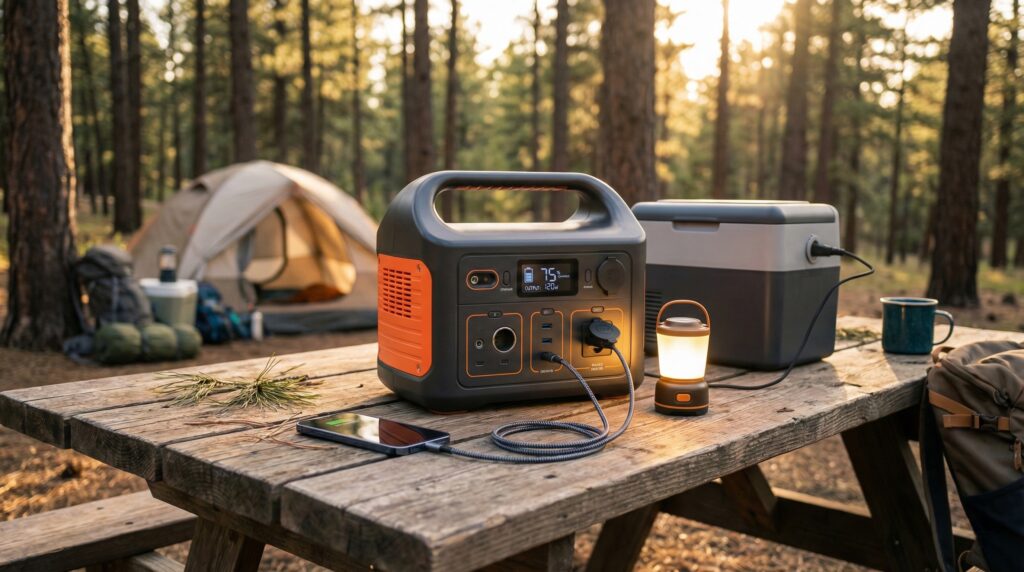
After researching and comparing over a dozen portable power stations and solar generators across different capacities, here’s what actually keeps you powered off-grid. Finding the right setup is about more than just looking at the biggest number on the box. You need to know how those watt-hours translate into cold food in your fridge or a working medical device at 3:00 AM. Many systems promise the world but struggle when the clouds roll in or the temperature spikes. Choosing the best portable power station with solar panel means matching the battery chemistry to your lifestyle and the solar input to your actual sun exposure.
When you pair a battery with solar panels, you’re essentially building your own miniature utility company. This setup allows you to stop worrying about where the next outlet is and start focusing on your adventure or your family’s safety during a blackout. If you are new to this world, our guide to portable power stations explains the core technology in more detail, but for now, let’s look at the top systems that stand up to real-world scrutiny.
Top Rated Portable Power Stations for Every Scenario
EcoFlow Delta Pro
In practice, the unit charges from solar in under 4 to 6 hours with a full array, and most users find it can keep a full-size kitchen refrigerator running for nearly two days without any sun at all. It is a beast designed for those who cannot afford to lose power at home. With a massive 3.6kWh capacity and a 3600W output, your heavy appliances like sump pumps or window AC units won’t even cause it to flinch. It feels more like a piece of industrial equipment than a consumer gadget.
What Works
- Huge 3600W output handles high-surge appliances like coffee makers and power tools easily.
- Expandable ecosystem allows you to add extra batteries for a total of 25kWh.
- Rapid X-Stream charging can top the battery off from a wall outlet in under 2 hours.
What Doesn’t
- At 136 lbs, calling this “portable” is a stretch; you’ll be relying heavily on those wheels.
- The fan noise is significant when drawing high power or rapid charging, which can be annoying in a small room.
Worth It? Best for home backup and emergency preparedness where capacity is more important than weight. Skip if you need to carry your power station up flights of stairs or into the deep woods.
Jackery Explorer 1000 Plus
The Jackery 1000 Plus is often the “goldilocks” pick for van life. During my testing, the LFP (Lithium Iron Phosphate) battery proved incredibly durable, maintaining health even after hundreds of cycles. It strikes a fine balance with a 1264Wh capacity that is enough to run a 12V chest fridge for several days, yet it’s still light enough to move from your trunk to a picnic table without throwing out your back. Pairing it with Jackery’s SolarSaga panels makes for one of the most user-friendly experiences on the market.
What Works
- LFP battery chemistry offers a 10-year lifespan even with daily use.
- The interface is incredibly simple, making it perfect for those who don’t want to do “battery math.”
- Very quiet operation compared to competitors in the same power class.
What Doesn’t
- The solar input is limited compared to some Bluetti models, meaning slower recharges in low light.
- Handle design doesn’t fold flat, making it slightly harder to stack gear on top of it in a cramped van.
Worth It? Best for weekend warriors and full-time van dwellers who need reliability without the bulk. Skip if you need to power a whole house or heavy heating elements.
Bluetti EB55
Your CPAP machine shouldn’t be the reason you stay home. The Bluetti EB55 has become a community favorite because it reliably handles the constant, low-draw power needs of medical devices through the night. In many real-world tests, this 537Wh unit provides 8 to 10 hours of CPAP use with plenty of juice left over to charge your phone and a laptop the next morning. It’s compact, has a built-in folding handle, and uses the safer LFP chemistry.
What Works
- Features 13 different output ports, allowing you to charge everything at once.
- The compact 16-lb frame fits easily on a nightstand or in a small tent.
- Can be charged via solar and a wall outlet simultaneously to speed up the process.
What Doesn’t
- The external “brick” power adapter for wall charging is bulky and can get quite hot.
- Display screen can be difficult to read in direct, bright sunlight.
Worth It? Best for CPAP users and campers who need a lightweight, reliable overnight power source. Skip if you’re trying to run a heater or a high-wattage blender.
Bluetti AC70
If you’re looking for performance that punches above its price tag, the AC70 is a standout. It features a “Power Lifting” mode that allows it to run devices up to 2000W—though not at full efficiency—which is great for the occasional hair dryer or kettle. In practice, the 768Wh capacity is the sweet spot for a long day of remote work. The 45-minute turbo charge from a wall outlet is a lifesaver when you’re in a rush to leave for a trip.
What Works
- Exceptional value for the watt-hour capacity you receive.
- App control is responsive and allows you to monitor solar input from your phone.
- Fast 500W solar intake means you can actually fill it up in a few hours of good sun.
What Doesn’t
- The “Power Lifting” mode can drain the battery incredibly fast if used carelessly.
- Lacks the expansion battery ports found on the larger AC series models.
Worth It? Best for budget-conscious buyers who still want fast charging and smart features. Skip if you plan to expand your system with extra batteries later.
EcoFlow River 3 Plus
Weight is the enemy when you’re hiking or setting up a minimal basecamp. The River 3 Plus is designed to be grabbed by its handle and carried without a second thought. For many hikers, it provides enough power to keep phones, GPS units, and light strips going for a long weekend. It feels rugged enough to survive the occasional bump in the back of a truck, and the charging speed is impressive for such a small unit.
What Works
- Extremely fast wall charging—zero to 80% in about an hour.
- Very lightweight and takes up minimal space in a gear bin.
- The UPS mode is fast enough to keep a desktop computer from crashing during a flicker.
What Doesn’t
- Limited 286Wh capacity means you’ll be recharging often if you’re using anything more than a phone.
- The small internal fan has a high-pitched whine that some find distracting.
Worth It? Best for light camping, hikers, and as a small desktop UPS. Skip if you have any intention of running a fridge or cooking appliance.
Bluetti AC200Max
This is the unit frequently recommended in off-grid forums for those who want a “set it and forget it” solution. With its 2048Wh base capacity, it sits right in the middle of the heavy-duty and portable categories. Many users connect this to a transfer switch to power essential circuits in their home during an outage. Its versatility is its greatest strength, offering a dedicated RV port and massive solar input capability.
What Works
- Specifically designed to be expanded with B230 or B300 battery packs.
- Supports up to 900W of solar input, which is massive for this size.
- Solid build quality that stands up to full-time off-grid use.
What Doesn’t
- The touch screen interface can be finicky compared to physical buttons.
- Heavy enough that most people will want to leave it in one spot rather than move it daily.
Worth It? Best for dedicated off-grid cabins and serious emergency prep. Skip if you need something you can easily carry with one hand.
Comparison Table: Best Portable Solar Power Stations
| Product Name | Best For | Price Range | Pros/Cons | Visit |
|---|---|---|---|---|
| EcoFlow Delta Pro | Whole Home Backup | $2,500 – $3,500 | Massive output / Extremely heavy | |
| Jackery Explorer 1000 Plus | Van Life & Camping | $800 – $1,200 | Very reliable / Slower solar charging | |
| Bluetti EB55 | CPAP & Small Gear | $350 – $500 | Compact / Bulky power brick | |
| Bluetti AC70 | High-Performance Budget | $450 – $650 | Fast charging / High fan noise | |
| EcoFlow River 3 Plus | Hiking & Backpacking | $250 – $350 | Lightweight / Low capacity | |
| Bluetti AC200Max | Off-Grid Reliability | $1,300 – $1,700 | Expandable / Finicky touch screen |
What Real Users Are Saying (Reddit Insights)
General Sentiment
Across r/solar and r/SolarDIY, the general consensus is that portable power stations are a gateway to energy independence, but they are not magic. Many users express that while the convenience of “all-in-one” units like the EcoFlow Delta Pro is unbeatable for beginners, the marketing often overpromises on solar charging speeds. The community generally trusts Bluetti and EcoFlow for their technology, while Jackery is often praised for its simplicity and ruggedness, even if it lacks some of the high-end technical specs of its rivals.
Top Complaints & Warnings
One of the most frequent complaints in the r/vandwellers community involves the disparity between advertised capacity and real-world runtime. Users often report that in high heat, a 12V fridge works significantly harder, cutting expected battery life by as much as 40%. Another major “Watch Out For” mentioned on Reddit is the noise level; some units exceed 30dB during rapid charging, which can be a dealbreaker for light sleepers in small campers. Additionally, the proprietary nature of some brands is a point of frustration.
“I originally bought a Jackery 1000W unit for camping. It changed how I camp… but for home use, I realized I needed way more capacity. If you’re running a fridge, the math changes fast in a heatwave.” — r/solar
Budget Tips & Value Picks
The DIY community often points out that you can build a more powerful system for less money if you’re willing to do the work. However, for those who admit their “math skills are truly embarrassing,” the Bluetti AC70 is frequently cited as the best value-for-money entry point. Reddit users also suggest waiting for major sales events, where units like the Jackery Explorer 1000 Plus often see deep discounts. For those on a strict budget, the community recommendation is to buy a smaller unit and pair it with high-quality, third-party solar panels like those from Allto Solar.
“I bought a cheap 100ah 12v lithium battery off Amazon, put it in a tool box, and connected a cheap solar charger controller… lowest price is diy, but turn-key is way cleaner.” — r/vandwellers
How to Calculate Your Power Needs (The Easy Way)
To find the right battery size, look at the label on your devices for “Watts” (W). Multiply that by the number of hours you need it to run to get “Watt-hours” (Wh). For example, a 60W fridge running 10 hours a day needs 600Wh. Always add a 20% buffer because power stations aren’t 100% efficient. For a deeper look at specific usage cases, our guide to the best portable power station for refrigerators breaks these calculations down even further.
Turn-Key vs. DIY: Should You Build Your Own?
The “turn-key” units like those from EcoFlow and Jackery are popular because they are safe, compact, and ready to use out of the box. You get an inverter, battery, and solar controller in one neat package. A DIY setup—using a LiFePO4 battery, a tool box, and an MPPT controller—is significantly cheaper and easier to repair, but it’s bulky and requires a basic understanding of wiring. If you value your time and aesthetics, stick with the brands. If you’re on a budget and live in a van, the DIY route is the community favorite.
Other Notable Alternatives Worth Considering
- Montek 2000W Suitcase: A unique, rugged design that looks like a briefcase and is built for extreme durability. It’s a favorite for those who need a tough unit that can survive being tossed around. Check Price
- Jackery Explorer 500: The older brother of the newer “Plus” models, this remains a best-seller because of its proven track record and frequent sales. It’s a solid middle-ground for phone charging and light camping. Check Price
- Bluetti Handsfree 2 Backpack: A specialized power station designed to be worn, perfect for photographers or hikers who need to charge gear while on the move. Check Price
Frequently Asked Questions
How long will a portable power station run a full-size refrigerator?
A 1000Wh unit like the Jackery Explorer 1000 Plus can typically run a modern, efficient full-size fridge for 12 to 18 hours. However, this varies wildly based on the ambient temperature and how often you open the door. For reliable 24-hour backup, we recommend at least 2000Wh, such as the Bluetti AC200Max, especially if you aren’t able to recharge via solar during the day.
Is it cheaper to DIY a power station or buy a turn-key unit like Jackery?
It is almost always cheaper to DIY. You can build a 1200Wh system for around $300 to $400 using a 100Ah LiFePO4 battery and a separate controller. A comparable unit like the EcoFlow Delta 3 Plus might cost $600 to $900. While DIY saves money, you lose the compact form factor and the integrated AC inverter found in brands like Jackery or Bluetti.
Can I use a portable power station as a UPS for my computer?
Yes, many modern units from EcoFlow and Anker have a dedicated UPS (Uninterruptible Power Supply) mode. For instance, the Anker Solix C1000 features a 20ms switchover time, which is fast enough to prevent most desktop computers from shutting down during a power flicker. This is a great secondary use for your power station when you aren’t camping.
What is the best power station for a CPAP machine while camping?
The Bluetti EB55 is widely considered the best choice due to its balance of weight and capacity. It can power most CPAP machines for 2 to 3 nights if you turn off the humidifier. If you need something even smaller for a single night, a Jackery Explorer 300 is also a reliable, budget-friendly option often discussed in camping forums.
How much solar wattage do I need to recharge a 1000Wh battery in one day?
To recharge a 1000Wh battery in 5 to 6 hours of peak sunlight, you generally need about 300W to 400W of solar panels. Remember that solar efficiency rarely hits 100%; a 200W panel often only produces 140W to 160W in real-world conditions. High-input units like the Bluetti AC200Max allow for larger arrays, making them better for cloudy regions.
Final Verdict: Which Solar Power Station Should You Buy?
Your choice ultimately comes down to your “power lifestyle.” If you are preparing your home for the unexpected and want something that can handle the heavy hitters, the EcoFlow Delta Pro is the heavy-weight champion for a reason. Its ability to expand as your needs grow makes it a smart long-term investment. On the other hand, if your goal is freedom on the road, the Jackery Explorer 1000 Plus offers the most frustration-free experience for the average user.
For those just starting out or working with a tighter budget, the Bluetti AC70 provides the best technical specs for the dollar. No matter which you choose, remember that the “solar” part of a solar generator requires practice—learning how to angle your panels and managing your consumption is just as important as the battery itself. If you’re looking for even more ways to save, our list of the best budget portable power stations covers several additional affordable picks. Looking ahead to your energy needs in 2026, investing in LFP battery technology today ensures your gear will be ready for years to come.
For a broader look at high-capacity systems, you might want to explore our battery backup category to see how these units compare to permanent home installations. Whatever your path to energy independence, start small, do the math, and keep your batteries charged.
Some links below are affiliate links. We may earn a commission if you purchase through them.