
TL;DR
The best budget portable power station is the one that covers your daily watt-hours (Wh) with a little buffer and has an inverter strong enough for your biggest device’s continuous (and startup) draw. In the budget tier, brand support, charging options (wall/car/solar), and the ports you actually need often matter as much as raw specs.
Top Recommended Portable Power Stations
| Product | Best For | Price | Pros/Cons | Visit |
|---|---|---|---|---|
| Jackery Explorer 300D Portable Power Station | Light loads on a tight budget | $200 – $240 | Trusted entry-level brand pick; limited headroom for higher-watt appliances | Visit Jackery |
| AC180 | CPAP and higher-demand weekend use | $410 – $480 | Solid step-up power for heavier devices; costs more than “tiny” stations | Visit Bluetti |
Top Pick: Best Overall Portable Power Stations
Jackery Explorer 300D Portable Power Station
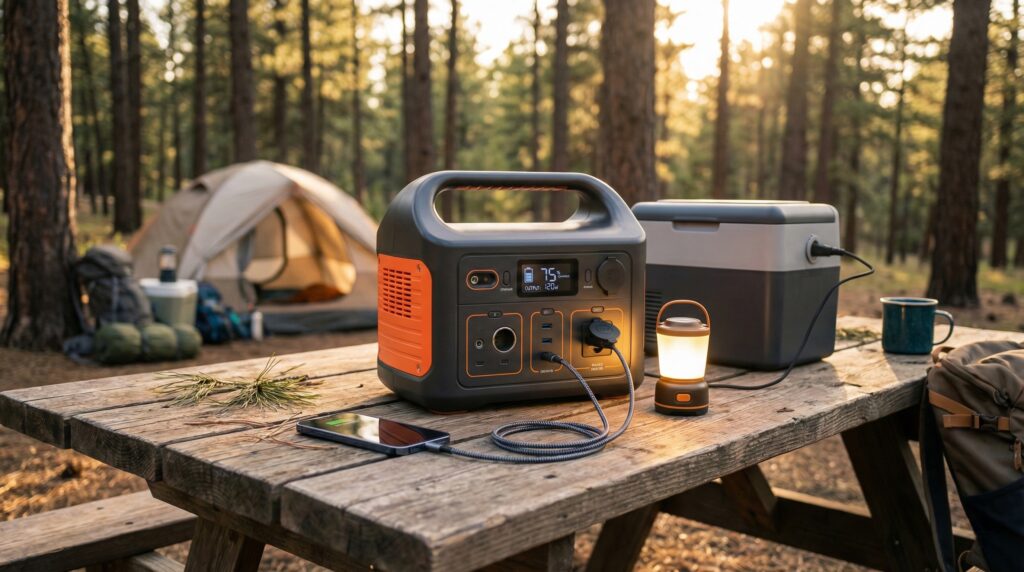
Best for: Budget shoppers who want a small, reputable power station for light-duty use like charging phones, running LED lights, and keeping small electronics going during a short outage or a weekend camping trip.
The Good
- Lowest-priced verified Jackery station in this roundup, which is a big deal if you’re trying to stay in the “true budget” tier.
- Well-known, established brand in portable power — that matters when you’re counting on warranty support and replacement cables down the road.
- Good fit for small loads (phones, lights, basic camping electronics) where you’re mostly using USB outputs rather than running energy-hungry AC appliances.
- Simple, approachable choice for first-time buyers who don’t want to gamble on an unknown battery brand for indoor outage use.
The Bad
- If your goal is running higher-watt devices (space heaters, kettles, microwave, many power tools), this “small station” class typically isn’t the right fit.
- Budget-friendly models like this can feel limiting if you need lots of AC outlets or want fast recharging from larger solar panels.
Our Take: If you mainly need a dependable, lower-cost power station for the basics during a 12–24 hour outage or a simple car-camping weekend, the Explorer 300D is the budget-safe pick — just be honest about your watt-hours and don’t expect it to act like a full home backup.
AC180
Best for: A step-up “budget” station for running higher-demand gear (like CPAP use overnight, or heavier campsite loads) during a 1–2 day outage or off-grid weekend.
The Good
- Mid-budget tier option that’s positioned for higher-demand devices than the smallest entry-level stations.
- Bluetti is frequently cited for value in portable power, especially when you want more capability without jumping to the most expensive classes.
- Useful upgrade path if you tried a small station and realized you need more output headroom.
- Practical for scenarios where you need reliable AC power rather than “USB-only” charging.
The Bad
- Costs meaningfully more than tiny budget stations, so it’s only “budget” in the context of higher-output power stations (not the sub-$300 crowd).
- If you’re only charging phones and a laptop, you may be paying for inverter capacity you won’t use.
“With enough power to run a CPAP for 8 to 10 hours, this small power station will let you sleep through the night even when the power’s out.” — unknown discussion
Price: $410 – $480
Our Take: If your budget can stretch and you want something that feels less cramped for real-world AC usage (especially overnight medical-device-style loads), the AC180 is the more comfortable “buy once” choice for a 48-hour outage plan.
FAQ
How many watt-hours do I need for a weekend trip or a short outage?
Make a quick list of what you’ll actually power, then do watts × hours = watt-hours (Wh). For example: a 10W LED light for 6 hours is 60Wh; a 60W laptop for 2 hours is 120Wh; a 5W router for 10 hours is 50Wh. Add those up for a daily total, then buy a station that covers that number with about a 20–30% buffer for inverter losses (when using AC) and normal battery reserve.
What’s the difference between capacity (Wh) and inverter watts, and which matters more?
Capacity (Wh) is “how long” it can run things; inverter watts is “what” it can run on AC. If you’re powering lots of small devices for a long time, Wh matters more. If you’re trying to start or run a higher-watt AC appliance, inverter continuous watts (and surge) is the limiting factor. A useful mindset is the same one you’ll see in general backup-power planning from the U.S. Department of Energy: size to your loads first, then choose equipment that can safely deliver it.
Is LiFePO4 always better for budget buyers, or does NMC make more sense sometimes?
LiFePO4 is often a better long-term value if you’ll use the station frequently because it typically offers longer cycle life (more charge/discharge cycles before noticeable capacity drop), which can lower cost-per-use. NMC (also written NCM) can be lighter and sometimes cheaper up front at the same Wh, which can make sense if you only use it occasionally and care most about portability. For either chemistry, prioritize reputable safety engineering and clear documentation — and whenever possible, look for recognized safety testing/listing practices from organizations like UL Solutions.
Can a budget power station run a refrigerator, and how do I estimate runtime realistically?
Sometimes, but it depends on both inverter power (startup surge) and capacity (Wh). Fridges cycle on and off, so you estimate average watts over time (many small fridges average far less than their “running watts” because the compressor doesn’t run constantly). If you power the fridge via AC, plan for extra overhead from inverter losses. For a serious “keep food cold” plan, consider talking with an off-grid solar installer or licensed electrician about realistic fridge loads and whether a dedicated 12V fridge/cooler (run from DC) is a better match for a smaller budget station.
What solar panel size works with budget models, and what input specs actually need to match?
Solar “works” only when the panel’s voltage/current stay within the power station’s solar input limits (voltage range, max watts, and connector type). Budget stations often have lower max solar input, which can bottleneck charging even if you buy a larger panel. Before buying a panel, confirm the station supports solar charging and that the panel’s output is compatible — otherwise you can end up with very slow charging or no charging at all.
What warranty and support signals should I look for to avoid getting stuck with a dead unit?
Look for a clearly stated warranty term, an established service channel (not just a marketplace message form), and readily available replacement accessories (AC charger, car charger, DC cords). In budget categories, support is part of the value — weak warranty handling can erase the money you saved by buying the cheapest spec sheet.
What are the biggest safety rules for using a portable power station indoors?
Don’t block ventilation, don’t charge on soft/flammable surfaces, and use only the manufacturer-recommended chargers and cables. General lithium battery safety guidance from the National Fire Protection Association (NFPA) also aligns with common-sense practices: keep damaged batteries out of service, avoid heat buildup, and treat charging as an “active” process you should monitor — especially with budget electronics.
Looking for these on Amazon? Browse best budget portable power station on Amazon →
Bottom Line
For most shoppers looking for a budget portable power station for light-duty needs, the Jackery Explorer 300D is the safest overall value bet because it keeps things simple and sticks with a widely recognized brand in this category. If you need more real-world AC capability (like CPAP-style overnight use), stepping up to the Bluetti AC180 can be worth the extra cost — but only if you’ll actually use that added output.
Affiliate disclosure: Some of the links in this article are affiliate links. We may earn a commission if you purchase through them.