
TL;DR
If you want a portable power station you can realistically keep topped up with solar, prioritize solar input specs (max watts and PV voltage range) and inverter output before you obsess over the biggest advertised Wh number. For most people, the sweet spot is a ~1,000Wh-class unit that’s easy to move, charges quickly on AC, and can take at least a couple hundred watts of solar without weird connector headaches.
Top Recommended Portable Power Stations
| Product | Best For | Price | Pros/Cons | Visit |
|---|---|---|---|---|
| Jackery Explorer 1000 v2 Portable Power Station, 2024 New, | General-purpose camping + outage-ready backup | Check price on Amazon | Strong everyday power in a popular ecosystem; plan for less usable AC energy than rated Wh | Visit Amazon |
| AC180 | Value-focused buyers who prefer buying direct | $410 – $480 | Often cross-shopped for value and solar use; buyer-feedback signal is thinner than Amazon-heavy picks | Visit Bluetti |
Top Pick: Best Overall Portable Power Stations
Jackery Explorer 1000 v2 Portable Power Station, 2024 New,
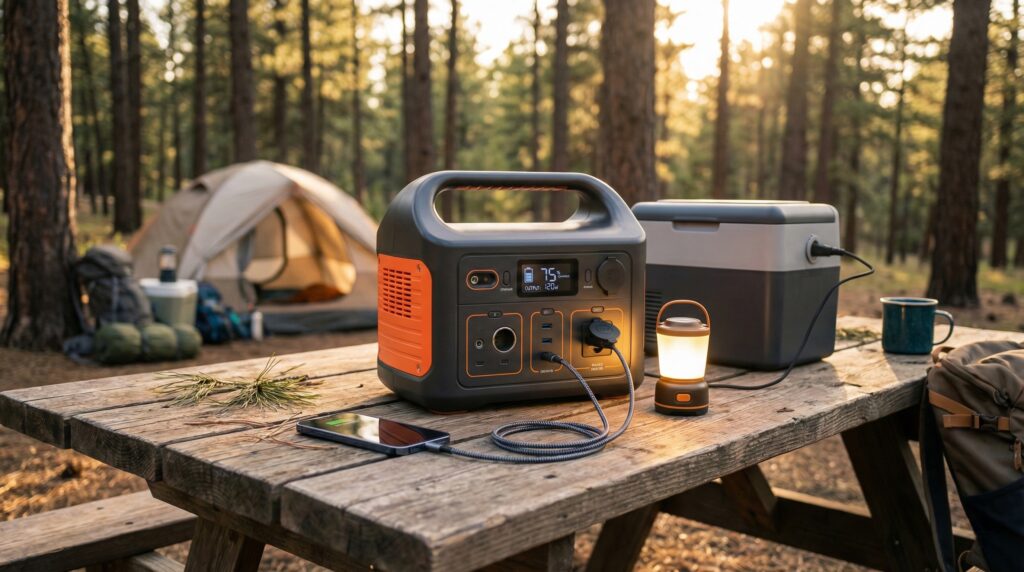
Best for: A 2–3 day car-camping trip, van weekends, or a 12–24 hour outage where you want to keep essentials going (phones, laptops, lights, router, and a fridge for a stretch) without hauling a giant “whole-home” unit.
The Good
- Strong, flexible “do-most-things” sizing for typical off-grid and emergency kits — enough headroom for multiple small devices at once and intermittent appliance use (manufacturer specs vary by configuration).
- Part of a widely used Jackery ecosystem, which can make it easier to find compatible accessories and pre-matched solar panels/cables.
- Good fit when you care about inverter capability as much as battery size (continuous/surge ratings are what decide whether motors and compressors will start reliably).
- Practical for solar day-use: you can plan around topping off during daylight and using stored energy at night, assuming you match panel voltage/connector requirements.
- Solid buyer sentiment for basic reliability in real use, including refurbished purchases.
The Bad
- Like most power stations, you shouldn’t expect 100% of the rated watt-hours to come out of the AC outlets — inverter and conversion losses reduce usable AC energy.
- Solar performance depends heavily on the unit’s supported PV voltage range and the panel/cable you use; mixing third-party panels can require adapters.
- Not the right tool for sustained high-heat loads (space heaters, kettles, toasters) — those can drain a ~1,000Wh class station fast even if the inverter can briefly handle them.
4.5/5 across 96 Amazon reviews
“I bought this as a refurbished item. It came out of the in perfect/new condition. I ran it through the drills and it performs perfectly. All of the ports work; the APP provides complete hands off management of the device – except for one thing. You cannot power this device on from the APP. I was going to place this device in the bottom of a cabinet in my…” — Verified Amazon buyer (5 stars)
“I have had several Jackery units which I have found very useful in a variety of situations, especially since they started being able to connect with wifi and the Jackery app. But what quickly became apparent for my seasonal home in a rural area with semi-frequent power outages, is that if my Jackery loses its wifi connection for any reason, it will not…” — Verified Amazon buyer (4 stars)
“We had a power outage for 18 hours and I wasn’t worried at all. Jackery 1000 powered my fridge for 12 hours.” — r/preppers discussion
Our Take: If you want one “grab-and-go” power station that can work with solar for camping and also reduce stress during typical short outages, this is the most broadly sensible pick in this small shortlist.
AC180
Best for: A weekend cabin, tailgates, or a basic home-backup tote where you want a straightforward solar-generator style setup and you’re comfortable buying direct from the brand rather than relying on Amazon review volume.
The Good
- A commonly cross-shopped model for value in the “portable solar generator” category, especially for buyers comparing output-per-dollar.
- Brand-direct availability can be a plus if you prefer warranty/service handled directly and want to shop official bundles.
- Relevant choice for solar recharging setups where input specs and cable/connector planning matter as much as battery capacity.
- Works well for “daytime solar in, nighttime power out” routines when paired with compatible panels and correctly rated wiring.
The Bad
- We have less buyer-review detail to lean on here than with Amazon-heavy products, so you should be more diligent about reading current customer reviews and return terms.
- As with any brand ecosystem, confirm connector type and solar input limits before assuming your existing panels will plug in without extra cabling.
- Not a whole-home solution by itself — high-watt 240V loads and central HVAC are outside the realistic scope of this class.
Our Take: If you’re shopping for value and want a direct-purchase option that’s still aimed at solar-friendly use, this is a reasonable alternative — just do a closer spec-and-compatibility check before ordering.
FAQ
How do I estimate runtime from watt-hours (Wh)?
Take your device’s average watts and divide the power station’s usable watt-hours by that number to get hours. Because inverter and conversion losses reduce AC output, many buyers plan on roughly ~75%–90% usable energy from the rated Wh for AC use (DC outputs can be closer), then add margin for cold weather, aging, and surge events.
Why is usable AC energy lower than the rated capacity?
The rated Wh is stored in the battery, but when you use AC outlets the station must run power through an inverter and other conversion electronics. Heat and conversion losses mean you’ll get less energy out than the nameplate rating, which is normal — it’s why we recommend sizing up if you’re trying to run a fridge overnight or cover a longer outage window.
What solar panel wattage do I need for a 1,000Wh power station?
A practical starting point is 200W–400W of panels for a ~1,000Wh-class station if you want meaningful daytime refills, assuming decent sun and correct panel angle. Real-world panel output is often below nameplate due to heat, sun angle, shading, and clouds; tools like the NREL PVWatts Calculator can help you sanity-check how many watt-hours you might harvest in your location.
What solar input specs matter most on a power station?
Look for (1) max solar input watts (how much solar it can accept), (2) the PV voltage window (so your panel’s Vmp/Voc are compatible, especially if you series-wire panels), and (3) connector type (so you’re not stuck with the wrong plug). If you’re unsure about wiring or series/parallel setups, an off-grid solar installer can help prevent expensive compatibility mistakes.
Can I use third-party solar panels with a portable power station?
Usually yes, as long as the panel voltage is within the station’s allowed PV input range and you have the right connector or adapter (many third-party panels use MC4-style connectors). The two big “gotchas” are (a) series wiring pushing voltage too high and (b) proprietary input connectors that require a specific cable.
Can I run devices while charging from solar (passthrough charging)?
Many units support using outlets while charging, but it’s not universal and sometimes it’s limited by heat or by how the internal power path is designed. Check the manufacturer guidance, keep vents clear, and monitor input/output watts on the display — running heavy loads while charging can increase thermal stress and trigger throttling or shutdown.
What safety certifications should I look for?
At a minimum, we like to see credible safety testing and compliance markings and prefer stations that are listed/certified to relevant standards used for portable power packs (often referenced as UL 2743). You can learn more about UL’s role in product safety at UL Solutions. For outage planning, follow basic emergency guidance (charging placement, ventilation, cord safety) consistent with FEMA-style preparedness checklists.
Bottom Line
If you’re buying one portable power station to pair with solar for camping and short outages, the Jackery Explorer 1000 v2 is the most balanced option in this shortlist thanks to its broad everyday usability and strong buyer feedback. If you prefer buying direct and want a value-leaning alternative, the Bluetti AC180 is worth a look — just double-check solar input specs and connector compatibility before you commit.
Affiliate disclosure: Some of the links in this article are affiliate links. We may earn a commission if you purchase through them.