
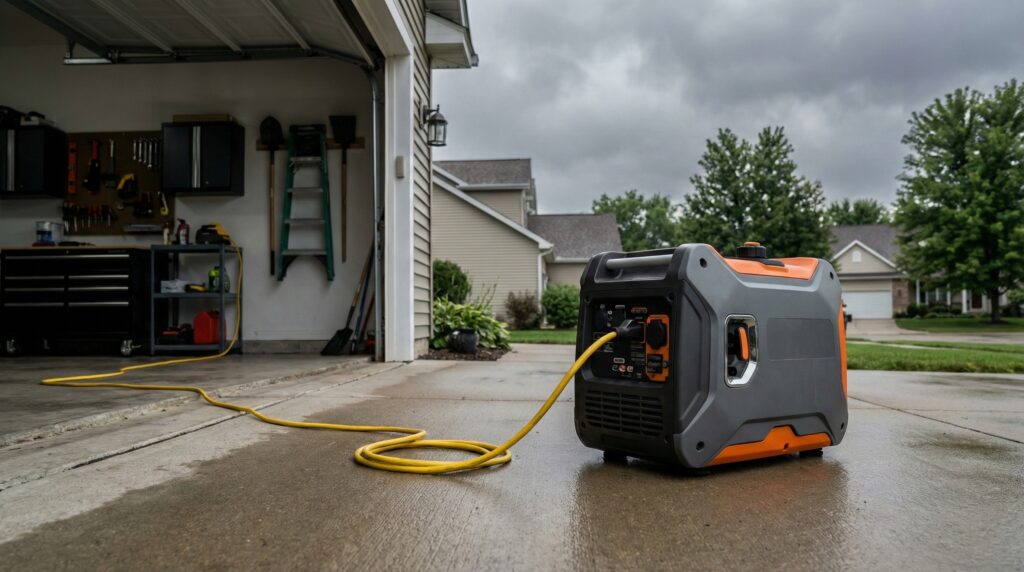
TL;DR
If you’re shopping for an ultra quiet generator, you’re almost always looking for an inverter generator with a clearly stated noise spec (dB at a specific distance and load) and enough wattage headroom that it doesn’t need to rev hard. In practice, “quiet” is as much about correct sizing and smart placement as it is about the published dB number.
Among mainstream “quiet-first” options, Honda’s EU-series is the reference point many shoppers start with — just make sure you’re comparing apples-to-apples on noise specs and planning for safe outdoor-only operation.
What Ultra Quiet Inverter Generators Actually Are
An “ultra quiet generator” isn’t a formal technical category — it’s a shopping term that usually points to inverter generators designed to reduce noise through a mix of engine control, sound-dampening design, and (often) smaller engines running at lower RPM under light loads.
Here’s the practical formula we use when thinking about “ultra quiet”:
Quiet in the real world = (published dB rating at a stated distance and load) + (inverter/eco throttle behavior) + (not running near max output) + (smart placement).
The key is that decibel ratings can be misleading unless the manufacturer tells you how they measured it. A noise number only means something when it includes:
- Distance (commonly 7 meters / 23 feet)
- Load condition (commonly 25% load; sometimes “rated load”)
If one listing says “52 dB” but doesn’t tell you the distance or load, treat it like marketing — not a spec you can reliably compare. Two generators with the same dB rating can sound different if one was measured closer, in a different mode, or at a higher load.
Inverter generators are usually the quietest because they can vary engine speed with demand. When you’re only charging batteries, running a few lights, or powering small electronics, an inverter model can idle down and stay relatively calm. But the same unit will get noticeably louder when you ask for more — like a microwave, a fridge compressor start, or power tools — because noise rises with load.
Also: “quiet” isn’t just the generator. Sound reflects off concrete pads, walls, fences, and vehicles. Put a generator too close to a hard surface and it can seem louder than the spec suggests. Put it on soft ground and aim the exhaust away from people, and the same unit often feels substantially more livable.
Finally, remember that “quiet” can’t come at the expense of safety. Gas generators produce carbon monoxide, so they must be operated outdoors and away from openings. For generator CO safety basics, see CDC guidance on generator-related carbon monoxide poisoning prevention.
Who Ultra Quiet Inverter Generators Fits Best
Ultra quiet inverter generators are a strong fit when noise is a primary constraint — not just a nice-to-have. Typical good-fit scenarios include:
- Campgrounds and tailgates where you want power without upsetting neighbors (and where rules may restrict generator hours and noise).
- RV and van users who need modest power for battery charging, lights, fans, and occasional appliance use — especially when “eco” mode can keep RPM low.
- Home backup for essentials when you prioritize a more neighbor-friendly sound profile (fridge/freezer, router, some lights), and you can place the unit at a safe distance outdoors.
- Anyone with sensitive sleepers (kids, light sleepers, or simply people who hate engine noise) who still needs a gas option.
These generators tend to shine when your typical load is light to moderate most of the time — because that’s where inverter throttling can keep the engine from racing.
One more “fit” note: if you’re trying to stay ultra quiet, plan your wattage so the generator isn’t constantly fighting for its life. A little headroom often means a lot less noise because the engine doesn’t have to rev as high to maintain stable output.
If you’re considering Honda specifically, keep in mind that buyer sentiment can be mixed at the brand level depending on what people are reviewing (shopping experience vs. the generator itself). In Trustpilot feedback associated with Honda’s main domain, one customer wrote: “No customer service what so ever. I will never buy another Honda.” — Trustpilot reviewer, 1.0 stars.
Who Should Skip Ultra Quiet Inverter Generators
Ultra quiet inverter generators aren’t the right answer for everyone. You should consider skipping (or at least rethinking) this category if:
- You need high continuous wattage (jobsite tools all day, big resistive heaters, large RV A/C without careful planning). Bigger output generally means bigger engine — and more noise.
- You’re shopping solely on the lowest dB number without matching distance/load conditions. That’s an easy way to buy the “quiet” unit that’s loud in your use case.
- You expect silent operation. “Ultra quiet” still means “engine running.” If you need near-silent, consider a battery power station (with solar or charging strategy) instead of gasoline.
- You can’t place it safely outdoors (tight urban lots, apartment patios with restrictions, enclosed porches, garages). CO risk is real, and CO shutoff features are a backup — not permission to run it near doors/windows or inside.
Also be honest about your load profile. If your “essentials” include frequent high-draw events (microwave + toaster + coffee maker, or repeated compressor starts), even a quiet inverter generator may spend a lot of time at higher RPM — meaning it won’t feel “ultra quiet” in practice.
Finally, brand support experiences can matter. In Trustpilot feedback tied to Honda’s main domain, one user stated: “Worst experience ever.” — Trustpilot reviewer, 1.0 stars.
Price and Value
Price in the “ultra quiet inverter generator” world is heavily driven by three things: (1) wattage/output class, (2) brand reputation and long-term parts/service network, and (3) whether the generator is positioned as a premium “quiet” model with additional sound-dampening.
In general, you’ll pay more for:
- Higher usable output (especially if you want it to stay relatively quiet while powering more than small loads).
- Better enclosure design that reduces mechanical noise and vibration.
- Higher perceived reliability and a broader dealer/service footprint.
For the Honda EU3000 Inverter Generator specifically, we don’t have verified pricing in the provided product data. Practically, you’ll want to comparison shop across authorized dealers and consider total value: warranty support, parts availability, and whether the generator’s output actually matches what you’re trying to power without running near max.
One often-overlooked value factor: if a generator is undersized for your needs, you may “save” upfront but pay for it in annoyance (noise from higher RPM), performance issues (overload trips), and higher stress on the machine.
Also check emissions compliance for your location. Federal requirements are governed by the EPA, and some states require additional compliance (like CARB). If you want background on emissions rules that can affect what’s available and legal to sell/use, see the U.S. EPA guidance on regulations for nonroad engines and vehicles.
Common Mistakes When Trying Ultra Quiet Inverter Generators
Most “my generator isn’t quiet” problems come down to setup and expectations — not necessarily a bad product. Here are the mistakes we see most often in customer reviews and owner reports:
- Comparing dB ratings that weren’t measured the same way. If the listing doesn’t specify distance and load, you can’t meaningfully compare it.
- Buying too little wattage, then running near max output constantly. Even a quiet inverter generator will get louder when it has to rev hard to keep up.
- Placing the generator on concrete or next to a wall. Hard surfaces reflect sound and transmit vibration, making it seem louder than it would on dirt/grass and away from obstacles.
- Pointing the loud side/exhaust toward people. Orientation matters; use distance and direction to your advantage.
- Treating CO shutoff as “safe to run closer”. It’s not. The generator still needs to be outdoors and away from openings.
A non-obvious one: people sometimes assume “quiet” means “quiet at all loads.” In reality, the quietest experience typically happens at low load/eco mode. If your lifestyle is mostly battery charging and lights, you’ll be happier than if you’re hammering it with big loads for hours.
And if you’re planning home backup, don’t improvise your electrical connection. Backfeeding a home through a receptacle is dangerous; talk to a licensed electrician about a transfer switch or interlock setup.
Brand-level shopping mistakes can also show up as frustration with support channels. In Trustpilot feedback tied to Honda’s main domain, one user wrote: “No response from Honda.” — Trustpilot reviewer, 1.0 stars.
FAQ
What dB rating counts as “ultra quiet,” and what distance should I compare?
There’s no universal cutoff, but “ultra quiet” listings usually highlight measurements in the low-to-mid 50s dB range — often measured around 23 feet (7 meters) and commonly at 25% load. The critical part is comparing only numbers measured at the same distance and similar load conditions; otherwise you’re not comparing like-for-like.
Why are inverter generators usually quieter than conventional generators?
Inverter generators can vary engine speed based on demand. When your load is light, they can idle down, reducing noise and fuel use. Conventional open-frame units often run at a more constant high RPM, which tends to be louder.
How much wattage headroom do I need to keep a generator quieter in real use?
Enough that your typical running load doesn’t force the generator to live near its limits. A practical approach is: add up your normal running watts, then include extra headroom for surge/starting watts (especially fridges, freezers, pumps, and some RV appliances). If you’re not sure, an off-grid solar installer or licensed electrician can help you size to your actual loads so the generator isn’t constantly revving high.
Will a generator seem louder at night or in a campground?
Often, yes. Ambient noise drops at night, and sound can carry in open areas. Also, hard surfaces and nearby walls/vehicles can reflect sound toward you. Good placement (soft ground, more distance, exhaust aimed away, avoid corners/walls) can make a bigger difference than people expect.
Do CO shutoff features make it safe to run a generator in a garage or near a window?
No. CO shutoff is a helpful backup feature, but it does not make indoor or enclosed/partially enclosed operation safe. Generators should be operated outdoors and kept well away from doors, windows, and vents. For safety guidance, follow CDC generator carbon monoxide prevention recommendations.
Do I need EPA or CARB compliance for an ultra quiet generator?
You should confirm the generator meets EPA requirements, and if you’re in a state that requires CARB compliance, you’ll need that too. Compliance can affect what models are legal to sell/use and what dealers can stock. For regulatory background, see the U.S. EPA overview of regulations for nonroad engines and vehicles.
What else can I do to reduce generator noise besides buying a “quiet” model?
Placement and load management matter a lot: run in eco mode when possible, avoid operating near max output, place it on dirt/grass rather than concrete, increase distance from people, and avoid setting it near walls or in corners that reflect sound. Always prioritize safe outdoor placement and ventilation.
Looking for these on Amazon? Browse ultra quiet generator on Amazon →
Bottom Line
An “ultra quiet generator” is usually an inverter generator that’s measured and marketed for lower noise — especially at light loads — plus the right setup to keep sound under control. Focus on a documented noise spec (distance + load), size it with headroom so it won’t rev constantly, and follow outdoor-only safety practices.
If you want a well-known quiet-oriented line, Honda’s EU-series is a common starting point — just be sure your expectations match your wattage needs and your ability to place the generator safely away from people and openings.
Affiliate disclosure: Some of the links in this article are affiliate links. We may earn a commission if you purchase through them.