
TL;DR
If you’re searching for a “diesel home generator,” what you usually want is a permanently installed standby diesel generator paired with an automatic transfer switch (ATS)—not a portable inverter generator. The best results come from sizing it with a licensed electrician (including 240V loads and HVAC starting surge), then planning your diesel storage and maintenance so you’re actually ready for a multi-day outage.
What Diesel Home Generator Actually Is
A true diesel home generator is typically a stationary standby generator: a permanently installed engine-generator set (genset) that’s hardwired into your home’s electrical system through an automatic transfer switch (ATS). When utility power fails, the ATS isolates your home from the grid (to prevent dangerous backfeed), signals the generator to start, and transfers your home (or selected circuits) onto generator power — usually within seconds.
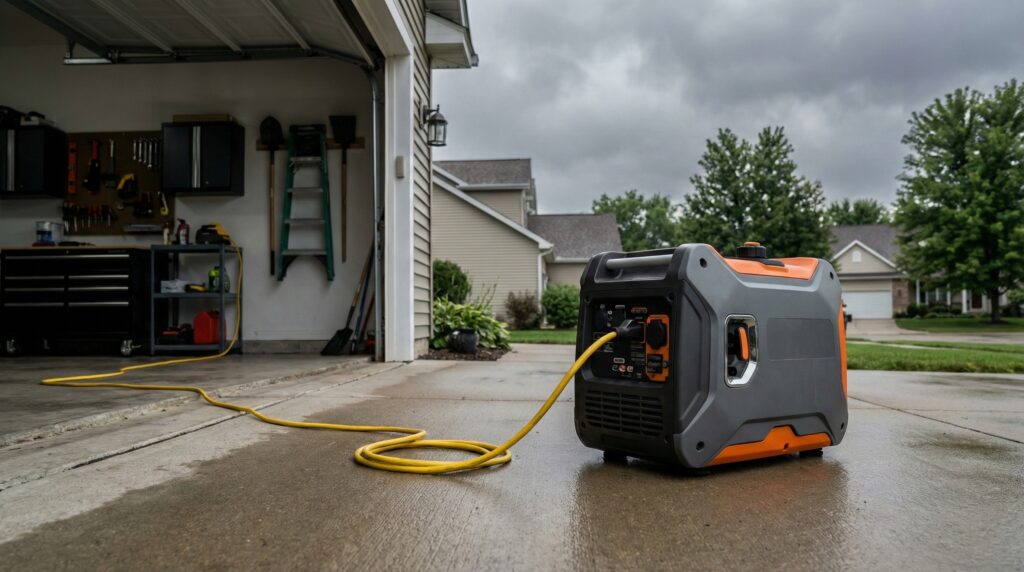
That’s very different from what many shoppers imagine when they see the word “generator” online. A portable inverter generator is designed to be moved, fueled by hand, started manually, and plugged into appliances (or into a home inlet) only when you set it up. It can work well for backup power, but it’s not the same experience as a standby system: no automatic start, no automatic switching, and it requires a safe, code-compliant connection method (transfer switch or interlock) and safe outdoor placement every time.
Most homes in the U.S. need 120/240V split-phase power for full functionality. A “home generator” setup often needs to support 240V loads like well pumps, dryers, ranges, central AC/heat pumps, and some EV chargers. That’s one reason diesel standby units are popular for larger homes and rural properties: they’re commonly available in higher kW ratings and are built for long runtimes.
Many residential-capable diesel standby units run at 1800 RPM (common in liquid-cooled designs), which often improves comfort and longevity compared with small, high-RPM portables — though enclosure design, placement, and load also matter a lot for perceived noise.
Finally, because this is a fixed engine installation with fuel storage and electrical integration, you should expect permitting and inspections in many areas, plus ongoing maintenance. Industry standards like NFPA 110 are commonly referenced for standby power systems, and federal/state/local air rules can also apply to stationary engines (see U.S. EPA stationary engine guidance for the regulatory context).
Who Diesel Home Generator Fits Best
Diesel standby generators tend to fit best when you’re prioritizing long-duration resilience, higher whole-home loads, and automatic backup—and you’re willing to handle the up-front cost and installation complexity.
- Homes with frequent or extended outages (rural lines, hurricane zones, winter storm areas) where multi-day runtime is a realistic need.
- Properties with critical 240V loads like well pumps, septic pumps, central AC/heat pumps, or large shop loads that you want to keep running without constant manual circuit juggling.
- Owners who want “hands-off” backup: automatic start, automatic switching, scheduled exercise cycles, and a system that a technician can service on a known schedule.
- People who can store fuel on-site (or have a permitted connection to an existing tank where allowed) so refueling during disruptions is realistic.
The most satisfied owners are usually the ones who treat diesel backup as a system: correct generator sizing, correct ATS selection, correct placement/clearances, and a fuel plan that matches their outage profile.
Important caveat about buyer quotes: This assignment didn’t include a product list or any verbatim attributed quotes from customer reviews to pull from. Buyer quotes are therefore not available to reproduce here without fabricating them.
Customer reviews caveat: no verbatim quote available from public reviews.
Who Should Skip Diesel Home Generator
A diesel standby setup is not the right fit for everyone — especially if your real need is occasional, short outages or a lower-cost backup plan.
- You can’t (or don’t want to) install an ATS/interlock and get permits. A standby generator is fundamentally an electrical integration project. If you want “buy it and run a cord,” you’re shopping in the portable category.
- You don’t need automatic operation. If you’re fine rolling out a portable generator a few times a year, you may not get the return on a full diesel standby system.
- Fuel storage is a non-starter. Diesel is less volatile than gasoline, but it still requires approved storage, spill/containment planning, and local code compliance. If you can’t store enough fuel, long-runtime diesel backup loses its main advantage.
- Noise/placement limitations. Even 1800 RPM units make real sound and exhaust. Small lots, strict HOA rules, or tight setback requirements can make installation difficult.
- You primarily need clean power for sensitive electronics in a small footprint. Many homeowners are actually better served by a battery/inverter system for silent short outages, or an inverter generator for portable use — depending on loads and duration.
Critical feedback caveat: No product-specific critical quote was provided in the input, so we can’t include a verbatim negative owner quote without making one up.
Customer reviews caveat: no verbatim quote available from public reviews.
Price and Value
Pricing for a diesel home generator setup is best thought of in three buckets:
- Generator hardware: Diesel standby units that can realistically cover whole-home or large managed loads are a significant purchase. (Exact price varies massively by kW rating, enclosure, controller features, and brand/dealer network.)
- Electrical integration: The ATS is not optional for an automatic standby experience, and installation labor can be substantial. Expect additional costs for conductors, breakers, service upgrades (sometimes), and load management modules if you’re controlling HVAC or other big loads.
- Site work + fuel considerations: A stable base/pad, clearances, and exhaust routing matter. Fuel storage (tank, plumbing, compliance) can swing the total cost meaningfully.
Value tends to be strongest when:
- You have a clear, repeatable need (multi-day outages, medical needs, well water dependence, home business uptime).
- You size the system correctly so you’re not paying for capacity you can’t practically use (or undersizing and fighting nuisance shutdowns/voltage dips).
- You have a realistic diesel plan (hours of runtime you want, how you’ll refuel during a storm, and how you’ll keep stored fuel in good condition).
One practical tip: before you commit to diesel standby, ask a licensed electrician or off-grid solar installer to help you decide whether you want whole-home coverage or a managed “critical loads” approach. Many homes can get excellent outage resilience with a smaller generator plus load management — especially when central AC starting surge is the limiting factor.
Common Mistakes When Trying Diesel Home Generator
Most “diesel home generator” problems aren’t because diesel is a bad fuel — they happen because buyers treat it like a simple appliance instead of a planned backup system. Here are the most common pitfalls:
- Skipping a real load calculation. Running watts are only half the story. Motor loads (HVAC compressors, well pumps) can have high starting current that will stall a generator or cause major voltage drop if the system isn’t sized and managed correctly.
- Forgetting 240V loads. Many homeowners add up a few 120V circuits and assume they’re done, then realize the well pump, dryer, range, or central HVAC is the actual priority.
- Underplanning fuel. Diesel standby shines in long outages — if you can actually run it long. Your runtime is only as good as your tank and refueling plan. A rough planning range often discussed for whole-home-capable sizes is around ~1–2+ gallons per hour depending on load and generator size, but your real burn rate depends on the unit and what you’re powering.
- Bad placement for noise and exhaust. Even with a quiet enclosure, exhaust direction, setbacks, and proximity to bedrooms matter. Always follow manufacturer clearance rules and keep exhaust away from openings.
- Unsafe assumptions about CO. Carbon monoxide can be deadly. While standby units live outdoors, placement still matters — exhaust can drift toward doors, windows, soffit vents, and neighboring structures. Review OSHA carbon monoxide guidance and keep CO alarms functioning in the home.
- Neglecting maintenance readiness. Standby generators depend on a starting battery, clean filters, and periodic service. If you don’t keep oil/filters on hand and don’t test the system, the first outage is a bad time to learn about a dead battery or clogged fuel filter.
- Using the wrong transfer equipment. The ATS must be correctly rated and compatible with the generator controls. Improper transfer equipment is not just inconvenient — it’s a safety issue due to backfeed risk.
Buyer quote caveat: No verbatim customer review quote was provided in the input, so we cannot include an owner-reported “mistake” quote without fabricating it.
Customer reviews caveat: no verbatim quote available from public reviews.
FAQ
Do I need a standby diesel generator, or will a portable generator work for my home?
If you want automatic backup (power goes out and the house comes back on without you being home), you’re in standby territory: generator + ATS + permitted installation. If you’re okay with manual setup — rolling out a generator, placing it safely outside, fueling it, and connecting via a transfer switch/interlock or extension cords — a portable generator can be a much cheaper solution for occasional outages. The deciding factors are usually: how often outages happen, how long they last, and whether you must run 240V loads like well pumps or central HVAC.
How do I size a diesel generator for central AC and other 240V appliances?
You need to account for both running load and starting surge (locked-rotor amps for compressors and pumps). In many homes, central AC/heat pump starting current is the limiting factor, not the steady-state watts. A licensed electrician can do a load calculation and help you decide between (1) sizing the generator large enough for worst-case starts, or (2) using load management/soft-start solutions so a smaller generator can still run HVAC reliably.
How much diesel will a whole-home generator use per hour?
It depends heavily on generator size and how hard you load it. For planning purposes, many homeowners and installers budget in the ballpark of ~1–2+ gallons per hour for whole-home-capable standby systems at meaningful load, but you should rely on the manufacturer’s fuel consumption charts for your exact model and operating percentage. Once you have a realistic gallons-per-hour estimate, you can size fuel storage for the number of hours or days you want to cover.
How big should my diesel tank be for outage backup?
Start with your runtime target (for example, 48–72 hours) and multiply by a realistic burn rate at your expected load, then add margin for refueling delays. Also factor in local rules about fuel storage and tank type — requirements vary by area. For any permanent tank or plumbing work, involve a qualified installer and follow local fire/electrical codes.
Are 1800 RPM diesel generators really quieter than 3600 RPM units?
Often, yes — lower engine speed generally reduces noise and wear, all else equal. But “quieter” in real life also depends on enclosure design, muffling, vibration isolation, placement relative to your home and neighbors, and the electrical load (generators can sound different under heavier load). Compare published sound ratings carefully and confirm the distance and operating conditions used for the rating.
What permits and equipment are required to connect a generator to a house?
For a standby generator, you typically need an automatic transfer switch and a permitted, inspected installation. The transfer equipment must isolate your home from the utility during generator operation to prevent backfeed. Many jurisdictions reference standards such as NFPA 110 for emergency and standby power system requirements, and stationary engine rules can apply as well (see the U.S. EPA stationary engine guidance for an overview). Always follow local AHJ (Authority Having Jurisdiction) requirements.
How often does a standby diesel generator need maintenance?
Maintenance intervals vary by model and hours of operation, but generally expect periodic oil and filter changes, air filter checks, and attention to the fuel system (filtration and water/contamination management). Standby units also rely on a starting battery and exercise cycles. If you’re not comfortable doing scheduled service yourself, plan for a service contract so the unit is ready when you actually need it.
Looking for these on Amazon? Browse diesel home generator on Amazon →
Bottom Line
A “diesel home generator” is usually best understood as a standby diesel generator + ATS—a permanently installed backup power system designed for automatic, longer-duration outages. If you size it correctly (including 240V loads and starting surge), plan fuel storage realistically, and install it to code with a licensed electrician, diesel can be a strong solution for serious whole-home backup.
Affiliate disclosure: Some of the links in this article are affiliate links. We may earn a commission if you purchase through them.