
TL;DR
The best alternative to an EcoFlow RIVER is not always another same-size power station. For many buyers, the smarter move is choosing a unit that better matches actual wattage needs, battery chemistry, and charging options, even if that means going a little bigger.
If you mainly want longer life and better long-term value, prioritize LiFePO4, practical wall and car charging, and enough continuous AC output for your real devices. If your list includes mini-fridges, coffee makers, or other heavier loads, a step up into a larger class often makes more sense than forcing a RIVER-size replacement.
What EcoFlow RIVER Alternatives Actually Is
An EcoFlow RIVER alternative is any portable power station that can fill the same role as a RIVER-class unit, or solve the same problem better. That sounds simple, but in practice shoppers often get stuck comparing watt-hours alone when they should be comparing the whole package: battery size, inverter output, charging speed, charging methods, portability, and support quality.
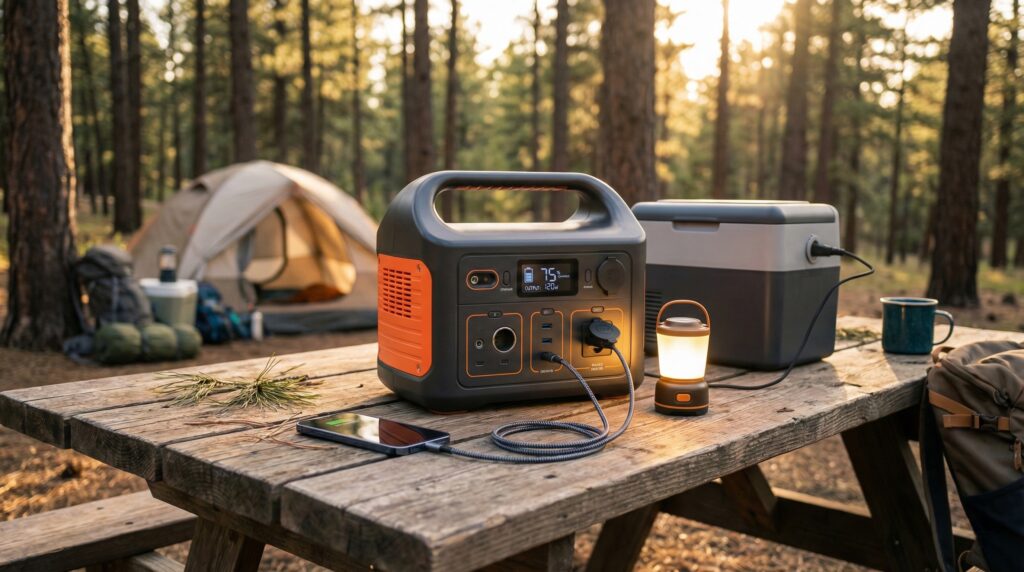
Most people searching for a RIVER alternative are trying to cover one of a few jobs. They want a compact backup for phones, laptops, routers, and lights. They want something for camping, road trips, van weekends, or working remotely. Or they want a unit that can keep a TV, game console, CPAP, or small cooler running for a limited stretch during an outage. In each case, the right replacement depends less on brand loyalty and more on what the station can actually run comfortably.
That is why a true alternative can take two forms. One is a like-for-like model: similar size, similar portability, similar intended use. The other is a better-fit model: maybe a bit larger, maybe heavier, but clearly better for your devices and runtime expectations. If your current shortlist includes heating appliances, kitchen gear, or anything with meaningful startup surge, a larger platform may be the honest answer.
Battery chemistry is a major dividing line here. Research and industry guidance suggest LiFePO4 is often the better choice for buyers who expect regular use over years, while older lithium-ion designs can still make sense when lower weight matters more. Either way, safety matters. We strongly recommend checking for recognized third-party testing and following basic storage and charging precautions, including guidance from NFPA lithium-ion battery safety.
Solar and vehicle charging also matter more than many first-time buyers expect. A station that looks great on paper can become annoying if car charging is too slow, solar input is too limited, or accessories are proprietary. If solar backup is part of your plan, it helps to review DOE solar PV basics and use realistic production estimates instead of assuming a panel’s advertised watts will show up all day.
Who EcoFlow RIVER Alternatives Fits Best
EcoFlow RIVER alternatives fit buyers who are open to solving the power problem first and the brand question second. That includes people who are not attached to a specific name, but do care about runtime, durability, and ease of recharging.
They are especially well suited to a few groups:
- Apartment dwellers and outage planners who need to keep phones, modems, routers, lights, and a laptop going through short outages.
- Campers and road trippers who want a compact station for chargers, fans, camera batteries, and occasional AC use.
- Remote workers who need practical USB-C and laptop charging without carrying a giant battery box.
- Frequent users who should care about cycle life and may be better served by LiFePO4 chemistry.
- Shoppers outgrowing compact stations who have realized they need more AC output or more runtime than a RIVER-class model usually provides.
That last group is important. A lot of shoppers start by looking for a same-size swap, then realize their actual use case points them upward. If you regularly want to run a TV, networking gear, charge devices, and maybe cover a small appliance for a while, moving above the smallest class can be the better value. One owner put it plainly: “The Delta 2 (2 of them now!) have been a solid platform for me for camping.” — Owner using it for camping on r/Ecoflow_community
That kind of feedback lines up with what we see across this category: buyers are often happiest when they stop chasing a neat spec match and instead buy enough power for their real routine. Research from sources such as Battery University and broader testing guidance in the category suggest that long ownership tends to reward durable chemistry, sensible charging options, and enough inverter headroom.
These alternatives also fit buyers who plan to use solar occasionally, but with realistic expectations. Portable panels can help a lot, especially during longer trips or outages, but setup quality, sun angle, weather, and input limits all matter. If you are building around solar, NREL PVWatts solar calculator is a useful reality check for expected generation in actual conditions.
Who Should Skip EcoFlow RIVER Alternatives
Not everyone shopping this keyword should actually buy a RIVER-style alternative. Some should skip the whole class.
If your power plan centers on kettles, coffee makers, hot plates, space-heating tools, or hair tools, compact stations are often the wrong tool. Those loads can exceed what smaller inverters handle comfortably, even when the battery capacity looks decent. For those buyers, the better move is shopping by continuous wattage first, and accepting the extra size and weight that come with it.
You may also want to skip this category if you need whole-evening runtime for larger appliances or repeated outage support without frequent recharging. At that point, a larger backup platform is usually more realistic than trying to stretch a small station beyond its sweet spot.
Another reason to pause is charging setup. If you depend heavily on car charging, a lot of your real-world satisfaction will come down to how practical 12V charging actually is. Weak vehicle sockets, slow input rates, and long recharge windows can make an otherwise good power station frustrating to live with. The same goes for solar if your plan depends on high expectations from a small panel.
Support is another honest concern. Not all alternatives are equal once something goes wrong. Firmware issues, app quirks, accessory compatibility, and warranty handling can change the value equation quickly. One skeptical shopper said, “I was dead set in getting a delta 2 but as I continued to read a lot of people are having issues with the brand in general. The delta 2 was well regarded and had good reviews but now I’m having second thoughts” — Prospective buyer with doubts on r/Ecoflow_community
That quote is a good reminder that buying a power station is not just about the battery and outlets. It is also about confidence in ownership. If you are very sensitive to support risk, or if you need mission-critical backup for medical gear, a conversation with a licensed electrician or off-grid solar installer can be worth it before you buy.
Finally, skip this category if you are expecting indoor emergency power to behave like a gas generator. Portable battery stations are quieter and safer for indoor use than fuel-burning generators, but they are still limited by battery size and inverter output. And if you are comparing against a generator, remember that generators belong outdoors only, per basic CDC carbon monoxide safety guidance.
Price and Value
For value, the key question is not whether a RIVER alternative is cheap. It is whether it gives you enough usable performance for the money over the long haul.
Based on the available pricing here, a move up to the DELTA 3 Plus sits around $600 to $700. That puts it in the range where buyers are often deciding between a stronger mid-size unit and a smaller station with a lower sticker price. In many cases, paying more upfront for a larger class can be better value if it prevents underbuying.
We would frame value in four layers:
- Usable output value: A unit with enough AC wattage to run your devices is worth more than a cheaper one that constantly hits its ceiling.
- Battery life value: LiFePO4 often costs more initially, but it can make more sense for buyers who expect years of regular cycling.
- Recharge value: Fast wall charging, practical car charging, and workable solar input can matter as much as battery size.
- Ownership value: Warranty confidence, replacement accessories, and support responsiveness count.
This is why the “best deal” is often not the lowest-priced lookalike. If you only need a grab-and-go station for phones, tablets, and a laptop, staying small can absolutely be the smart buy. But if your use case has already expanded to TVs, consoles, coolers, CPAP use, or outage backup beyond a few hours, the better value is often in stepping up once rather than replacing a too-small unit later.
Also, do not ignore safety certification when assessing value. A recognized third-party certification from organizations such as UL Solutions can be more important than a flashy feature list. Evidence from safety agencies and consumer guidance consistently suggests that safe charging, proper ventilation, and using the correct input limits are basic parts of getting long-term value from any battery power station.
Common Mistakes When Trying EcoFlow RIVER Alternatives
The biggest mistake is buying by watt-hours alone. A battery number may look comparable, but that does not tell you whether the inverter can run your devices, whether the station charges in a practical amount of time, or whether the ports fit your routine.
Here are the most common errors we see buyers make:
- Ignoring continuous AC output: This is the classic problem with coffee makers, kettles, and some mini-fridges. Capacity is irrelevant if the inverter cannot handle the load.
- Overestimating runtime: Real-world losses, inverter overhead, and startup surges mean you should not expect label math to play out perfectly.
- Treating all solar charging as equal: Solar input limits, connector standards, and weather conditions make a huge difference.
- Assuming car charging will be fast enough: In practice, 12V charging can be much slower than people expect.
- Buying too small for future use: Many shoppers know they may later want to run more than phones and laptops, but still buy to the smallest current need.
- Skipping safety basics: Charging in poor ventilation, using the wrong solar input, or leaving the unit in excessive heat can shorten life or create risk.
One buyer quote captures the “buy for reality, not the brochure” lesson well: “The Delta 2 (2 of them now!) have been a solid platform for me for camping.” — Owner using it for camping on r/Ecoflow_community. That matters because camping use often reveals the practical details that spec-sheet shopping misses: carrying comfort, recharge convenience, and whether the unit actually covers the gear you brought.
Another common mistake is failing to distinguish between portable backup and appliance backup. If you want to power a router, phones, and a laptop, a compact station may be perfect. If you want to run kitchen gear or stretch through a long outage, you probably need a different class. Research and buyer reports both point to the same pattern: underbuying is common, especially when shoppers focus on battery size and not sustained wattage.
Solar setup mistakes are worth calling out too. Do not assume any panel will work well with any station. Use only charging inputs that match the published limits, and keep expectations grounded in actual sun conditions. For portable solar planning, NREL renewable energy research and the DOE’s plain-language solar guidance are better references than optimistic marketing numbers.
Finally, think about travel rules before treating a portable station like a carry-on battery. If you fly with spare lithium batteries or battery accessories, check FAA lithium battery transport rules ahead of time.
FAQ
What makes a good alternative to an EcoFlow RIVER?
A good alternative is one that matches your real job better, not just one with a similar battery number. Look at usable watt-hours, continuous AC output, battery chemistry, charge speed, car and solar input options, port selection, and how easy the unit is to carry and recharge.
Is LiFePO4 worth prioritizing over older lithium-ion designs?
Usually yes if you expect regular use over several years. Evidence from battery guidance and category testing suggests LiFePO4 generally offers better cycle life and durability, which can make it the better value for camping, van use, and repeated outage duty. If lowest weight matters more than long cycle life, another chemistry can still make sense.
Can a RIVER-size alternative run a mini-fridge, TV, or game console?
Often yes, but only if both the continuous AC output and the expected runtime fit the device. TVs, consoles, routers, and laptop chargers are often realistic loads for compact stations. Mini-fridges are trickier because startup surge and cycling behavior vary a lot, so check both inverter headroom and runtime expectations before buying.
Do I need to move up to a larger power station?
You probably do if your list includes kettles, coffee makers, hot plates, hair tools, or longer backup for multiple AC devices. Those use cases usually push buyers beyond the practical limits of a RIVER-class unit. A larger station is heavier and pricier, but it may be the more honest and cost-effective choice.
How important is charging speed?
Very important. Fast wall charging can make frequent use much easier, while realistic car charging and useful solar input matter for travel and outages. A station with nice capacity but frustrating recharge options can become a poor fit in daily life.
Can I charge a portable power station with solar panels while using it?
Many models allow pass-through or simultaneous charging and discharging, but behavior varies by design. You should check the manufacturer’s instructions, stay within the allowed voltage and amperage limits, and keep the unit ventilated while charging. For a good basic overview of how solar generation works, see DOE solar PV basics.
How should I use one safely indoors?
Battery power stations are generally intended for indoor use in dry, ventilated areas, unlike fuel generators. Keep the unit out of direct heat, do not block ventilation, use the correct charging accessories, and avoid overloading the inverter. For battery fire precautions, review NFPA lithium-ion battery safety.
How do I estimate the right size for my needs?
Start with the devices you actually want to power, note their watt draw, and multiply by the hours you need them to run. Then add some margin for inverter losses and surge behavior. This simple load-based approach is far more reliable than shopping by battery size headline alone.
Looking for these on Amazon? Browse ecoflow river alternatives on Amazon →
Bottom Line
The right EcoFlow RIVER alternative is the one that fits your actual devices, runtime expectations, and recharge habits. For many buyers, that means prioritizing LiFePO4, practical charging, and enough AC output over a simple like-for-like size match.
If your needs are expanding beyond phones, laptops, and light electronics, do not be afraid to move up a class. A slightly larger station can be a much better buy than a compact unit that never quite covers the job.
Affiliate disclosure: Some of the links in this article are affiliate links. We may earn a commission if you purchase through them.