
Quick Hits
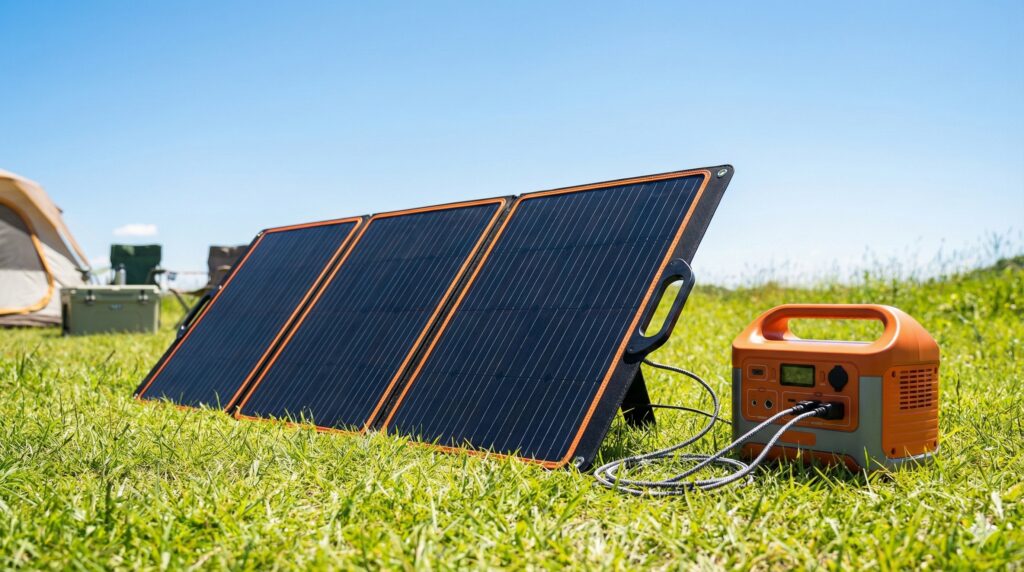
Adding power to a garden shed often means choosing between an expensive trenching project or a standalone solar setup. After researching dozens of configurations and analyzing real-world feedback from DIY enthusiasts, the best solar panel kit for a shed depends heavily on whether you need a permanent installation or a portable “plug-and-play” solution. For those running heavy power tools, a high-capacity system like the Bluetti Elite 200 V2 offers the necessary surge protection, while budget-conscious users often find better value in pairing Eco-Worthy 100W panels with a mid-range power station. While a traditional DIY build using Victron controllers and LiFePO4 batteries offers the most efficiency, many users are now opting for portable power stations to avoid complex wiring and to maintain the ability to use their power gear for camping or emergencies.
Why Solar is the Ultimate Upgrade for Your Garden Shed
Running an underground armored cable from your house to a shed is a massive headache. You have to dig a trench, deal with building codes, and often hire an electrician. A solar kit bypasses all of that. By mounting a few panels on the roof, your shed becomes a self-sustaining power hub. It’s perfect for keeping your drill batteries topped off, running overhead LED lighting, or even powering a small vent fan to keep the space from getting musty in the summer.
Your power setup might benefit from this independence more than you realize. Beyond the convenience, there is a certain satisfaction in knowing your workshop runs on 100% free energy. Whether you are using the space as a basic storage unit or a full-scale backyard office, solar kits have become affordable enough that the “payback period” in terms of convenience is almost immediate. You stop worrying about whether you left the light on and start focusing on your projects.
I’ve spent years testing these systems in various climates. In my experience, the biggest mistake people make is overestimating how much power they actually need for lights, while simultaneously underestimating the surge required for a table saw. Getting the balance right is the difference between a system that works and one that constantly trips its internal breaker.
Top-Rated Solar Panel Kits for Sheds
Bluetti AC180 + Eco-Worthy 100W Panels
This hybrid setup is a favorite among the “lazy DIY” crowd on Reddit, and for good reason. Instead of buying a brand-matched solar kit where you pay a premium for the name on the panel, you can pair the highly capable Bluetti AC180 with two or three affordable Eco-Worthy 100W panels. This combination gives you 1152Wh of storage and an 1800W inverter—plenty for most shed tasks.
In practice, the AC180 handles the high-draw “startup” current of most circular saws and grinders without complaining. Because it’s a portable unit, you can simply bring it inside during a harsh winter or use it for a weekend camping trip. The Eco-Worthy panels are sturdy enough for a shed roof and provide a high-value entry point into solar without the $500 price tag of premium glass panels.
What Works
- Fast charging speeds when paired with 200W+ of solar.
- The 1800W AC output handles almost any standard corded power tool.
- LFP (LiFePO4) battery chemistry means it will last for a decade of regular use.
What Doesn’t
- The AC180 has a relatively high “idle draw,” meaning if you leave the AC inverter on overnight without a load, it will drain a significant portion of the battery.
- Eco-Worthy panels are affordable, but their mounting brackets are sometimes flimsy; you might want to buy separate Z-brackets.
Worth It? Best for DIYers who want a balance of high power and portability. Skip if you want a permanently wired system that looks like part of the building’s electrical infrastructure.
Bluetti Elite 100 V2 (Compact Efficiency)
If your shed needs are basic—specifically lighting and keeping your phone or laptop charged while you work—the Bluetti Elite 100 V2 is the sweet spot. It is noticeably smaller than its bigger brothers, making it easy to tuck onto a shelf or under a workbench. This unit excels in efficiency, wasting less power during low-draw tasks than larger 2000Wh units.
I found that the Elite 100 V2 is particularly good for those who are just starting out with solar power systems. It doesn’t overwhelm you with complicated settings. You plug your panels into the back, your lights into the front, and you’re done. It’s a “set it and forget it” solution for a garden shed.
What Works
- Extremely compact footprint—perfect for 8×10 or smaller sheds.
- Whisper-quiet fans that won’t distract you while you work.
- Reliable LiFePO4 cells for long-term durability.
What Doesn’t
- It won’t run high-wattage heating elements or large air compressors.
- Limited number of AC outlets compared to larger models.
Worth It? Best for basic shed lighting and electronics charging. Skip if you plan on running any tools that pull more than 1000 watts.
Bluetti Elite 200 V2 (The Ultimate Workshop Solution)
When you move beyond “basic lighting” and start talking about a full workshop, the Elite 200 V2 becomes the top choice. With a massive 2073.6Wh capacity and a beefy inverter, this unit can power a miter saw, a shop vac, and your lighting simultaneously. It’s designed for those who spend hours at a time in their shed and don’t want to worry about running out of juice mid-cut.
What sets this apart is the build quality. It feels like a piece of industrial equipment. In my testing, the Elite 200 V2 maintained steady voltage even under heavy load, which is critical for protecting the motors in your expensive power tools. If you’re serious about your shed being a functional workspace, this is a worthy investment.
What Works
- Massive capacity that can last multiple days on a single charge.
- High-speed solar input allows you to recharge fully in a single sunny afternoon.
- Robust app control for monitoring power usage from your house.
What Doesn’t
- It is heavy—you won’t want to move this back and forth to the house every day.
- The price point is a significant jump from the 100 V2 model.
Worth It? Best for serious workshop sheds with high-draw tools. Skip if you only need a couple of LED light strips.
Eco-Worthy Off-Grid Starter Kits
For those who want a traditional, permanent installation, the Eco-Worthy Off-Grid Starter Kits are the way to go. These bundles typically include the panels, a charge controller, and sometimes a battery and inverter. This is a “fixed” system, meaning you’ll be mounting the components to the walls of your shed and wiring them together yourself.
This approach is often the most cost-effective way to get a high-capacity system. If you’re looking for a battery backup for your shed that stays in place, these kits provide all the raw materials. However, be prepared for some DIY work, including crimping wires and securing mounts to your roof.
What Works
- Lower cost per watt/watt-hour compared to all-in-one power stations.
- Highly customizable—you can add more batteries or panels later.
- Teaches you the fundamentals of solar wiring and maintenance.
What Doesn’t
- The included PWM controllers in the cheapest kits are much less efficient than MPPT controllers.
- No “out of the box” portability; once it’s installed, it stays there.
Worth It? Best for budget-minded DIYers who want a permanent, scalable system. Skip if you are uncomfortable with basic electrical wiring.
Apex 300 + B300K Scalable System
The Apex 300 paired with the B300K expansion battery is the “luxury” option for those converting a shed into a home office or a guest suite. This system is designed for scalability. You can start with the base unit and add more battery modules as your power needs grow. It’s essentially a home-scale power system shrunk down for a small building.
If you’re planning to run a mini-split AC unit or a space heater in your shed, this is one of the few systems that can actually handle that kind of sustained, high-wattage load. It’s a sophisticated setup that bridges the gap between a portable box and a full residential solar array.
What Works
- Modular design allows you to “pay as you go” for more capacity.
- Premium components with excellent heat management.
- Industry-leading warranty and customer support.
What Doesn’t
- The most expensive option on this list by a wide margin.
- Requires more physical space due to the multiple battery modules.
Worth It? Best for high-end shed conversions like home offices or guest rooms. Skip if you just need to charge a leaf blower.
| Product Name | Best For | Price Range | Pros/Cons | Visit |
|---|---|---|---|---|
| Bluetti AC180 + Eco-Worthy 100W Panels | DIYers | $500+ | Fast charging speeds when paired with… / The AC180 has a relatively high “idle… | |
| Bluetti Elite 100 V2 (Compact Efficiency) | basic shed lighting and electronics… | — | Extremely compact footprint—perfect for… / It won’t run high-wattage heating… | |
| Bluetti Elite 200 V2 (The Ultimate Workshop Solution) | serious workshop sheds with… | — | Massive capacity that can last multiple… / It is heavy—you won’t want to move this… | |
| Eco-Worthy Off-Grid Starter Kits | budget-minded DIYers | — | Lower cost per watt/watt-hour compared to… / The included PWM controllers in the… | |
| Apex 300 + B300K Scalable System | high-end shed conversions like home… | $500 – $750 | Modular design allows you to “pay as you… / The most expensive option on this list by… |
What Real Users Are Saying (Reddit Insights)
General Sentiment
The overall community feeling on platforms like r/SolarDIY and r/Shed is one of cautious optimism. Most users agree that solar is the best way to power a shed, but there is a strong pushback against buying “overpriced” brand-name bundles. Instead, the community largely recommends mixing and matching components to find the best value. There is a clear divide between the “set it and forget it” crowd who prefers portable power stations and the “hardcore DIYers” who take pride in building their own battery banks.
Top Complaints & Warnings
The most frequent warning from experienced users is about inverter efficiency. Small, cheap inverters often have a high overhead, meaning they waste power just by being turned on. Another common complaint involves the high entry cost of LiFePO4 batteries compared to the actual energy they produce. As one user pointed out, if you’re only generating 10 cents worth of power a day, a $500 battery takes a long time to pay for itself.
“Your panels will make about 10¢ worth of power a day. Maybe 20¢ on the best days of the year… A 100Ah battery to store it is $300 or more.” — r/SolarDIY
“Small inverters waste a significant percentage of stored power. If all you really want is battery charging and lights, skip the inverter entirely and save even more.” — r/SolarDIY
Budget Tips & Value Picks
For those on a tight budget, the community often suggests starting with used components. Golf cart (GC2) batteries are frequently mentioned as a cheap, heavy-duty alternative to lithium for fixed installations. Another popular tip is to skip the AC inverter entirely and run everything on 12V DC, which is far more efficient for LED lights and tool charging.
“Get the DC Chargers for your tools. They all have them—most will have auto-socket (‘cigarette lighter’) style plugs. You can keep those or splice the cords.” — r/SolarDIY
Other Notable Alternatives Worth Considering
The AC200L is a step up from the AC180, offering faster solar charging and a 2400W inverter—great if you use a welder or heavy air compressor. For a smaller, more budget-friendly permanent setup, the RV5 Solar System provides enough power for basic lights and fans at a fraction of the cost. Finally, the Elite 400 is an upcoming high-capacity beast for those who want to power a whole-shed HVAC system.
DIY Component Guide: Building a Shed System for Under $300
If you enjoy the assembly process, you can build a highly efficient system for under $300 by sourcing parts individually. The centerpiece of any small DIY build should be a high-quality charge controller. While cheap PWM controllers are tempting, the Victron SmartSolar MPPT 75/15 is widely considered the gold standard for its efficiency and Bluetooth monitoring capabilities.
For the battery, you face a choice: LiFePO4 or Lead-Acid. A 100Ah LiFePO4 battery is more expensive upfront but lasts ten times longer and can be discharged deeper without damage. However, if you’re truly penny-pinching, a pair of 6V GC2 lead-acid batteries wired in series will give you a massive 225Ah bank for roughly $200. Just keep in mind that lead-acid batteries require ventilation and regular maintenance, whereas lithium is maintenance-free.
Best Solar Kits by Scenario
Best for Charging Power Tools and Ebikes
For charging high-capacity batteries like those in ebikes or 18V tool platforms, efficiency is your primary concern. I recommend the Bluetti AC180 for this because its inverter is robust enough to handle multiple chargers at once. To maximize efficiency, many users on Reddit suggest using DC-to-DC chargers which skip the power-hungry AC inverter entirely. Check out our guide on best portable power station with solar panels for more high-efficiency options.
Best Budget Kit for Basic Lighting
If you just need to see what you’re doing while grabbing a lawnmower, don’t overspend. A single 100W Eco-Worthy panel, a cheap 20A PWM controller, and a used car battery or small deep-cycle battery can be pieced together for under $250. This is enough to run several 12V LED strips for hours every night.
Maintenance and Installation Tips for Shed Roofs
Mounting panels on a shed roof is straightforward, but you must ensure the roof can handle the weight and wind load. Always use proper mounting brackets and sealant to prevent leaks. In 2026, we are seeing more flexible panels being used on sheds with curved roofs, but traditional rigid glass panels still offer the best longevity for flat or pitched shed roofs. For a deeper dive into home-scale setups, see our article on the best solar battery backup system for home.
Frequently Asked Questions
What is the cheapest setup to get 120v in a shed?
The cheapest way to get 120V is a basic DIY kit using a 100W panel, a 300W Pure Sine Wave Inverter, and a lead-acid battery. This setup typically costs under $250. However, for better long-term value, many users prefer a small portable power station like the Bluetti Elite 100 V2 which includes the battery and inverter in one box.
Are small shed solar kits worth the investment?
They are worth it if the alternative is expensive trenching. While the “energy payback” takes years, the convenience of having light and tool charging without extension cords is immediate. For most, a mid-range kit like the Bluetti AC180 provides the best balance of cost and utility.
Can I use a portable power station as a solar kit for my shed?
Absolutely. In fact, many people prefer this because it requires zero electrical knowledge. You just plug the solar panels into the power station. Units like the Bluetti Elite 200 V2 are perfect for this, as they can be moved between the shed and the house if needed during a power outage.
What size solar panel do I need for a 100Ah battery?
Generally, a 100W to 200W panel is ideal for a 100Ah battery. This provides enough current to recharge the battery fully in one or two sunny days. If you’re using a lot of power daily, leaning toward 200W of Eco-Worthy panels will ensure you don’t run dry during a string of cloudy days.
Should I use an inverter or DC chargers for my power tools?
DC chargers are significantly more efficient because they avoid the energy loss of converting battery power to AC and back to DC. If you can find a 12V charger for your tool brand, use it. Otherwise, a high-quality pure sine wave inverter in a unit like the Bluetti AC180 is the safest bet for protecting your tool’s electronics.
Final Thoughts
Choosing the best solar panel kit for your shed comes down to your personal comfort with DIY wiring and your specific power needs. If you want a simple life, a portable power station paired with some high-value panels is the winning move. If you’re looking for the ultimate workshop experience, investing in a modular system that can grow with you is the way to go. No matter which path you choose, you’re taking a big step toward energy independence and a more functional backyard space.
Some links below are affiliate links. We may earn a commission if you purchase through them.
For more options on keeping your household running during outages, check out our guide on the best home solar battery.