
Quick Hits
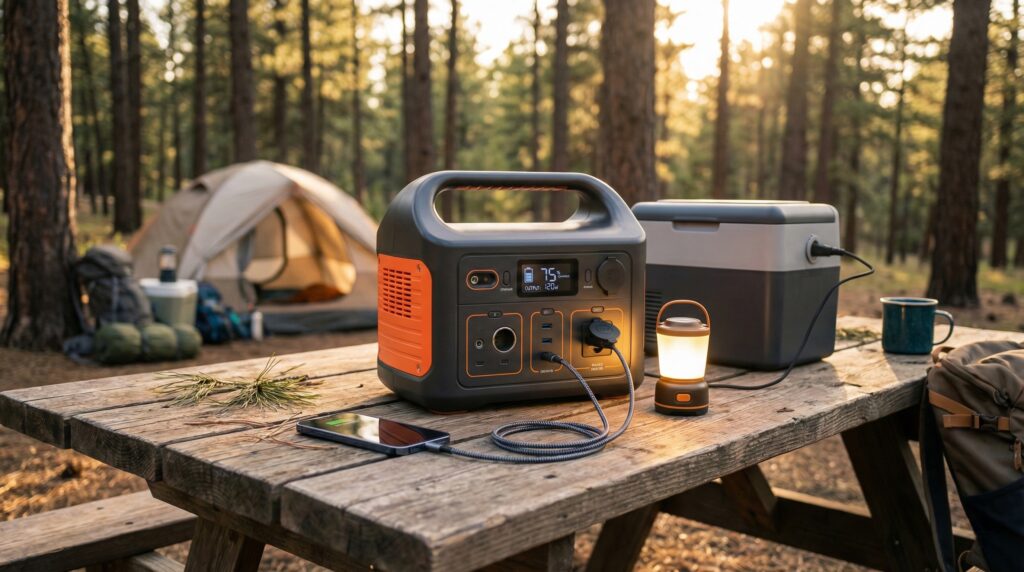
Finding the right portable power station paired with solar panels depends entirely on your specific energy needs. For most users, a unit with around 1,000Wh capacity, like the Anker Solix C1000, offers the best balance of weight and performance. If you are preparing for home emergencies, high-capacity systems like the EcoFlow Delta Pro can keep a refrigerator running for days. For light travelers or CPAP users, smaller units like the Jackery Explorer 300 are easier to carry but require more frequent solar recharging. Real-world tests show that solar panels rarely hit their advertised wattage, and DIY setups often provide more capacity per dollar if you are willing to manage the assembly yourself. Always check for LiFePO4 battery chemistry to ensure your investment lasts for years of regular use.
Top Rated Portable Power Stations for Every Use Case
Choosing a power station isn’t just about picking the biggest battery. You need to consider how fast it recharges from the sun, whether the inverter can handle your appliances, and if you can actually lift the thing without throwing out your back. Your power setup might benefit from a “turn-key” solution that works right out of the box, or you might find that a modular system fits your van life better.
If you’re exploring more options, our portable power stations roundup covers the top picks for every use case beyond just solar-ready kits.
1. Best Overall: Anker Solix C1000
The Anker Solix C1000 has quickly become a favorite because it hits the “Goldilocks” zone of portable power. It offers 1056Wh of capacity and a 1800W output, which is enough to run 99% of common household appliances, including coffee makers and hair dryers. What really sets it apart is the charging speed; it can go from zero to 100% in just 1.4 hours when plugged into a wall, making it easy to top off before a sudden storm.
What Works
- Hyper-fast recharging means less downtime between locations.
- The LiFePO4 batteries are rated for 3,000 cycles, lasting roughly a decade of regular use.
- Compact footprint fits easily on a car floorboard or under a desk.
What Doesn’t
- The companion app can be finicky during initial Bluetooth pairing.
- While it handles solar well, the maximum solar input is capped, so adding more than 600W of panels won’t speed up charging further.
💰 Street Price: $699 – $999
Worth It? Best for weekend warriors and digital nomads who need a reliable, fast-charging middle-weight unit. Skip if you need to power a full-sized air conditioner for more than an hour.
2. Best for Extended Off-Grid Use: Jackery Explorer 2000 v2
When you are heading deep into the woods for a week, the Jackery Explorer 2000 v2 provides the peace of mind that comes with massive capacity. With 2,042Wh at your disposal, you can run a 12V portable fridge, charge multiple laptops, and keep LED string lights going without stressing about the battery percentage every hour. It is a beast, but Jackery has refined the ergonomics to make it more manageable than previous versions.
What Works
- Huge 2,042Wh capacity handles multi-day trips with ease.
- Simple, intuitive interface that doesn’t require an engineering degree to read.
- Excellent heat management; the fans are quieter than most competitors in this size class.
What Doesn’t
- At 39 lbs, it is “portable” only in the sense that it has a handle. You won’t want to carry this far from your vehicle.
- Unlike EcoFlow or Bluetti, this model lacks expandable battery ports, so you are stuck with the capacity you buy.
💰 Street Price: $1099 – $1299
Worth It? Best for car campers and van dwellers who want a simple, high-capacity “plug and play” system. Skip if you have limited storage space or need to carry your gear on foot.
3. Best for CPAP & Light Camping: Jackery Explorer 300
Not every trip requires a massive power vault. The Jackery Explorer 300 is a lightweight companion specifically suited for CPAP users and photography enthusiasts. It’s small enough to fit in a motorcycle saddlebag or a cramped trunk, providing just enough juice to keep essential electronics alive for 2-3 nights. For more on smaller setups, see our guide to the best solar power bank options for ultra-portable needs.
What Works
- Extremely lightweight and easy to toss in a backpack for short hikes.
- Charges via USB-C, AC, or solar, giving you plenty of options on the road.
- Reliable performance for CPAP machines (typically 2-3 nights depending on settings).
What Doesn’t
- It lacks a “time to empty” display, which makes it hard to gauge exactly how much runtime you have left.
- Small capacity means you’ll need to deploy solar panels daily if you’re using a fridge.
💰 Street Price: $1099 – $1299
Worth It? Best for CPAP patients and light travelers who prioritize portability over raw power. Skip if you plan on using any heating appliances like a hot plate or kettle.
4. Best for Home Backup: EcoFlow Delta Pro
If your goal is surviving a multi-day power outage at home, the EcoFlow Delta Pro is the heavyweight champion. It starts with a 3.6kWh capacity but can be expanded up to 7.2kWh or even 25kWh with extra batteries. It is one of the few portable units that can output 3600W (7200W surge), allowing it to start up heavy-duty appliances like well pumps or full-sized refrigerators without tripping a breaker. For a deeper look at high-capacity home units, browse our battery backup systems category.
What Works
- Massive expansion potential allows you to build a true home microgrid.
- The 30A outlet is a rarity, making it compatible with RV shore power cables.
- Incredible solar input (up to 1600W) allows for very fast off-grid recharging.
What Doesn’t
- It weighs nearly 100 lbs; while it has wheels, moving it up stairs is a two-person job.
- The price tag is significant, especially once you start adding extra batteries and panels.
💰 Street Price: $2999 – $3599
Worth It? Best for homeowners who want a serious emergency backup system without the noise of a gas generator. Skip if you need something to take on a casual camping trip.
| Product Name | Best For | Price Range | Pros/Cons | Visit |
|---|---|---|---|---|
| Anker Solix C1000 | weekend warriors and digital nomads who need a reliable, fast-charging middle… | $699 – $999 | ✅ Hyper-fast recharging means less downtime between ; The LiFePO4 batteries are rated for 3,000 cycles, ❌ The companion app can be finicky during initial Bl; While it handles solar well, the maximum solar inp |
|
| Jackery Explorer 2000 v2 | car campers and van dwellers who want a simple, high-capacity “plug and play”… | $1099 – $1299 | ✅ Huge 2,042Wh capacity handles multi-day trips with; Simple, intuitive interface that doesn’t require a ❌ At 39 lbs, it is “portable” only in the sense that; Unlike EcoFlow or Bluetti, this model lacks expand |
|
| Jackery Explorer 300 | CPAP patients and light travelers who prioritize portability over raw power | $200 – $300 | ✅ Extremely lightweight and easy to toss in a backpa; Charges via USB-C, AC, or solar, giving you plenty ❌ It lacks a “time to empty” display, which makes it; Small capacity means you’ll need to deploy solar p |
|
| EcoFlow Delta Pro | homeowners who want a serious emergency backup system without the noise of a … | $2999 – $3599 | ✅ Massive expansion potential allows you to build a ; The 30A outlet is a rarity, making it compatible w ❌ It weighs nearly 100 lbs; while it has wheels, mov; The price tag is significant, especially once you |
What Real Users Are Saying (Reddit Insights)
General Sentiment: Plug-and-Play vs. DIY
In communities like r/vandwellers and r/camping, there is a constant tension between the convenience of all-in-one power stations and the cost-efficiency of DIY builds. Many users appreciate that brands like Jackery and Anker offer a warranty and a sleek, safe package. However, seasoned builders often point out that you are paying a premium for that plastic housing. If you are comfortable with basic wiring, a DIY setup can significantly lower your cost per watt-hour, but for the average camper, the risk of a loose connection in the middle of a trip makes the retail units a more attractive choice.
Top Complaints & Warnings
Real-world usage often reveals frustrations that don’t appear on a spec sheet. One of the most common complaints involves proprietary connections. Users frequently vent about needing $25 to $50 adapter cables just to use a standard solar panel with a specific brand’s power station. Efficiency loss is another sticking point. Many users report that a 100W panel rarely produces more than 70W-80W, even in direct sunlight.
“I bought a Jackery 1000W unit for camping… plugged my fridge in and about 7 hours later power went back on. The Jackery had went down to about 50% SOC. Good test of needing a bigger unit.” — r/solar
“100W panel from manufacturer A will charge the same as a 100W panel from manufacturer B. What differs is mostly the price. So don’t sweat about it too much.” — r/SolarDIY
Budget Tips & Value Picks
For those on a tight budget, the community often suggests starting with a smaller unit like the Jackery 500 or even building a “toolbox” generator. One user on Reddit detailed how they spent $270 to create a 1200Wh system using a 100Ah lithium battery and a cheap solar controller, which is roughly a third of the price of a comparable retail unit. If you do go the retail route, users suggest waiting for sales, as these products often see 20% to 40% discounts during major shopping holidays.
Portable Solar Panel Guide: Maximizing Your Input
Buying the best portable power station with solar panels is only half the battle; you also have to know how to set them up. Most people just lay the panels flat on the ground, but this is the least efficient way to charge. Angling your panels directly toward the sun can increase output by 30% or more. We compared similar logic in our best solar generator breakdown—it is always about the input-to-output ratio.
Choosing the Right Panel: Jackery SolarSaga vs. Eco-Worthy Bifacial
Traditional portable panels, like the Jackery SolarSaga, are rugged and easy to fold. However, “bifacial” panels are gaining popularity. A bifacial panel has solar cells on both sides, allowing it to catch reflected light from the ground. In testing, an Eco-Worthy Bifacial panel produced 125W on a white patio compared to 110W for a standard panel. If you are camping on sand or light-colored rocks, bifacial is a smart upgrade.
Rigid vs. Portable: The Budget Factor
If you have a permanent vehicle setup, consider rigid panels. While a portable 100W panel might cost $150, a rigid 100W panel meant for a house roof can often be found for $70. The trade-off is that rigid panels are glass-backed and heavy, making them unsuitable for carrying by hand but perfect for mounting on a van roof.
Calculating Your Power Needs
To avoid being left in the dark, you need to do some basic math. Most power stations are rated in Watt-hours (Wh). If you have a 1000Wh battery and you run a 100W device, it should theoretically last 10 hours. In reality, you lose about 15-20% to heat and the inverter’s own power consumption.
The 12V Fridge Test
A typical 12V chest fridge, like an Alpicool model, uses about 40-60 Watts while the compressor is running. Since it cycles on and off, a Jackery Explorer 500 will usually keep it running for about 24 hours. However, if it’s 90 degrees outside, that fridge will run much more often, and your battery might only last 15 hours. Always over-estimate your needs by 25% to account for weather.
CPAP Performance Breakdown
For sleep apnea patients, power is a medical necessity. A Bluetti EB55 can usually power a CPAP (with the humidifier turned off) for about 8-10 hours. If you need a full week of sleep without recharging, you’ll need a massive unit like the Jackery 2000. For help narrowing it down, our solar generators section breaks down the top picks by specific medical and travel needs.
Best Portable Power Station by Segment
Best for CPAP Machines
The Jackery Explorer 300 is our top recommendation here. It is silent, small enough to sit on a nightstand, and can be recharged via solar during the day. It provides a stable pure sine wave output, which is critical for protecting sensitive medical electronics.
Best for Van Life and Car Camping
The Bluetti AC200Max is the workhorse of the van life community. It offers a 2048Wh capacity and allows you to add up to two external batteries for a total of 8192Wh. The built-in 30A NEMA TT-30 outlet means you can plug your van’s shore power cord directly into the unit without adapters.
Best for Home Power Outages
The EcoFlow Delta Pro remains the king of home backup. Its ability to charge from 0 to 80% in an hour and its massive 3600W output make it the most capable replacement for a gas generator during a storm. You can even daisy-chain two of them together for 240V output to run heavy-duty appliances.
Frequently Asked Questions
How long will a portable power station run a 12V fridge?
It depends on the battery size and ambient temperature. A medium-sized unit like the Jackery Explorer 500 can typically run a standard 12V fridge for about 24 hours. If you use a larger unit like the Anker Solix C1000, you can expect 2 to 3 days of runtime. High temperatures make the fridge work harder, which can cut these times in half.
Can I use different brands of solar panels with my power station?
Yes, you can usually use third-party solar panels, but you will likely need an adapter. Most solar panels use MC4 connectors, while power stations use various ports like DC7909 or XT60. For example, to use an Eco-Worthy panel with a Jackery unit, you would need an MC4 to 8mm adapter. Just ensure the panel’s voltage (Voc) matches the power station’s input range.
How much power does a CPAP machine need for camping?
A standard CPAP machine uses about 30-60 Watts. If you turn off the heated humidifier and hose, it uses significantly less. A Jackery Explorer 300 can usually last 2-3 nights on a single charge. For longer trips, a Bluetti AC200Max provides enough capacity for a week or more of use without needing a recharge.
Is it cheaper to build a DIY solar generator or buy one?
Building a DIY setup is almost always cheaper per watt-hour. You can build a 1200Wh system for around $300 using a LiFePO4 battery and a Newport Vessels battery box. However, retail units like the EcoFlow Delta 3 Plus offer “plug-and-play” convenience, multiple ports, and built-in safety features that are difficult to replicate in a home build.
What is the difference between a solar generator and a portable power station?
The terms are often used interchangeably. Technically, a portable power station is just the battery and inverter unit. It becomes a “solar generator” once you connect solar panels to it. Most retailers sell them as kits, such as the Anker Solix C1000 bundled with folding panels, which qualifies it as a complete solar generator system.
Are bifacial solar panels worth the extra cost for portable use?
Bifacial panels can be worth it if you often camp on reflective surfaces like sand, light-colored dirt, or concrete. They can provide a 10-15% boost in power by catching light on both sides. For most people, a standard high-quality panel is sufficient, but if you have limited space and need maximum efficiency, a bifacial panel is a smart choice.
Conclusion: Which System is Right for You?
The best portable power station with solar panels is the one that meets your specific energy needs without becoming a burden to carry. For the average camper or person looking for a bit of home security, the Anker Solix C1000 is the most balanced choice available today. If you are a medical patient relying on a CPAP, smaller units like the Jackery 300 are easier to manage in a tent. For those looking for serious off-grid independence, investing in a high-capacity Bluetti or EcoFlow system with expandable batteries is the way to go. Remember that solar panels are a long-term investment; choosing LiFePO4 batteries ensures that your power station will be ready to work for thousands of cycles. Whether you choose a turn-key brand or a DIY toolbox build, having a reliable source of energy gives you the freedom to explore and the security to stay home during a storm.
Disclosure: We earn a small commission on qualifying purchases through our Amazon links, at no extra cost to you.