
TL;DR
For most buyers in Australia, the right portable power station is the one that can run your actual gear, recharge fast enough from the wall, car, or solar, and still be practical to move around camp or home. In this lineup, Bluetti’s AC180 stands out as the best all-round fit, while Jackery’s Explorer 1500 v2 makes more sense if you want more capacity for longer trips or backup use.
Top Recommended Portable Power Station Australias
| Product | Best For | Price | Pros/Cons | Visit |
|---|---|---|---|---|
| AC180 | Best overall camping and touring fit | $410 – $480 | Well-rounded for mixed camping loads; check weather and dust protection before rough tub use | Visit Bluetti |
| Jackery Explorer 1500 v2 Portable Power Station | Longer stays and backup capacity | $999.00 – $1299.00 | Larger-capacity option for extended use; costs more and is less appealing for light weekend trips | Visit Jackery |
Top Pick: Best Overall Portable Power Station Australias
AC180
Best for: Most Australian buyers who want one unit for a 1- to 3-day camping trip, weekend touring with a 12V fridge, or a small emergency backup pack at home.
The Good
- Balanced size and portability for buyers who do not want a huge home-backup box
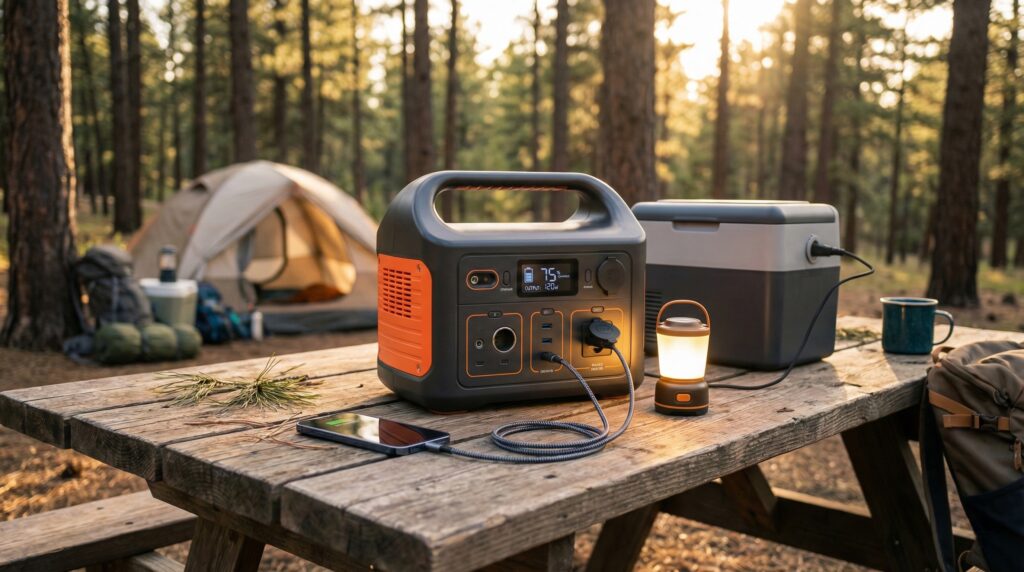
- Good match for common camping jobs like running a fridge, charging devices, lights, and small electronics
- Flexible removable-power format that is easier to move between car, tent, boat, caravan, and home than a fixed dual-battery setup
- Well-known option in Australian camping discussions, which matters when you are buying into a category where support and spare cables can become important
The Bad
- Not the safest blind buy for dusty tubs or exposed wet campsites unless you confirm protection details first
- If your main goal is high-draw appliances for longer periods, you may outgrow it faster than a larger unit
Our Take: The AC180 is the easiest recommendation here because it hits the sweet spot most buyers actually need: enough usable power for camping and touring without dragging around a much bigger, pricier station than your setup requires.
That balance matters more than headline battery size. A lot of people shop by watt-hours first, but in real use, inverter output and recharge speed often matter just as much. If you mainly need to run a compressor fridge, charge phones, top up camera batteries, power a laptop, and keep camp lights going for a long weekend, the AC180-style class makes more sense than jumping straight to a much larger unit.
It is also a strong fit for buyers who want removable power instead of a permanent install. If you are moving power between the shed, the back of a ute, a caravan annexe, and the house during a blackout, a portable power station can be simpler than a hard-wired second-battery setup. That convenience is a big reason these units have become so popular with campers and casual tourers.
The main tradeoff is the usual one for this category: weather, dust, and handling. Portable power stations are not all built for the same abuse level, and buyers should not assume a camping-friendly product is fine to leave exposed in rain, red dust, or a hot enclosed vehicle. Energy Safe Victoria and ACCC Product Safety Australia are both worth checking for general electrical safety and recall guidance before you buy or while setting up a charging routine at home.
For safety, we also recommend following basic lithium-battery best practice from NFPA lithium-ion battery safety: charge in a dry, ventilated area, avoid damaged cables, and do not leave the unit in extreme heat. If your plan involves solar charging at camp, it also helps to understand panel basics and realistic output expectations through DOE solar PV basics.
Overall, this is the best overall portable power station Australia pick for shoppers who want practical power, not bragging rights. If your loads stay in the normal camping range, this is the smarter place to start.
Jackery Explorer 1500 v2 Portable Power Station
Best for: Buyers planning a 3- to 5-day off-grid camping trip, longer touring runs, or home backup where extra battery capacity matters more than keeping weight and cost down.
The Good
- Larger-capacity option that makes more sense for longer stays away from mains power
- Better suited to multi-device use and backup duties than a smaller weekend-focused station
- Strong category fit for buyers who want one unit to cover camping and occasional outage use
- Useful step up for people who already know they will power a fridge plus several chargers and small appliances
The Bad
- More capacity usually means more weight and a higher upfront price
- Can be overkill for short overnight trips where a mid-size station would do the same job for less
- You still need to confirm charging speed and solar compatibility against your actual setup rather than assuming bigger means better
Our Take: If you need more runtime than a compact all-rounder can offer, the Explorer 1500 v2 is the better pick, but it is best bought with a clear use case in mind rather than as an automatic upgrade.
The reason to buy this kind of unit is simple: capacity buys breathing room. On longer trips, especially when a fridge is cycling day and night and everyone in the vehicle wants to charge phones, cameras, tablets, drones, and laptops, a larger station gives you margin. That can be the difference between enjoying camp and constantly rationing power.
It also has more appeal for buyers who want a crossover product for both recreation and outage prep. During a short power outage, a larger station can cover small essentials like internet gear, phone charging, lights, and in some cases a medical device or compact appliance, depending on the unit’s inverter capability and the device’s startup demands. As always, mission-critical medical use should be confirmed with the device maker first.
The flip side is practicality. Bigger power stations tend to be heavier, bulkier, and more expensive, which makes them less attractive if your normal use is one or two nights away with modest loads. For many camping buyers, overspending on capacity is the most common mistake. A station that spends most of its life half-used is not necessarily the better value.
Solar planning matters here too. A large battery can take much longer to refill if your panel size, connector type, or charge limits are weak. That is where realistic solar expectations matter more than marketing. Tools like NREL PVWatts solar calculator can help you estimate solar production, while NREL renewable energy research is useful background if you want to understand why panel angle, weather, and temperature can change charging performance so much.
This Jackery makes the most sense for shoppers who already know they need the extra runtime. If you do, paying for more capacity can be worth it. If you do not, the smaller all-round class is usually the more sensible buy.
How to choose the best portable power station in Australia
The best portable power station in Australia is rarely the biggest one on the page. In practice, the right choice depends on four things: what you want to run, how long you need to run it, how you will recharge it, and how much weight you are willing to move around.
Start with your loads. List every device you actually plan to use: a camping fridge, phone chargers, LED lighting, camera batteries, laptops, a CPAP, maybe a small appliance. Battery capacity tells you roughly how much energy is stored, but inverter output tells you whether the station can run the item at all. That is why a smaller unit can still be perfect for a fridge and lights, while a larger one might be necessary if you want to run higher-draw kitchen gear or tools.
Next, think about trip length. For a one- or two-night trip, many buyers can get away with a lighter, less expensive station if their loads are modest. For longer touring, daily recharge becomes just as important as battery size. A large battery that refills slowly from 12V while driving can be frustrating in real Australian road-trip conditions. Research and buyer reports alike suggest car-charging speed is often one of the most overlooked parts of the decision.
Solar compatibility is another area where buyers get tripped up. Not all stations handle solar the same way. Check maximum solar input, connector style, and whether you need extra adapters. Also check whether the unit can realistically take in enough solar to replenish what you use each day. A “solar-ready” badge does not guarantee strong solar performance.
If you already own panels, look at the exact plug type and charging limits before you buy. If you are new to solar, it helps to review DOE solar PV basics so you know what terms like PV input and panel output really mean in the field. This is especially useful if your goal is daytime recovery during camp rather than just occasional trickle charging.
Support and warranty deserve more attention than they usually get. These are not cheap products, and Australian buyers often use them in heat, dust, corrugations, and travel-heavy conditions. Good local support can matter as much as one extra outlet or a little more battery. If service access matters to you, it is worth checking brand support channels and reading customer reviews with an eye on warranty claims, not just first impressions.
Finally, think about whether you want removable power or a fixed setup. Portable power stations are great for flexibility. You can move them from the vehicle to the tent, from the boat to the house, or lend them to family during a blackout. But if you are building a permanent touring rig with heavy daily loads, a hard-wired dual-battery system may still be the better long-term answer. If you are unsure, talking to a licensed electrician or an off-grid solar installer can help you compare a plug-and-play station against a more permanent setup.
Short trips vs longer touring: which size makes sense?
For short camping trips, especially one or two nights, many people overspend. If your real loads are a fridge, a few device charges, lights, and maybe a laptop, a mid-size portable power station is usually enough. That is why the AC180-style class is so appealing. It keeps weight and cost in a more manageable range while still covering the basics well.
For touring and extended stays, the logic changes. If you are away longer, your system has to recover energy day after day, not just last through one weekend. That makes recharge speed, solar input, and car-charging performance much more important. A larger station like the Jackery Explorer 1500 v2 can make more sense here because it gives you more reserve, but only if your recharge plan can keep up.
A good rule of thumb is this: buy enough capacity to handle your realistic daily use with some margin, then make sure your chosen charging method can refill a meaningful part of that use. Big battery, slow recovery is not always better than moderate battery, fast recovery.
Safety and setup notes for Australian buyers
Portable power stations are easier to live with than petrol generators in many situations, but they still need sensible handling. Charge and use them in dry, ventilated spaces, keep them out of standing water, and do not assume they are fine in dusty storage tubs or under direct weather exposure unless the maker clearly says so.
If you are also comparing a battery station against a generator for home backup, remember the safety difference around fumes. A battery station has no combustion exhaust during use, while generators create a carbon monoxide risk and must never be used indoors. The CDC carbon monoxide safety page is a helpful refresher if you are weighing both options for emergency planning.
Travel is another point worth noting. Large lithium battery products may face transport restrictions, especially by air. If you expect to travel with one, check the FAA lithium battery transport rules and your airline’s specific policy before you book.
Before buying, it is also smart to check Australian recall listings through ACCC Product Safety Australia. For home charging and electrical-use basics, Energy Safe Victoria is a useful reference. And if you want a broader consumer perspective on value and usability, CHOICE is one of the better-known Australian sources to monitor for category coverage.
FAQ
What size portable power station do I need to run a camping fridge in Australia?
It depends on the fridge size, ambient temperature, thermostat setting, and how often you open it, but many buyers with a typical 12V compressor fridge do well with a mid-size station for a short trip. The key is not just battery size; the station also needs enough inverter or DC output support for your setup, plus a realistic way to recharge if you are staying more than a night or two.
Is a portable power station better than a dual-battery setup for camping and touring?
For flexibility, yes. A portable power station is easier to move between vehicles, tents, boats, caravans, and home use, and it usually needs less installation effort. A dual-battery system can still be the better choice for serious touring rigs with heavier daily loads, built-in charging, and permanent accessories. If you are deciding between the two for a custom setup, a licensed electrician or off-grid solar installer can help you weigh convenience against long-term capability.
How fast can a portable power station recharge from a car while driving?
That varies a lot by model and charging method. Some stations recharge slowly from a standard 12V socket, while others offer much better input options. For road trips, this matters almost as much as battery capacity, because a large station that only sips power from the car may never fully catch up with daily use. Check the manufacturer’s car-charging details before buying rather than assuming all stations behave the same way.
Can I use any solar panel with a portable power station, or do connector types and input limits matter?
Connector types and input limits absolutely matter. You need to match the panel connection, voltage range, and power input capability of the station, and you may need adapters depending on the brand. If you are new to the topic, DOE solar PV basics is a good primer, and NREL PVWatts solar calculator can help estimate how much solar energy you might actually collect.
Are portable power stations worth it for short camping trips compared with a simple battery box?
They can be, especially if you want AC outlets, easier charging, and a plug-and-play setup without building a system yourself. But for simple low-draw camping, a battery box may still be cheaper. Portable stations make the most sense when you value convenience, portability, and the option to use the same unit at home during outages.
Can a portable power station replace a generator for home backup?
For small essentials, often yes. A portable power station can be a cleaner, quieter option for lights, phones, internet gear, and other modest loads. For long outages or whole-home backup, no — most portable stations are too limited in runtime and output. If you are comparing the two, remember that generators carry exhaust risks, and the CDC carbon monoxide safety guidance is essential reading.
How do I charge a portable power station safely at home?
Use the charger and cables recommended by the manufacturer, keep the station in a dry and ventilated area, and avoid covering it while charging. It is also wise to keep an eye on heat, especially in Australian summer conditions. For general battery fire precautions, review NFPA lithium-ion battery safety, and for local safety reminders and electrical-use guidance, see Energy Safe Victoria.
Looking for these on Amazon? Browse best portable power station australia on Amazon →
Bottom Line
If you want the best portable power station Australia option for most people, go with the AC180. It is the most sensible blend of portability, practical camping use, and all-round flexibility for buyers who want removable power without paying for more battery than they are likely to use.
If your trips are longer or your backup needs are heavier, the Jackery Explorer 1500 v2 is the stronger step-up choice. But for the average buyer, the Bluetti-class all-rounder remains the smarter buy because it better matches real-world camping, touring, and occasional home backup needs.
Affiliate disclosure: Some of the links in this article are affiliate links. We may earn a commission if you purchase through them.