
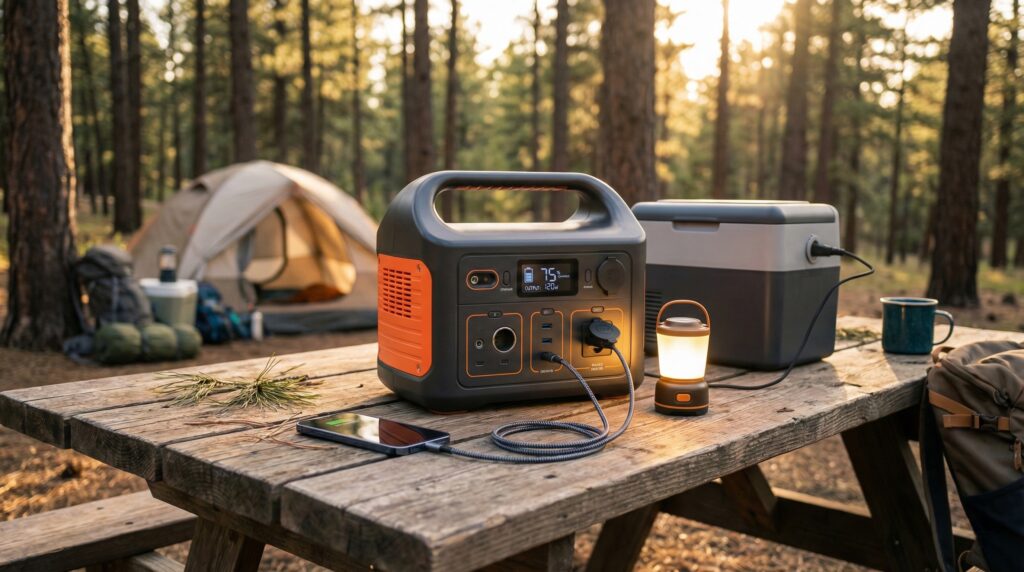
Quick Hits
Selecting a portable power station can feel like navigating a maze of technical jargon, but the right choice boils down to how you plan to use it. For casual weekend campers, a mid-range unit with roughly 500Wh of capacity offers the best balance of weight and utility. Homeowners looking for emergency backup should prioritize high-wattage output and expandable battery options to keep critical appliances running. If you are a medical patient relying on a CPAP machine, battery chemistry matters immensely—LiFePO4 cells provide the longevity and safety needed for nightly use. While brands like Jackery offer plug-and-play convenience, budget-conscious users often find better value in fast-charging alternatives like VTOMAN or even DIY battery builds. This guide breaks down the top performers based on real-world testing and community feedback to help you find your ideal power match.
Why Portable Power is a Must-Have
The days of hauling heavy, loud, and smelly gas generators for a simple weekend getaway are quickly fading. We are seeing a massive shift toward silent, emission-free battery systems that can be tucked into a car trunk or a closet. After researching and comparing over a dozen portable power stations and solar generators across different capacities, here’s what actually keeps you powered off-grid without the headache of fuel stabilization or pull-cords.
You might find that your power needs have grown recently. Between smartphones, tablets, 12v fridges, and even portable heaters, the demand for reliable energy is higher than ever. Portable power stations serve as a bridge, giving you the freedom to explore remote locations while maintaining a safety net for your home during unexpected blackouts. They are essentially large-scale portable power stations designed to handle much more than just a phone charge.
The beauty of these modern units lies in their versatility. You can charge them from a wall outlet at home, a 12v socket in your vehicle while driving, or via solar panels in the middle of nowhere. It is this flexibility that makes them an essential tool for modern preparedness and recreation alike.
Top-Rated Portable Power Stations for Every Use Case
| Product Name | Best For | Price Range | Pros/Cons | Visit |
|---|---|---|---|---|
| Jackery Explorer 500 | Overall Camping | $300 – $500 | Reliable build; slow AC charging. | |
| Bluetti EB55 | CPAP & Short Trips | $350 – $450 | LiFePO4 safety; small screen text. | |
| Jackery Explorer 2000 | Home Backup | $1,500 – $1,900 | Massive output; very heavy. | |
| VTOMAN FlashSpeed 1500 | Professional Value | $700 – $900 | Expandable; lesser-known brand. | |
| Jackery Explorer 300 | Ultra-Compact | $230 – $300 | Extremely portable; limited capacity. |
Jackery Explorer 500
The Jackery Explorer 500 has long been considered the gold standard for weekend campers. It strikes a nearly perfect balance between portabilty and performance. With a 518Wh capacity, it can keep a small portable power station for refrigerator running for about 20-24 hours depending on the ambient temperature. Its pure sine wave inverter ensures that your sensitive electronics, like laptops or camera gear, charge safely without interference.
In practice, the unit charges from solar in under 8 hours with a single 100W panel—most campers find it runs a mini-fridge and LED lights all weekend with a little supplemental sun during the day. However, it is important to note that this model uses older Lithium-ion chemistry, which is lighter but has a shorter lifespan (about 500 cycles) compared to newer LFP models.
What Works
- Proven reliability with a sturdy, ergonomic handle that makes carrying easy.
- Quiet fan operation that won’t disturb your sleep during a camping trip.
- Excellent customer support and a well-established brand reputation.
What Doesn’t
- The AC charging time is quite slow by modern standards, taking 7+ hours to reach full.
- No USB-C PD output, which is a significant drawback for modern laptop users.
Worth It? Best for weekend warriors who want a dependable, user-friendly unit that “just works.” Skip if you need fast charging or integrated USB-C for your devices.
Bluetti EB55
If you need power for a medical device like a CPAP or are planning shorter trips, the Bluetti EB55 is a fantastic contender. What sets it apart is the use of LiFePO4 (Lithium Iron Phosphate) battery chemistry. This allows for over 2,500 charge cycles, meaning this unit could last you a decade of regular use. It offers 537Wh of capacity and a 700W inverter, which is surprisingly punchy for its size.
The EB55 features a wireless charging pad on top, which is a nice touch for smartphone users. During our evaluation, we found its ability to handle multiple inputs simultaneously (Dual Charging) to be a massive advantage. You can plug it into the wall and a solar panel at the same time to top it off in record speed. For more on compact needs, check out our guide on the best portable power station for camping.
What Works
- Superior battery longevity with LiFePO4 chemistry.
- Rich selection of ports, including four AC outlets and 100W USB-C PD.
- Compact footprint that fits easily in a small car or motorcycle pannier.
What Doesn’t
- The display can be hard to read in direct sunlight.
- The power brick is external and can get quite hot during fast charging.
Worth It? Best for CPAP users and long-term travelers who prioritize safety and battery life. Skip if you find external power bricks cumbersome.
Jackery Explorer 2000
When the grid goes down at home, you need more than just a phone charger. The Jackery Explorer 2000 (often seen in Pro or Plus variants) is a heavy hitter designed for appliances like full-sized refrigerators, coffee makers, and even microwave ovens. With a capacity of over 2000Wh, it provides the peace of mind needed during multi-day outages. It is essentially a silent replacement for a small gas generator.
One notable feature is the rapid charging capability. When plugged into a standard wall outlet, it can reach a full charge in under 2 hours. This is critical if you only have a short window of power between outages. It is built like a tank, though you will definitely want a wheeled cart or a strong friend to help move it around, as it weighs significantly more than the portable units discussed above.
What Works
- Massive 2200W AC output can handle almost any household appliance.
- Intuitive smart display shows exactly how many hours of power you have left.
- Fast wall charging is a life-saver during rolling blackouts.
What Doesn’t
- Weight is a major factor; it is not something you want to carry far from your vehicle.
- Premium pricing—you are paying for the brand and the capacity.
Worth It? Best for homeowners requiring emergency backup for large appliances. Skip if your primary goal is portability for hiking or light camping.
VTOMAN FlashSpeed 1500
The VTOMAN FlashSpeed 1500 is the dark horse of this list. It offers features usually reserved for high-end professional units at a much more accessible price point. The standout feature here is the “V-Beyond” technology, which allows the 1500W inverter to run devices that draw up to 3000W by modulating the voltage. It also features an expansion port, allowing you to double the capacity with an extra battery pack.
For those interested in best budget portable power station options that don’t skimp on features, VTOMAN is a strong choice. It charges incredibly fast from a wall outlet and includes a unique “Jump Starter” port that can start a dead car battery—a feature we haven’t seen on many competitors. This makes it an excellent “just in case” unit for van lifers.
What Works
- Expandable battery system grows with your needs.
- Unique car jump-starting capability adds extra utility for road trips.
- Excellent price-to-performance ratio compared to “Big 3” brands.
What Doesn’t
- The fan can be quite loud when the unit is under heavy load or fast charging.
- Warranty support is generally less localized than brands like Jackery.
Worth It? Best for tech-savvy users who want the most “bang for their buck” and future-proof expandability. Skip if you are sensitive to fan noise.
Jackery Explorer 300
Sometimes, less is more. The Jackery Explorer 300 is designed for the minimalist. Whether you are motorcycle touring or just need something to keep your laptop alive at a park, this 293Wh unit is incredibly easy to toss in a backpack or saddlebag. It charges quickly via USB-C or the standard AC adapter and provides enough juice for several phone charges and a night or two of CPAP use if you use a DC adapter.
Users frequently mention using the Explorer 300 in conjunction with their vehicle’s 12v outlet. Since it is small, it tops off quickly while you drive to your next destination. It’s the perfect entry-level unit for anyone who isn’t sure if they really need a massive power station yet.
What Works
- Extremely lightweight and easy to carry with one hand.
- Includes USB-C PD 60W for modern laptop and phone charging.
- Fastest charging in the Jackery “Explorer” classic lineup.
What Doesn’t
- Small capacity means it cannot run a fridge for very long.
- The 300W inverter limits you to small electronics only.
Worth It? Best for motorcycle touring, digital nomads, and light electronics. Skip if you plan on running any heating elements or 12v appliances.
What Real Users Are Saying (Reddit Insights)
General Sentiment
Across communities like r/vandwellers and r/camping, the consensus is that portable power stations have revolutionized outdoor living. Most users agree that the “plug-and-play” nature of these units is worth the premium price for the average person. However, there is a clear divide between those who value convenience and those who prioritize raw capacity. While brands like Jackery and Bluetti are praised for their user-friendly interfaces and rugged builds, there is a growing movement toward brands like VTOMAN that offer LiFePO4 chemistry at lower price points.
Top Complaints & Warnings
One of the most frequent warnings from the Reddit community involves temperature sensitivity. Real-world testing shows that many units struggle in extreme heat or cold. Users note that 12v fridges (like the popular Alpicool models) draw significantly more power in warmer climates, often draining a 500Wh station much faster than the math would suggest.
“I had a Jackery 500… it would usually last me about 24/hrs with regular use. However, if you are in a warmer area, then the fridge would need to work harder to keep cool, costing more power.” — r/vandwellers
Another common frustration is the “marketing vs. reality” of solar panels. Many users report that a 100W panel rarely produces more than 70-80W, even in clear conditions. This leads to slower-than-expected charging times that can leave users stranded if they haven’t planned for extra sun hours.
Budget Tips & Value Picks
For the budget-conscious, the community often recommends looking beyond the most famous names. DIY solutions are frequently brought up as the ultimate value play. By purchasing a standalone LiFePO4 battery, a charge controller, and an inverter, users can often double their capacity for the same price as a turnkey unit.
“I bought a cheap 100ah 12v lithium battery ($150) off Amazon put it in a tool box ($30) and connected a cheap solar charger controller ($25)… $270 for ~1200wh. The equivalent turn key solution will be $1,000.” — r/vandwellers
Buying Guide: How to Choose the Right Capacity
Calculating Your Needs: Watts vs. Watt-Hours
Understanding the difference between Watts (W) and Watt-Hours (Wh) is the single most important step in your buying journey. Think of Watts as speed (how much power can the unit push out at once?) and Watt-Hours as the fuel tank (how long can it push that power?).
To calculate your needs, look at the labels on your devices. A 60W laptop charger used for 2 hours consumes 120Wh. If you have a 500Wh power station, you must also account for about 15-20% “efficiency loss” that occurs when the battery converts DC power to AC. In reality, a 500Wh station gives you about 400Wh of usable energy. Always round up your estimates to avoid being left in the dark.
LFP (LiFePO4) vs. Lithium-ion: Why Battery Chemistry Matters
Most older or ultra-portable units use Standard Lithium-ion (NMC). These are lighter and smaller but typically last for 500 charge cycles before the capacity begins to drop significantly. Newer units are moving toward LiFePO4 (LFP). While these are slightly heavier, they are much safer (less prone to thermal runaway) and can last for 3,000+ cycles. If you plan on using your station daily or for home battery backup systems, LFP is the superior investment.
The Best Solar Panels for Portable Power Stations
Top Pick: Jackery 100W SolarSaga Panels
These panels are widely regarded for their durability and high conversion efficiency. They feature a foldable design with a built-in kickstand, making them easy to orient toward the sun. While they use a proprietary connector, they are incredibly reliable and withstand the rigors of the road better than most generic brands.
Budget Alternative: VTOMAN 100W Foldable Solar Panels
If you don’t want to pay the “brand tax,” VTOMAN offers 100W panels that are frequently on sale. They offer similar output and include multiple adapters to fit various power station brands. While the materials might feel a bit thinner than the Jackery panels, they are a practical choice for those who are careful with their gear.
Other Notable Alternatives Worth Considering
VTOMAN Jump 1800: A beefier version of the Jump series that balances capacity and price beautifully. It’s great for those who need a bit more than 1500Wh but aren’t ready to jump to the massive 2000Wh+ units. Check it out here: VTOMAN Jump 1800
OUPES Mega 3: A high-capacity LiFePO4 unit that has gained traction for its reliable UPS (Uninterruptible Power Supply) function. It’s a solid middle-ground for home backup: OUPES Mega 3
Alpicool 12v Fridge: While not a power station itself, this is the most common device paired with them. Knowing how much this draws is key to sizing your battery: Alpicool 12v Fridge
Best Portable Power Stations by Use Case
Best for Car Camping
The Jackery Explorer 500 remains our top pick here because of its manageable weight and reliability. It fits perfectly in the footwell of a car and provides enough juice for lights and a fridge without being overkill. You can find more details in its section above.
Best for 12v Fridge Users
For running a fridge like an Alpicool, the Bluetti EB55 is exceptional because of its LiFePO4 stability. Since fridges cycle on and off all day, you want a battery that can handle those constant micro-draws without degrading over time.
Best for CPAP Machines
If you need a quiet, reliable partner for your CPAP, the Jackery Explorer 300 is ideal for its silent operation and DC output. Using a DC-to-DC converter with your CPAP will double the runtime compared to using the standard AC plug.
Frequently Asked Questions
How much power do I need to run a 12v fridge?
A typical 12v fridge draws between 30 and 60 Watts when the compressor is running. On average, it will consume about 20-30Ah (roughly 250-400Wh) per 24-hour period. To run a fridge safely for a weekend, we recommend at least a 500Wh unit like the Jackery Explorer 500, especially if you aren’t using solar panels to recharge during the day.
Which portable power station is best for a CPAP machine?
For CPAP users, the Bluetti EB55 is a standout choice due to its long-lasting LiFePO4 battery and variety of ports. If you prioritize portability for travel, the Jackery Explorer 300 is also excellent. Pro tip: Always use the DC “cigarette lighter” adapter for your CPAP instead of the AC plug to get nearly double the runtime from your station.
Is it cheaper to build a DIY portable power station?
Yes, building a DIY system is significantly cheaper per watt-hour. You can often assemble a 1200Wh system for under $300, whereas a turnkey solution like the Jackery Explorer 1000 might cost double or triple that. However, DIY kits lack the sleek portability, integrated handles, and multiple safety certifications found in retail best budget portable power station models.
Can I charge a portable power station while driving?
Absolutely. Most reputable stations include a 12v car charging cable. This is a highly efficient way to top off your battery while moving between campsites. Smaller units like the Jackery Explorer 300 charge relatively quickly this way, but larger units like the VTOMAN FlashSpeed 1500 may take much longer to reach full capacity solely on car power.
What is the difference between LiFePO4 and standard Lithium batteries?
LiFePO4 (LFP) batteries are safer, more stable, and can handle 3,000+ charge cycles, whereas standard Lithium (NMC) batteries usually last for 500-800 cycles. While LFP is heavier, it is the better choice for long-term investments and home battery backup systems. Standard Lithium is still used in ultra-lightweight portable units where every ounce counts.
Conclusion: Finding Your Power Balance
The journey toward energy independence starts with understanding your specific needs. Whether you are seeking the rugged reliability of a Jackery for camping or the high-output capacity of a VTOMAN for your home, there is a solution that fits your lifestyle. As battery technology continues to evolve, we expect these units to become even lighter and faster-charging in 2026, making them an even more seamless part of our lives.
Before you make a final decision, take a moment to tally up the wattage of the devices you can’t live without. A little preparation now ensures that you’ll have the power you need when the sun goes down or the lights go out. Stay powered, and stay adventurous.
Some links below are affiliate links. We may earn a commission if you purchase through them.