
TL;DR
A “3500 watt generator” is usually a class of portable generator where the headline number is often the surge/starting rating, while the usable running watts are lower. If you want cleaner power for electronics, better fuel efficiency at varying loads, and typically lower noise, a 3,500W-class inverter generator is usually the right style — just confirm the unit’s rated running watts, the outlets you actually need (especially RV and transfer-switch connections), and that it includes modern carbon monoxide (CO) safety shutoff.
What a 3500 watt generator Actually Is
When shoppers say “3500 watt generator,” they’re usually talking about a portable generator marketed around a peak power number — often starting/surge watts. In practice, what matters most for planning is the generator’s continuous/running watts, because that’s what it can supply steadily for hours.
Think of it as a simple sizing formula:
Your total running load (everything you want on at the same time) + the biggest single starting surge (from one motor-driven appliance) ≤ generator capacity (running watts and surge watts, respectively).
Most “3500W” units can handle a solid mix of essentials — like a refrigerator (cycling), a modem/router, a TV, lights, chargers, and sometimes a microwave or coffee maker one at a time. Where people get into trouble is expecting 3,500W-class generators to run heavy 240V home loads (central AC, electric range, electric water heater) or to run multiple high-draw kitchen/heating appliances simultaneously. Load management — cycling big loads instead of stacking them — is often the difference between a smooth outage and constant breaker trips.
In this category, you’ll also see two generator “styles”:
- Inverter generators: Make AC power through an inverter stage, typically producing “cleaner” electricity for sensitive electronics and often running quieter and more efficiently at partial loads.
- Conventional/open-frame generators: Often cheaper per watt and sometimes more rugged for jobsite use, but usually louder and not as electronics-friendly.
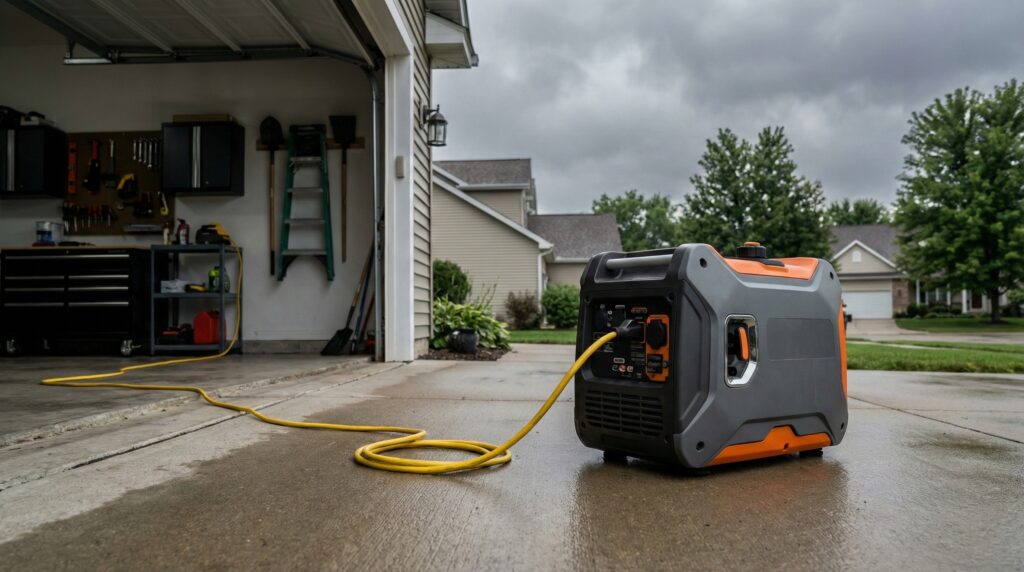
No matter which style you choose, safety features and proper use matter. CO poisoning is a major generator risk. Follow guidance from the CDC carbon monoxide prevention resource and the OSHA carbon monoxide safety guidance: run generators outdoors only, far from doors/windows/vents, with exhaust pointed away. Even if a model advertises an automatic CO shutoff, treat it as a backup — not permission to run closer to your home.
Who a 3500 watt generator Fits Best
A 3,500W-class inverter generator tends to fit best when you need “a lot of portable power,” but still care about noise, fuel consumption, and the quality of power going to electronics.
- RV owners (especially 30A RVs) who want enough power for battery charging, outlets, and moderate appliance use — and who know to look specifically for a 120V 30A TT-30R receptacle (not just “a 30A outlet”).
- Home backup for essentials (fridge + lights + communications + small appliances), especially where you’re willing to manage loads instead of trying to power the entire panel.
- People who run sensitive electronics during outages — Wi‑Fi gear, laptops, modern TVs, CPAPs, and battery chargers — where inverter power is often the safer bet than a basic open-frame unit.
- Neighbors are close or you want a calmer campsite/tailgate experience; inverter models commonly do better on perceived noise, especially at lower loads.
- Anyone planning a safer setup, including using a proper inlet/transfer switch (installed by a licensed electrician) rather than extension-cord chaos.
One big reason shoppers like this size class is that it can feel like a “sweet spot” between tiny suitcase inverters and bulky 6,000–9,000W open-frame units. As one owner put it: “This generator powers our RV with no issues and starts up easily.
” — Buyer report, 5 stars.
Who Should Skip a 3500 watt generator
This category isn’t a fit for everyone. Here’s who should consider sizing up, choosing a different style, or switching to a different backup strategy.
- You need true whole-home backup with multiple large loads at once (central AC, electric dryer, well pump + other loads). You’ll likely want higher continuous wattage and/or 120/240V output with the right inlet/transfer setup.
- You need 240V output for specific loads. Many 3,500W-class inverter generators are 120V-only. Always confirm whether the unit supports 120/240V if that’s part of your plan.
- You can’t (or won’t) manage loads. If you expect to microwave, run a space heater, and start a fridge compressor at the same time, you may hit overloads quickly.
- You need very long, unattended runtime. Portable generators require refueling, cool-down time, and supervision; you may be better served by a professionally installed standby generator or a battery system sized for your loads.
- You’re in an environment where noise is less tolerable than you think. Even inverter generators get noticeably louder as load increases — and published dBA numbers are often measured under light loads at a set distance.
Also: don’t buy this class expecting “3500W all day long” just because the listing headline says so. Buyer frustration here is common, especially when they discover the running watts are lower than expected: “It’s not as powerful as advertised and struggles with heavier loads.
” — Buyer report, 2 stars.
Price and Value
Inverter generators in the 3,500W class typically cost more than open-frame models with similar headline watt numbers, but you’re paying for a different experience: cleaner power, variable-speed fuel savings, and usually better noise control. Value here comes down to (1) whether you actually need inverter output, and (2) whether the generator’s running watts, outlets, and runtime match your real use.
When you’re comparing price, try to normalize by the things that change real-world satisfaction:
- Rated running watts (not peak): A cheaper “3500W” that only runs ~3,000W continuously may not be a deal if you actually need more headroom.
- CO safety shutoff: Many newer models promote built-in CO detection/shutoff. For example, Champion markets “CO Shield®” on a 3,500W-class model (Champion model 201286 specs). Treat this as an important safety layer — but still follow outdoor placement rules.
- Outlet set: Paying a bit more for the correct RV receptacle (TT‑30R), enough 20A outlets, and sensible breaker layout can save you from living in adapter-land.
- Portability hardware: Wheel kits and handles aren’t glamorous, but they change whether you’ll actually move the generator where it needs to be during an outage (farther from the house is better for CO safety).
If you’re budgeting for home backup, include the real costs: a proper outdoor-rated generator cord, possibly a power inlet box, and a transfer switch or interlock installed to code. That part is where talking to a licensed electrician is worth the money — especially to avoid unsafe “backfeed” setups.
Common Mistakes When Trying a 3500 watt generator
Most “bad generator experiences” at this size aren’t because the generator is defective — they’re because of mismatched expectations, outlet confusion, or avoidable setup mistakes.
- Mistake #1: Sizing off surge watts instead of running watts. Listings often emphasize the biggest number. In real use, your plan should keep steady loads under the generator’s continuous rating, leaving headroom for surges.
- Mistake #2: Forgetting motor starting surges. Refrigerators, freezers, sump pumps, and furnace blowers can demand 2–3× their running watts briefly at startup. If your generator is already near its limit, that surge trips overload protection.
- Mistake #3: Assuming “30A outlet” automatically means RV-compatible TT‑30R. Some units have a 30A locking outlet (like L5‑30) instead of TT‑30R, and you’ll end up with adapters that may not be ideal.
- Mistake #4: Trying to power a home without a transfer switch or interlock. Never backfeed a panel through a dryer outlet or a homemade “suicide cord.” It’s a serious shock and fire hazard and can energize utility lines. Use a proper transfer method and have it installed per local code.
- Mistake #5: Believing published runtime and noise numbers will match your use. Runtime is often quoted at ~25% load; noise is often measured at a fixed distance under light load. If you run closer to half-load (or more), expect more fuel burn and more noise.
- Mistake #6: Poor fuel management. Stale gasoline and ethanol-related issues are a common cause of “won’t start” complaints. Use fresh fuel, consider stabilizer, and do periodic test runs under load.
Owner feedback often reflects these expectation gaps. For example: “Runs great, but you have to manage what you plug in or it will overload.
” — Buyer report, 4 stars.
Finally, don’t treat any safety feature as optional. CO risk is real. The CDC’s generator CO guidance is clear: run it outdoors, away from openings, and use CO alarms inside the home.
FAQ
What can a 3500 watt generator run during a power outage?
In many homes, a 3,500W-class unit can handle a refrigerator/freezer (cycling), some lights, TV/router, phone/laptop chargers, and small kitchen appliances — often not all at once. Plan around running watts, then leave room for the largest starting surge (typically the fridge compressor or a blower motor).
Is 3500 watts enough to power a house?
Usually it’s enough for essential circuits, not “the whole house.” You’ll likely need load management, and you may be limited by outlet type (many are 120V-only) and how you connect to your home. For a safe setup, use a transfer switch or interlock with a proper inlet — ideally planned with a licensed electrician.
Do I need an inverter generator at 3500 watts?
If you’ll run sensitive electronics (modem/router, computers, modern TVs, CPAPs, battery chargers) or you care about lower noise and better fuel efficiency at varying loads, an inverter model is often worth it. Conventional/open-frame units can be cheaper per watt, but are typically louder and may produce “dirtier” power.
What outlet should I look for if I have a 30A RV?
Look specifically for a 120V TT-30R receptacle if you have a standard 30A RV cord. Don’t assume any “30A outlet” is the same — some are locking styles intended for different cables. Adapters can help physically connect plugs, but they don’t increase the generator’s usable wattage.
Can I connect a portable generator directly to my home electrical panel?
Only through a properly installed transfer switch or interlock and a correctly rated inlet — never by plugging the generator into a wall outlet. Backfeeding is dangerous to you, your home, and utility workers. If you’re unsure what your panel/inlet should be, a licensed electrician can confirm what’s code-appropriate for your area and your generator’s outlet options.
How far should I place a generator from the house?
Place it outdoors, far away from doors, windows, and vents, with exhaust pointed away from the home. For authoritative safety guidance, follow the CDC’s carbon monoxide prevention recommendations and the OSHA carbon monoxide safety guidance. Even generators with automatic CO shutoff should still be positioned correctly.
Why does my “3500W generator” trip when I start the microwave or fridge?
Two common reasons: (1) your continuous load is already close to the generator’s running watt limit, and the added appliance pushes it over; (2) a motor load (like a fridge) has a brief starting surge that stacks on top of other loads. The fix is usually load management — turn off or unplug one high-draw item before starting another.
What maintenance matters most for a 3500 watt inverter generator?
Oil changes (especially after break-in), clean air filter, fresh stabilized fuel, and periodic test runs under load tend to prevent the most common reliability issues. Also keep it dry and use only safe, purpose-built rain covers if you must operate in wet weather.
Looking for these on Amazon? Browse 3500 watt generator on Amazon →
Bottom Line
A 3,500W-class inverter generator is a strong choice for RV use and essential-home backup when you size it by running watts, account for starting surges, and verify the outlets you need. Prioritize CO safety shutoff as an added layer, but follow CDC/OSHA placement guidance every time — outdoors only, away from openings — and use a proper transfer setup for any home-panel connection.
Affiliate disclosure: Some of the links in this article are affiliate links. We may earn a commission if you purchase through them.