
TL;DR
A dual fuel inverter generator is a strong fit if you want quieter, “cleaner” power and the flexibility to run either gasoline or propane — especially for RVing or essential-home backup. Just remember: output is typically lower on propane, so size the generator based on its propane-rated running/surge watts if LP will be your main fuel, and plan your connection method (cords vs RV shore power vs a home inlet with transfer equipment) before you buy.
What Dual Fuel Inverter Generators Actually Are
A dual fuel inverter generator combines two ideas in one machine:
- Dual fuel means it can run on gasoline or propane (LP). You typically switch fuels via a selector (or by connecting/disconnecting the propane line) and start the unit on your chosen fuel.
- Inverter generator means the generator produces AC power through an inverter process (it generates DC internally, then inverts it to stable AC). In plain terms, inverter models generally deliver more stable electricity and can throttle down at lighter loads — often making them quieter and more fuel-efficient than conventional open-frame, fixed-speed generators.
Why do buyers choose this combo? It’s mostly about flexibility and livability:
- Propane stores better than gasoline. It doesn’t “go stale” in the same way and it can reduce the odds of carburetor gumming during storage — handy if the generator sits for long stretches between outages.
- Gasoline is easy to find (when stations have power) and often delivers higher wattage than propane on the same generator.
- Inverter behavior matches real-world loads. Many households and RV setups spend a lot of time at partial loads (fridge cycling, a few lights, modem/router, charging devices). Inverters typically run more quietly and sip fuel in those scenarios.
The “formula” for buying one is:
Pick your connection style (extension cords vs RV cord vs home inlet) + size for your highest starting-watt load (fridge, well pump, RV A/C, etc.) + confirm propane ratings (running and surge watts on LP) + plan fuel/runtime (tank size and expected average load).
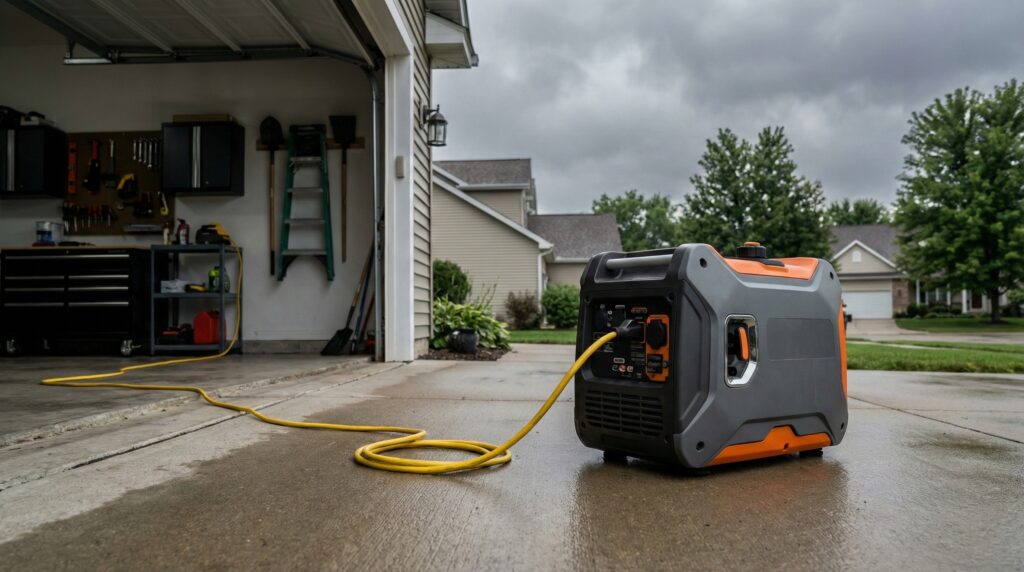
One more critical piece: generators create carbon monoxide (CO). CO-related injuries and deaths are a persistent risk with portable generators, so “inverter” doesn’t change the safety basics — run it outdoors only and away from openings. For clear guidance, see CDC carbon monoxide safety information and the U.S. Consumer Product Safety Commission generator safety guide.
Who Dual Fuel Inverter Generators Fits Best
Dual fuel inverter generators tend to make the most sense for buyers who care about quiet operation, fuel flexibility, and clean power—and are willing to pay a bit more (and accept a bit less peak wattage per dollar) versus a conventional generator.
They’re a particularly good match for:
- RV owners who want a quieter campground experience and the option to plug into an onboard propane setup or standard cylinders (with the correct hose/regulator).
- Home essentials backup where you’re powering selective loads (fridge, lights, Wi‑Fi, small appliances) and you value lower noise and better light-load efficiency.
- People who store gear long-term and want to reduce gasoline storage hassles (stabilizer routines, draining carbs, stale-fuel issues).
- Outage planners who like having “Plan A/Plan B” fuel options when either gasoline access or propane refills get difficult.
Budget-minded shoppers also look at certain models because the price-to-features ratio can be appealing. As one shopper put it: “I think the AI Power set noted by u/Dull_Caterpillar_642 for $1,300 at Costco is a pretty good deal.” — Deal-seeker recommending Costco model on r/Generator
Who Should Skip Dual Fuel Inverter Generators
This category isn’t automatically the best choice for everyone. You may want to skip a dual fuel inverter generator if:
- You need the most watts per dollar and don’t care much about noise. A conventional open-frame generator can be cheaper for high-watt demands.
- You’ll run heavy loads for long stretches (or need a lot of 240V capacity). You may be better served by a larger conventional unit or a different backup strategy.
- You don’t want propane complexity. Propane can be very convenient, but it adds hoses, fittings, and leak-check routines.
- You expect “full rated power” on propane. Many dual fuel generators have noticeably lower running and starting watts on LP than on gasoline.
Also, quality can vary a lot by brand and model. One buyer weighing tradeoffs summarized the concern this way: “I personally just grabbed the A-iPower 7100 closed frame inverter from Costco for $1,300. It’s squarely in that more budget range in terms of quality, but reviews on them seem reasonably okay” — Costco buyer weighing budget vs quality on r/Generator
Price and Value
Dual fuel inverter generators usually cost more than similarly sized conventional generators because you’re paying for inverter electronics, sound-dampening design (on many models), and the dual-fuel system. In return, you typically get:
- Better noise manners at partial load
- More efficient fuel use when you’re not near max output
- Cleaner power characteristics that are generally friendlier to sensitive electronics
- Propane capability for easier long-term fuel storage
On pricing: the featured A-iPower model’s brand product page currently displays pricing in a way that isn’t usable for straightforward comparison (it may show as $0.00), but buyer feedback references a Costco-purchased A-iPower closed-frame inverter around $1,300. Treat that as anecdotal buyer context rather than a universal street price — inventory channel, included accessories, and promotions can shift real-world cost a lot.
Value-wise, a good rule is: pay extra for dual fuel + inverter only if you will actually use the benefits (propane storage, quieter running, better light-load efficiency). If your goal is simply “most power for the least money” and noise isn’t a concern, a non-inverter generator can pencil out better.
Common Mistakes When Trying Dual Fuel Inverter Generators
Most frustrations we see come down to planning mistakes — not the idea of dual fuel or inverter power itself. Here are the big ones to avoid:
- Sizing from the gasoline rating when you’ll mostly run propane. Many units lose a meaningful chunk of running and starting watts on LP. If propane is your primary fuel, size using the manufacturer’s propane-rated numbers.
- Assuming an adapter replaces a real connection plan. If you want to feed a home inlet, confirm receptacle type (and 120V vs 120/240V) and use proper transfer equipment. Adapters are fine for compatibility, but they shouldn’t be your whole plan.
- Underestimating starting watts. Fridges, freezers, well pumps, and RV A/C units can draw a large surge at startup. If you size too close, nuisance overload trips are common.
- Ignoring propane cold-weather limits. High draw in cold weather can reduce vaporization and can chill components. Bigger tanks and lower steady loads are often the practical fix.
- Relaxing CO safety because the generator is “quiet” or has a CO feature. CO shutoff/alert features can help, but they’re not permission to run in a garage, near doors/windows, or under vents.
Finally, don’t underestimate “budget vs quality” realities. To echo one owner’s expectations-setting: “I personally just grabbed the A-iPower 7100 closed frame inverter from Costco for $1,300. It’s squarely in that more budget range in terms of quality, but reviews on them seem reasonably okay” — Costco buyer weighing budget vs quality on r/Generator
If you’re connecting a generator to a home inlet/panel, loop in a licensed electrician. Safe installations typically use a transfer switch or interlock, aligned with common electrical-code practices for optional standby setups (often referenced under NFPA 70 / National Electrical Code Article 702). The goal is to prevent dangerous backfeeding and ensure circuits are properly isolated from the grid.
FAQ
How much less power will I get on propane?
Often enough to matter. Many dual fuel generators produce lower running watts and lower surge watts on LP than on gasoline. If you plan to run propane most of the time, size the generator based on its propane-rated specs (not the headline gasoline number), and keep extra headroom for startup surges.
Is an inverter generator actually safer for electronics?
In many cases, yes — because inverter generators generally produce more stable, cleaner power than conventional models. That said, you still need to avoid overloads, use properly rated cords, and keep water/weather exposure in mind.
Do I need 120/240V output for home backup?
Only if you need to run 240V loads (common examples: some well pumps, some HVAC equipment, some shop tools). Many households can cover “essentials” at 120V if you choose circuits carefully. If you’re planning to connect through a home inlet, a licensed electrician can help you decide what you truly need and how to wire it safely.
Can I plug a generator into a wall outlet to power my house?
No. That’s dangerous backfeeding and can electrocute utility workers and damage equipment. Use a properly installed transfer switch or interlock with an inlet — this is also the direction reflected in electrical safety best practices (often discussed under NFPA 70 / National Electrical Code Article 702). For general safety reminders, review the U.S. Consumer Product Safety Commission generator safety guide.
Does a CO shutoff feature make indoor use safe?
No. CO can build up quickly, and even “CO shutoff” designs are only a layer of protection. Generators should be operated outdoors, away from doors, windows, and vents. For detailed public guidance, see CDC carbon monoxide safety information.
What propane tank size makes sense for overnight runtime?
It depends on your average watt draw, not just peak surge. Small 1 lb bottles are typically for short runs; many people use 20 lb cylinders for moderate runtime, while longer overnight/multi-day plans often push buyers toward larger cylinders or multiple tanks. In cold weather, larger tanks also help because they vaporize propane more reliably under higher draw.
Where should I place a generator when it’s running?
Outdoors only, far from doors/windows/vents, with exhaust pointed away from the home — and never in a garage, basement, or shed. CO safety guidance from the CDC and generator-specific advice from the CPSC are good references to follow.
Looking for these on Amazon? Browse dual fuel inverter generator on Amazon →
Bottom Line
Dual fuel inverter generators are worth it when you want quieter operation, cleaner power delivery, and the option to run propane for easier storage. Just size the unit based on the propane ratings you’ll actually use, and plan a safe, code-appropriate connection method — especially if you’re tying into a home inlet with a transfer switch or interlock.
Affiliate disclosure: Some of the links in this article are affiliate links. We may earn a commission if you purchase through them.