
Home generator cost can swing widely because “generator price” is really a bundle of equipment, electrical work, fuel setup, permits, and ongoing upkeep. Below, we break down the typical cost ranges and the specific choices that usually move your total up or down.
Need to Know
Our editorial team reviewed the best-available portable power guidance and community owner reports to answer this. Home generator cost isn’t just the sticker price of a generator — your total usually includes installation labor, electrical hardware, permitting, fuel plumbing (if applicable), and maintenance. The biggest cost drivers are how much you want to power (your “loads”), how automatic you want it to be (manual vs. automatic), and site-specific install complexity; where available, peer-reviewed research and manufacturer safety standards generally align with that real-world experience.
Quick Answer
Home generator cost typically ranges from a few thousand dollars for a portable setup with a safe home connection to well into five figures for a permanently installed standby system. Your region, fuel type (natural gas/propane/gasoline), and installation details (transfer switch, gas line work, permits) can move the final price substantially — so you’ll want to check current local installer quotes and retailer pricing.
What This Usually Means
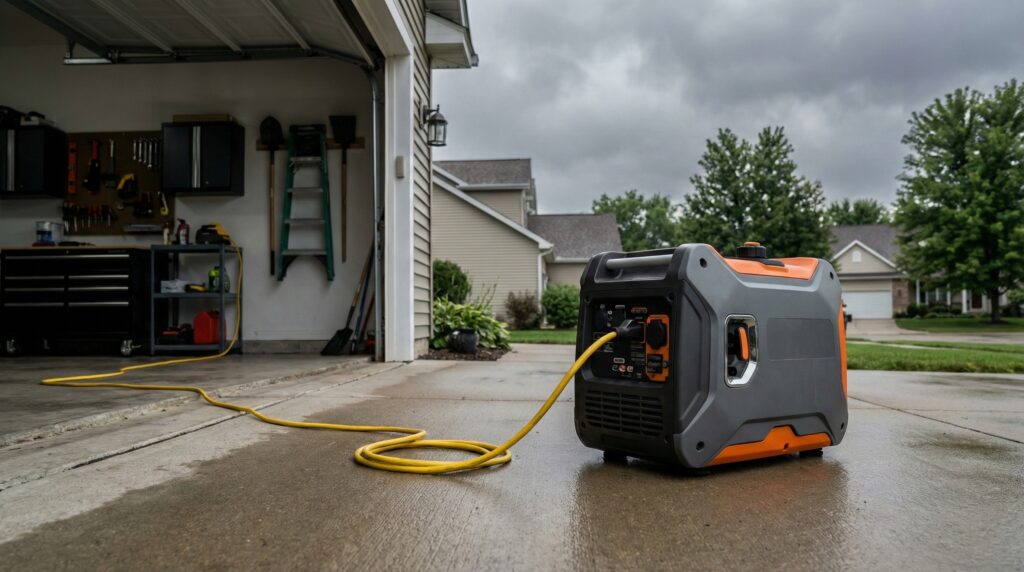
When you search “home generator cost,” you’re usually trying to estimate total project cost, not just the generator. In practice, most households land in one of three “cost lanes”: (1) portable generator used outdoors with extension cords (lowest up-front, least convenient), (2) portable generator connected to your home through a transfer switch or interlock + inlet (moderate up-front, much more usable), or (3) a permanently installed standby generator with an automatic transfer switch (highest up-front, most seamless during an outage).
From a budgeting standpoint, it helps to separate costs into: equipment (generator, transfer switch, inlet, cords, fuel tanks/regulators), labor (electrical work, possibly gas plumbing), paperwork (permits/inspections), and ongoing ownership (fuel storage, oil changes, battery replacement for standby units, periodic service). We’ve also seen homeowners underestimate “small” line items — like a concrete pad for a standby generator, trenching, or upgrading an older electrical panel — until a licensed electrician walks the site.
Finally, “how much generator you need” is often misunderstood as square footage. Cost tracks more closely with what you want to run at the same time: HVAC, well pump, sump pump, electric range, water heater, medical equipment, refrigerator/freezer, lights, and internet. A smaller house with all-electric appliances can cost more to back up than a larger home with gas heat and modest electrical loads.
“It all depends on the size of your house, your loads, whether you have gas heat, what you want to run, etc. There is no one answer. You have a relatively small house and I’m guessing gas heat and a gas stove. Someone else might have an all electric house and 5,000 sf. They…” r/Generator
One more “hidden” factor in home generator cost is your local code and inspection environment. Electrical equipment and transfer gear are commonly expected to be listed by a recognized testing lab (you’ll often see references aligned with UL Solutions listings), and standby installations may involve clearances, placement rules, and fuel-specific requirements. If you’re in a region with tighter air-quality rules, engine certification can also matter—CARB requirements are a common reference point for compliant small engines and portable generators, and those compliance features can affect pricing and availability.
What Can Help
- Define your “must-run” circuits before you shop. A tighter list (refrigerator, freezer, furnace blower, some lights, router, a few outlets) usually lowers total home generator cost because it reduces the size of generator you need and may reduce electrical labor.
- Decide whether you want “manual effort” or “automatic comfort.” Portable setups are typically cheaper up front but require you to roll the unit out, fuel it, start it, and connect it safely. Standby units cost more but can restore power automatically within seconds to minutes.
- Ask for quotes that break out equipment vs. labor vs. permits. Itemized quotes make it easier to compare apples-to-apples (especially if one bid includes permitting, a pad, or a longer cable run).
- Consider an interlock/transfer-switch connection for portables (where code allows). Compared to running extension cords everywhere, a proper inlet + interlock/transfer switch can be a cost-effective step up in convenience and safety — often cheaper than going full standby, but much more “whole-home feeling” than cords.
- Right-size fuel planning (which can change costs). Natural gas standby systems avoid gasoline storage and refueling runs, but may require gas line work. Propane adds tank costs and delivery planning. Gasoline is often cheapest up-front but can be costly and inconvenient during long outages.
- Budget for maintenance from day one. Oil, filters, spark plugs, a starting battery (for standby), and periodic service visits are real ownership costs. Planning for them helps you compare the “year one” cost to “year five” cost.
- Check local incentives or resilience programs carefully. Some areas or utilities occasionally offer limited programs related to home resilience; eligibility is very location-specific and often tied to medical need or grid-hardening efforts.
- Use preparedness checklists to avoid overbuying. FEMA emergency preparedness guidelines can help you map realistic outage needs (food safety, heating/cooling strategy, communications) so you don’t pay for “everything running” if you don’t truly need it.
“If your power doesn’t go out that often and you’re physically capable person, you may want to look into an interlock kit with a power inlet” r/Generator
Example budget approach we’ve seen work: you list your critical loads, decide whether you can live without central A/C during outages, and then price two paths—(1) portable + inlet/interlock + a few managed circuits, and (2) standby + automatic transfer. Even if you ultimately choose standby, the portable “connected properly” quote gives you a grounded baseline for what you’re paying for convenience and automation.
If you want to explore the standby side in more depth (without turning this into a shopping list), our hub on standby generator options can help you understand how systems are typically configured — information that often clarifies where the costs come from.
What to Avoid
- Avoid budgeting from “generator price” alone. The project can change a lot once you add a transfer switch, inlet, electrical labor, permit fees, and (sometimes) panel or service upgrades.
- Avoid backfeeding your home through a dryer outlet or improvised cords. It’s dangerous and can be illegal — plus it can create costly damage or liability. Proper transfer equipment is part of the real home generator cost for a reason.
- Avoid oversizing “just in case” without a load plan. Bigger units often cost more to buy, install, and fuel. A licensed electrician can help you calculate starting loads (like motor inrush) instead of guessing.
- Avoid assuming square footage equals generator size. Two 2,000 sq ft homes can have very different electrical demands (gas vs. electric heat, well pump vs. city water, induction range vs. gas range), which affects cost.
- Avoid skipping compliance considerations in regulated states. In some places, emissions compliance (often discussed in terms of CARB) can influence what models are sold and at what price.
- Avoid ignoring noise, placement, and neighbor constraints. Solving these late (moving a unit, adding sound mitigation, redoing a pad) can add surprise costs.
“Cool. Then you make a change or you accidentally turn on the HVAC, Coffee maker, and the microwave and it faults. Personally I want something in place where I don’t need a critical loads panel. Where I don’t have to think about it. Where my significant other doesn’t have to…” r/Generator
We’d also avoid “optimistic outage planning.” If your goal is comfort during multi-day outages, the cheaper plan can become expensive if it forces repeated fuel trips, spoiled food, or emergency hotel stays. That doesn’t mean you need a top-end system — it means you should treat runtime logistics (and your own tolerance for hassle) as part of cost.
When to Consult a licensed electrician or off-grid solar installer
- You want to connect a generator to your home panel. Any plan involving an interlock kit, transfer switch, inlet, or critical-loads subpanel is the moment to bring in a licensed electrician for code-compliant design and permitting.
- You’re considering a standby generator tied to natural gas or propane. Coordinating electrical + fuel + placement requirements is where costs can balloon if the site is tricky, so professional scoping helps prevent surprise change orders.
- Your panel is older, crowded, or you suspect it needs upgrading. If a contractor mentions a service/panel upgrade, get it evaluated — this can be a major driver of home generator cost and is highly site-specific.
- You need to run large motor loads. Central A/C, well pumps, sump pumps, and some shop tools have starting surges that can require careful sizing and circuit planning.
- You’re blending generator backup with batteries or solar. An off-grid solar installer can help you avoid double-spending on overlapping equipment and can design around transfer behavior, inverter limits, and safe neutral/ground handling.
- You’re unsure about local rules, inspections, or equipment listings. Pros typically know what your AHJ (Authority Having Jurisdiction) expects, and can steer you toward appropriately listed gear (often aligned with UL Solutions standards).
If you’re weighing generator backup versus a battery-first approach for shorter outages, it can be useful to read our overview of home battery backup basics as a cost-comparison framework. Even then, we’d still involve a licensed electrician or off-grid solar installer for any permanently installed system.
FAQ
What factors change home generator cost the most?
The biggest drivers are the amount of power you want available (especially if you want central A/C or electric heat), whether you want automatic operation (standby) or manual setup (portable), and installation complexity (distance to panel, need for trenching, panel upgrades, or gas line work). Permits and inspections also vary by region and can meaningfully change the total. Fuel choice matters, too, because it changes both up-front hardware and long-term operating cost.
Is it cheaper to power just “critical loads” instead of the whole house?
Usually, yes. Designing around a smaller set of circuits can let you use a smaller generator and simpler transfer equipment, and it can reduce fuel consumption during an outage. We’ve found many households are happiest when their “critical loads” list is realistic: refrigeration, basic lighting, HVAC blower (if gas heat), internet, and a few outlets.
How much does installation add to the total cost?
Installation can be a significant portion of home generator cost because it may include a transfer switch or interlock, wiring, an inlet, breakers, load management or a subpanel, and permitting/inspection time. Standby installs can add site work (pad, placement), plus fuel plumbing coordination. The best way to avoid surprise is to request an itemized quote and a site walk from a licensed electrician.
Can a portable generator be a “whole-home” solution cost-wise?
In some homes, a portable generator connected through a code-compliant inlet and interlock/transfer switch can cover most essentials at a lower up-front cost than standby. The tradeoff is convenience: you still have to move it outside, manage fueling, and live within a power budget to prevent overloads. If you want hands-off operation during overnight outages or severe weather, the added cost of standby can be easier to justify.
Do standards or regulations affect what you’ll pay?
They can. Equipment that’s listed to recognized safety standards (commonly associated with UL Solutions) may cost more than non-listed alternatives, but it’s often what inspectors and electricians will specify for a compliant installation. Emissions rules can also affect availability and pricing in some states; CARB compliance is a common reference point for portable generator engine requirements. For radios and electronics that may be integrated into modern standby controls, compliance concepts tied to the FCC can also shape product design and cost indirectly.
Bottom Line
Home generator cost is best understood as a full backup-power project: equipment + installation + permits + fuel setup + maintenance, not just the generator itself. Many households spend a few thousand dollars for a portable setup with a safe home connection, while automatic standby systems can push the total into five figures depending on loads and installation complexity. We’d stick with a load-first, itemized-quote approach and revisit if new research shifts the consensus.