
TL;DR
If you’re shopping for a “generator for home,” start by deciding whether you need 240V output (well pump, central AC, some dryers/ranges) and then size for both running watts and starting/surge watts. For many households, a mid-to-high watt inverter generator is the sweet spot for quieter operation and cleaner power, but you’ll still need a safe, code-compliant way to connect it (transfer switch or interlock) and a realistic fuel plan.
What a Home Backup Inverter Generator Actually Is
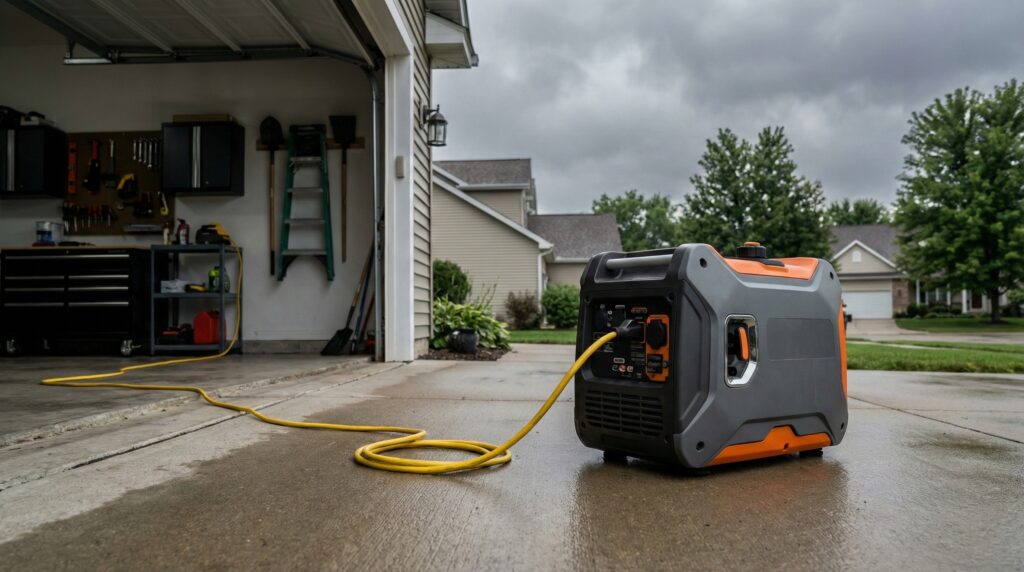
Inverter generators are portable engine-driven generators that make electricity in a way that’s generally steadier (cleaner waveform) than traditional “open-frame” generators. In plain terms: the engine spins, electricity is produced, and then electronics “condition” that power so it’s more stable for modern home loads like TVs, routers, computers, chargers, and variable-speed appliances.
For home backup, the useful way to think about an inverter generator is as a temporary, manual backup power source that can run either:
- Individual appliances via extension cords (simplest, but limited and easy to overload cords/outlets), or
- Selected home circuits through a properly installed transfer switch or panel interlock plus an exterior inlet box (the safer, cleaner approach for most people).
The “formula” that determines whether a generator will work for your house is:
(Your essential loads’ running watts) + (your largest motor-starting surge) + (some headroom)
AND
Correct voltage (120V-only vs 120/240V)
That voltage piece is what trips up a lot of buyers. Many smaller inverter generators are 120V-only—they can run a fridge, lights, Wi-Fi, and a furnace blower, but they won’t run 240V loads like a typical well pump or central air conditioner. If you want to power parts of a 240V panel through an inlet (common with interlocks), you usually want a generator that supports 120/240V output and has the right receptacle (often a 30A or 50A twist-lock) to match your inlet/cable.
Finally, no generator choice matters if it’s used unsafely. Federal safety guidance repeatedly emphasizes two home-generator risks: carbon monoxide (CO) poisoning and backfeeding (sending power into utility lines). Always run generators outdoors far from doors/windows and never connect one to house wiring without proper transfer equipment. For safety basics, see CDC carbon monoxide guidance, the U.S. Consumer Product Safety Commission generator safety guidance, and FEMA generator safety guidance.
Who Inverter Generators Fit Best
Inverter generators tend to fit best when you want real backup power without the noise, fuel burn, and “rough power” feel of many budget open-frame units. They’re especially strong for:
- Essentials-only backup (fridge/freezer, lights, internet, phone charging, a microwave occasionally) where you care about noise and fuel efficiency.
- Electronics-heavy households that want more stable power for TVs, modems/routers, laptops, and battery chargers.
- Neighborhood outages where you’ll be running it for hours at a time and want something you can live with (sound-wise), especially overnight.
- Homeowners planning a proper connection (transfer switch or interlock), so you can run chosen circuits instead of playing extension-cord roulette.
They’re also a good fit if your “generator for home” search is really about quiet, indoor-safe backup for communications and medical/small appliance needs. In that case, a portable power station (battery “solar generator”) can be the better match — no fumes, no oil changes, and you can recharge from solar during daylight.
Buyer reports note a common theme: people are happiest when they plan their circuit list first (what must run), then buy for that list, rather than buying a big number of watts and hoping it “covers the house.”
GENMAX GM5500i 5500 Watt Gasoline Inverter Generator with CO Detect is the style of inverter generator that tends to satisfy homeowners who want to step up from “camping-size” units to something that can credibly run multiple household loads.
AC200L and F3000 represent the other common “home generator” buyer: someone who mainly needs refrigeration bridging, device charging, internet, and lights — quietly — and is willing to manage energy usage rather than making continuous power with fuel.
Who Should Skip Inverter Generators
An inverter generator isn’t automatically the right answer for every home. You may want to skip this category (or be very selective) if any of the following apply:
- You need true whole-home coverage with automatic switching. A portable inverter generator is manual: you roll it out, fuel it, start it, and manage loads. For frequent outages or medical dependency where you need seamless power, talk to a licensed electrician or off-grid solar installer about a standby generator or a hybrid battery system.
- You must run large 240V loads (central AC, well pump) and you’re looking at 120V-only inverter models. Inverter doesn’t guarantee 240V — verify it before you buy.
- You hate fuel management (storing gasoline safely, rotating it, refueling during long outages). A battery power station may be a better fit for short outages; a properly installed standby generator on natural gas/propane may be better for long outages.
- Budget per watt is your #1 priority. Open-frame conventional generators often deliver more peak wattage per dollar (but louder and typically less refined power).
Also consider the reality that “portable generator + home inlet” still requires planning and often professional help. If you’re not prepared to install transfer equipment correctly, it’s easy to end up in unsafe territory (backfeeding, overloaded cords, exposed connections). FEMA and CPSC both warn against improvised hookups — don’t do it.
Price and Value
For inverter generators suitable for home backup, pricing usually tracks with three things: output class (especially 240V capability), features (electric start, CO shutoff, better outlets), and build/brand support.
- GENMAX GM5500i: listed around $920–$1080. In this price band, the value proposition is getting into a watt class that can run more than “just the fridge,” plus a home-safety-forward feature set like CO detection/shutoff.
- Bluetti AC200L (portable power station alternative): listed around $830–$970. Value here is silent, fume-free backup power you can use indoors, with the option to recharge from solar during the day — but you’re buying stored energy (Wh), not continuous engine-made power.
- Anker Solix F3000: price not provided in the data above, but products in this class are typically positioned as higher-capacity home-backup power stations, often with expandability options. The value depends heavily on whether you’ll actually use expandability (extra batteries, input options) and whether you can recharge during extended outages.
One important “hidden cost” for any generator for home plan is the safe connection gear: inlet box, power cord, transfer switch or interlock, and professional installation where required. Many homeowners find the electrical hardware and install can be as important as the generator purchase itself.
Common Mistakes When Trying Inverter Generators at Home
Most homeowner disappointment comes from mismatched expectations — not from the generator being “bad.” Here are the errors we see most often in customer reviews and user feedback across home-backup setups:
- Buying by peak watts only and ignoring starting/surge needs. Motor loads (fridge compressors, sump pumps, furnace blowers, some well pumps) can spike at startup.
- Assuming every inverter generator supports 240V. Many do not. If you need 240V, confirm the generator specifically provides 120/240V output and has the receptacle that matches your inlet plan.
- Trying to “power the whole panel” without load control. Even if you connect via interlock, you still need to manage what’s turned on — or you’ll trip breakers or overload the generator.
- Using the wrong cords (too thin, too long, not rated for the load). Voltage drop is real; motors are not forgiving.
- Improvised home connection (backfeeding). Never plug a generator into a wall outlet. Use a transfer switch or interlock installed to code by a licensed electrician.
- Underplanning fuel. Gasoline storage and rotation matters; propane derates output; natural gas depends on service continuity. Choose a fuel strategy that matches your likely outage scenario.
- Unsafe placement. Running too close to doors/windows/garage openings is a leading cause of CO tragedies. Follow CDC/CPSC guidance and the manufacturer’s distance instructions, and use CO alarms in the home.
If you want the simplest path: make a short list of circuits, confirm which are 120V vs 240V, then size the generator for the worst-case simultaneous load plus a buffer. A licensed electrician can help you pick between a transfer switch (selected circuits) and an interlock (more flexibility) based on your panel and goals.
FAQ
Do I need 240V output for a home backup generator?
Maybe. If you need to run a well pump, central AC, or certain large appliances (some dryers/ranges), you’ll likely need 240V. If your outage plan is “essentials only” (fridge, lights, internet, furnace blower), 120V may be enough — verify your specific appliances and panel setup before buying.
How do I size a generator for home use?
Add up the running watts of the loads you want to run at the same time, then account for starting/surge watts for the biggest motor load you’ll start (often a fridge, sump pump, or HVAC component). After that, leave headroom so the generator isn’t pinned at max output continuously. If you’re unsure, a licensed electrician or off-grid solar installer can help you translate your circuit list into a realistic generator size.
Is an interlock as safe as a transfer switch?
Either can be safe when installed correctly to code. A transfer switch typically powers a defined set of circuits; an interlock lets you energize your panel through a breaker while preventing the main breaker from being on at the same time. The right option depends on your panel compatibility, how many circuits you want available, and local code requirements. For the “don’t do this” list (like backfeeding), refer to FEMA generator safety guidance.
Where should I place a generator when it’s running?
Outdoors only, well away from doors, windows, and vents — never in a garage, basement, or enclosed space. Carbon monoxide can build up fast and can be deadly. For placement and CO prevention basics, follow the CDC carbon monoxide guidance and the U.S. Consumer Product Safety Commission generator safety guidance.
Can I run sensitive electronics on a generator?
Inverter generators are generally preferred for electronics because they typically produce steadier power than conventional open-frame models. Regardless of generator type, avoid overload, use properly rated cords, and don’t run electronics on marginal voltage (which can happen with long/undersized extension cords).
Should I buy a gas generator or a battery power station for home outages?
If you need multi-day power with refueling and want to run higher-watt loads continuously, a gas inverter generator can make sense — assuming you can store and handle fuel safely and operate outdoors. If your priority is quiet, indoor-safe backup for internet, phones, lights, and possibly short refrigeration bridging, a battery power station can be the better experience. Many households end up using both: battery for overnight/quiet hours and a fuel generator for recharging and heavier loads.
What safety features should I look for on a portable generator?
Prioritize CO detection/shutoff, overload protection, and GFCI-protected outlets where applicable, and look for clear compliance markings from recognized testing and safety organizations (UL standards are a common reference point for portable generator assemblies). Also make sure the model you choose meets emissions requirements for where you live (CARB rules may apply in California and some other jurisdictions).
Looking for these on Amazon? Browse generator for home on Amazon →
Bottom Line
A good “generator for home” choice starts with your circuit plan: confirm whether you need 240V, size for running watts plus surge, and then commit to a safe connection method (transfer switch or interlock) installed to code. For many buyers, an inverter generator provides the best balance of usable home-backup power, noise, and power quality — while battery power stations are a strong complement (or alternative) when quiet, indoor-safe operation matters most.
Affiliate disclosure: Some of the links in this article are affiliate links. We may earn a commission if you purchase through them.