
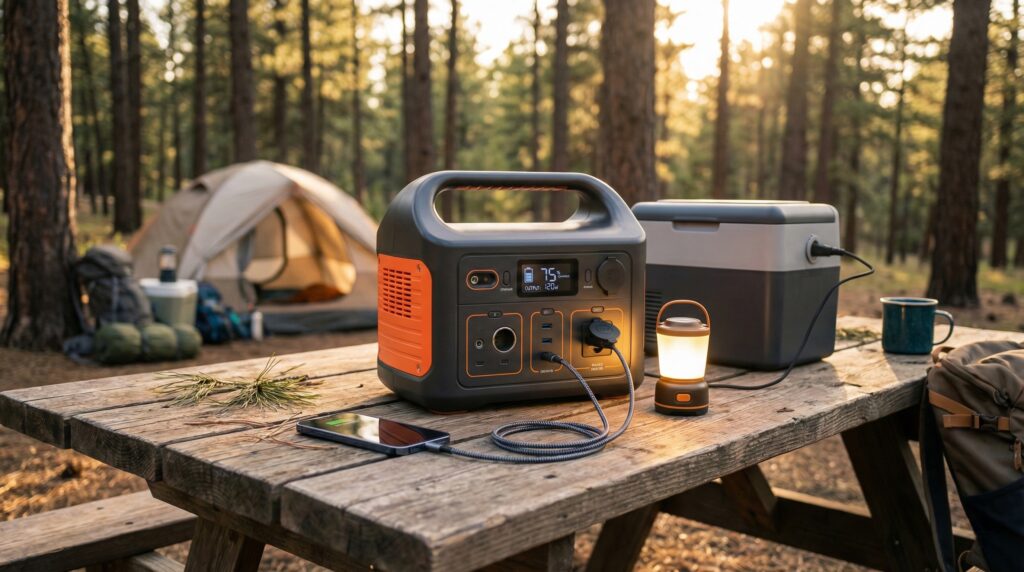
TL;DR
For hurricane prep, EcoFlow usually has the edge if your power company tends to restore service in short bursts, because faster wall recharging can matter more than a small difference in battery size. Jackery still makes sense for buyers who want a simpler, more straightforward backup setup, but for either brand, the real question is whether the exact unit can handle your fridge, fan, router, CPAP, and charging plan before the next outage hits.
Top Recommended Picks
| Product | Best For | Price | Pros/Cons | Visit |
|---|---|---|---|---|
| Jackery Solar Generator HomePower 1000 v2 | Simple home backup | $939.00 – $969.00 | Easy to use for storm basics; solar add-ons can get expensive | Visit Jackery |
| EF ECOFLOW Solar Generator RIVER 2 Pro & 160W Portable | Fast-recharge apartment kit | Check price on Amazon | Compact with strong fast-charge appeal; limited runtime for long outages | Visit Amazon |
Jackery Solar Generator HomePower 1000 v2
Best for: Buyers who want a more straightforward hurricane backup setup for lights, phones, Wi-Fi gear, and selected appliance use without a lot of extra complexity.
The Good
- Good fit for shoppers specifically comparing Jackery and EcoFlow for storm prep.
- Home-backup positioning lines up well with outage planning.
- User feedback commonly points to simple setup and easy operation.
- Likely a better fit than a very small unit if your outage plan includes more than just phones and flashlights.
The Bad
- Solar panel add-ons are often seen as pricey.
- The connector ecosystem may feel more proprietary to buyers who want flexible panel choices.
- You still need to check fridge startup load and runtime expectations before storm season.
Our Take: If you want the Jackery side of the Jackery vs EcoFlow question, this is the more natural pick here because it leans into home backup rather than ultralight portability. We think its biggest hurricane-prep advantage is ease of use: less fiddling, clearer role, and a setup many buyers are comfortable keeping ready in a closet or utility room. The tradeoff is that buyers focused on rapid turnaround between outage windows may still find EcoFlow’s fast-charge style more compelling, especially in areas where the grid flickers back for only an hour or two.
EF ECOFLOW Solar Generator RIVER 2 Pro & 160W Portable
Best for: Apartment dwellers, lighter hurricane kits, and buyers who value fast recharge over long standalone runtime.
The Good
- Compact size makes it easier to store, carry, and deploy quickly.
- Fast-charge appeal is a real storm-prep advantage when power returns briefly.
- LFP battery positioning is attractive for buyers who expect frequent use and recharge cycles.
- Useful for CPAP use, phone charging, lights, and communications gear in shorter outages.
The Bad
- Runtime is limited for extended hurricane outages.
- Not the right size to count on for long refrigerator backup.
- Some customer reviews mention compatibility frustrations.
4.5/5 across 1,774 Amazon reviews
“This is a fantastic new addition to Ecoflow’s line of "power houses". If you’re like I was, you are reading these reviews in hopes of finding more sincere information about the product. I was hesitant at first to purchase this unit thinking it’s the same thing as the smaller rivers with just an incremental increase in capacity from them. Noting that output…” — Verified Amazon buyer (5 stars)
“I recently purchased the EcoFlow River 2 Pro for a camping trip, and overall, I’m quite satisfied with its performance. The battery capacity and compact size make it ideal for travel, and it served me well as a power source for my CPAP machine and charging my phones. Throughout the night, it maintained a steady power supply, and I still had around 50%…” — Verified Amazon buyer (1 stars)
“I want to get both EcoFlow Delta and EcoFlow River Pro (with extra battery) from Costco.” — r/SolarDIY discussion
Our Take: For many storm-season shoppers, this is the clearer EcoFlow argument. It is not a big-home-backup machine, but it does answer a very practical problem: how to keep communications, charging, and a few critical devices going while also refilling quickly when utility service briefly returns. One buyer report also said, “The battery capacity and compact size make it ideal for travel, and it served me well as a power source for my CPAP machine and charging my phones.” — verified buyer, 1 stars. We would treat that as a good example of this model’s role: essentials-first backup, not whole-kitchen resilience.
Capacity and runtime for hurricane essentials
The first mistake we see in hurricane prep is buying by brand instead of by load plan. A hurricane outage plan should start with what FEMA would call core preparedness priorities: communications, lighting, food safety, medications, and basic comfort. If your station can keep phones charged, run your modem and router, power a few LED lamps, and maybe support a CPAP, that is already useful. You can review broader storm readiness guidance at Ready.gov hurricane preparedness.
That is why the Jackery vs EcoFlow debate is really a capacity-and-runtime debate. A roughly 700 to 800Wh class station, like the EcoFlow option here, is usually best treated as a short-duration essentials unit. In plain terms, that means:
- Phones and battery banks: easy load
- Modem and router: usually easy load
- LED lights: easy load
- Laptop charging: usually easy load
- CPAP: often workable, but check exact draw and whether you need AC or DC power
- Refrigerator: possible only in limited, intermittent use cases, and not something we’d promise for a long outage
A 1kWh-class setup like the Jackery model is generally a better starting point if your hurricane plan includes more than just communications and lighting. That does not mean it becomes whole-home backup. It means you have more room for a fridge cycling on and off, a fan overnight, repeated phone charging for multiple people, and some spare buffer for inverter losses.
That last part matters. Rated watt-hours do not equal perfectly delivered household energy. Inverter overhead, battery management, ambient heat, charging losses, and the simple fact that appliances cycle on and off all reduce what you can count on in the real world. Research suggests buyers should think in ranges, not perfect-label math. A modest power station may run a modem-plus-lights setup for many hours, but the same unit can feel small very quickly once you add a box fan or intermittent refrigerator load.
Our rough planning advice for hurricane basics looks like this:
- Tier 1: Phone, weather radio, modem/router, and lights
- Tier 2: Medical devices such as CPAP, plus laptop charging
- Tier 3: Box fan, occasional fridge support, and other comfort loads
- Tier 4: Heating elements, coffee makers, microwaves, and other high-draw appliances, which usually stress smaller stations too much
If your storm plan includes overnight refrigerator support, repeated fan use, or a household with several people charging devices, the safer move is usually to step up in capacity rather than trying to stretch a compact unit beyond its role.
Recharge speed can decide storm readiness
This is where EcoFlow often wins the hurricane-prep argument. In normal shopping, buyers may focus on battery size first. During hurricane season, recharge speed can be just as important. If utility power comes back for a short window and then drops again, a fast-charging unit can recover enough energy to matter. A slower-charging unit may still be half-empty when the next outage wave starts.
That is why we agree with the basic quick answer here: if you expect brief power returns between outages, EcoFlow is often the stronger buy. The RIVER 2 Pro is not bigger than the Jackery option, but its fast-charge positioning is one of the few features that can change your real outcome during unstable grid restoration.
Think about two different post-storm households:
- Household A gets power back for 90 minutes in the afternoon, then loses it again overnight.
- Household B has no utility return at all for two days.
For Household A, fast AC recharging can be more valuable than squeezing out a modest capacity advantage. For Household B, raw stored energy matters more. That is why there is no single universal winner between Jackery and EcoFlow for hurricanes. Your local outage pattern matters.
Generator-assisted charging can matter too. Some buyers use a small gas generator outdoors for a short run to refill a power station, then shut the generator down and bring the battery indoors for quiet overnight use. If that is your plan, fast input acceptance is still valuable. Just keep generator safety separate and strict: the CDC carbon monoxide safety guidance is clear that generators should never run indoors, in garages, or near openings.
We would prioritize recharge speed over extra app features or bundled solar claims if you live in a hurricane-prone area with shaky utility restoration. In a real outage, getting back to 60 to 80 percent quickly can be more useful than owning a larger battery that takes much longer to refill.
Output, surge, and pass-through limits
The second big mistake in hurricane prep is assuming a power station that has “1000” or “pro” in the name will run anything in the house. It will not. You need to check continuous AC output, startup surge, and the actual label draw on whatever you plan to plug in.
Easy loads include:
- Phone chargers
- Routers and modems
- LED lamps
- Laptops
- Many CPAP setups
Harder loads include:
- Refrigerators and freezers with compressor startup surges
- Sump pumps
- Space heaters
- Coffee makers and microwaves
- Window AC units
For hurricane prep, refrigerators are the classic trouble spot. A fridge may not draw huge power continuously, but startup can trip a smaller station if surge handling is not sufficient. That is why we recommend testing your intended backup loads before storm season, not during it. Plug in the actual appliance, let it cycle, and see whether the station overloads, alarms, or shuts down.
Pass-through and EPS behavior also deserve caution. Buyers sometimes assume these stations work exactly like a true UPS. That can be risky. Neither brand should be treated as seamless UPS protection for desktops, networking gear, or medical electronics unless the exact setup has been tested and the device tolerates the transfer behavior. If a load is truly mission-critical, talk with a licensed electrician or the device manufacturer about a proper backup strategy.
Safety also matters during indoor use. Battery power stations are generally safer indoors than fuel-burning generators, but they still need dry placement, airflow, and distance from heat sources. The NFPA lithium-ion battery safety page is a good reminder to avoid damaged batteries, blocked ventilation, and unsafe charging habits.
Solar input and brand ecosystem tradeoffs
Solar is useful, but for hurricane prep it is often oversold in the early outage phase. Before and during a storm, you may have clouds, rain, debris, limited safe outdoor setup space, and not much opportunity to angle panels well. That is why we do not recommend choosing between Jackery and EcoFlow based on solar claims first.
For most buyers, solar is a post-storm recovery tool rather than the main storm survival plan. In the first 24 to 72 hours, wall charging and stored capacity matter more. After skies clear, solar can help maintain phones, lights, routers, and smaller loads. If you want to estimate likely panel production for your area after a storm passes, the NREL PVWatts solar calculator can help set realistic expectations.
Brand ecosystem still matters, though. Over time, buyers often care about:
- Accessory compatibility
- Expansion battery options
- App control and monitoring
- Cable and connector flexibility
- Warranty support and service reputation
On that front, EcoFlow often appeals to buyers who want a more feature-rich, fast-moving ecosystem. Jackery often appeals to buyers who want a simpler, familiar path with less setup friction. One recurring buyer concern around Jackery is that the solar connector approach can feel more proprietary than some shoppers prefer. That does not make it bad; it just means you should think about your longer-term backup plan before buying into a system.
We would also check whether you really want a bundled panel at all. If your main use case is hurricane backup inside an apartment or condo, a compact station with quick wall charging may be more practical than a larger solar bundle you rarely deploy. If you live in a house with yard space and expect longer outages after the storm passes, then panel flexibility becomes more important. For background on solar charging fundamentals, the DOE solar PV basics page is worth a quick read.
Life-stage fit: apartment, suburban home, or medical backup
The right answer between Jackery and EcoFlow changes depending on your living situation.
For apartment dwellers: The EcoFlow RIVER 2 Pro makes more sense if your priority list is communications, lighting, fan use, and medical-device support in a compact package. It is easier to store, easier to move, and better aligned with shorter essentials-only outages.
For suburban homeowners: The Jackery HomePower 1000 v2 is the more natural fit if your plan extends beyond phones and Wi-Fi. It still is not a whole-home solution, but it gives you a more serious base for a refrigerator trial, broader family charging needs, and overnight fan use.
For CPAP and similar medical needs: Either can work depending on actual power draw, but this is not an area for guesswork. Confirm runtime, plug type, battery charging method, and backup duration before storm season. Keep a second plan in reserve. If the device is critical, speak with your care provider and verify the manufacturer guidance.
For buyers thinking about sump pumps or heavy appliance backup: Neither of these specific picks would be our automatic recommendation without careful load testing. That is where a larger system or a different backup architecture may be more appropriate.
What to check on the label before you buy
Whether you choose Jackery or EcoFlow, these are the label details we would verify before spending money for hurricane prep:
- Battery capacity: Do not buy by brand name alone. Match capacity to your actual outage plan.
- Continuous AC output: This determines what can run steadily.
- Surge rating: Important for refrigerators, pumps, and compressor-based loads.
- AC recharge speed: One of the most important storm-readiness specs.
- Weight and portability: You may need to move it upstairs, into a closet, or to another room quickly.
- Outlet mix: Make sure you have the right number of AC, USB-C, and DC outputs.
- Safety markings: Look for appropriate safety certification and follow manufacturer placement guidance.
- Expansion path: If your emergency plan grows, can the system grow with it?
We also recommend doing one dry run before hurricane season:
- Fully charge the station.
- Plug in your intended essentials.
- Track runtime in the real room where it will be used.
- Test any refrigerator or medical-device scenario well ahead of storm season.
- Practice recharging from a wall outlet and, if relevant, from solar.
Other Notable Alternatives Worth Considering
If your hurricane plan includes longer outages, heavier refrigerator use, or more demanding appliance support, a larger platform may be worth considering. One notable step-up option is the EF ECOFLOW Portable Power Station DELTA 2 Max 2048Wh, 2400W.
The Good
- Much more aligned with larger-capacity home backup planning than a compact 700 to 800Wh-class unit.
- Better suited to households that want more breathing room for fridge cycles, fan use, and multi-device charging.
- A stronger category to look at if your outages regularly last beyond a single day.
The Bad
- Larger units are heavier, pricier, and less grab-and-go friendly.
- They can be overkill if your only goals are phones, lights, and Wi-Fi.
- You still need to verify exact surge behavior and recharge fit for your backup plan.
FAQ
Which is better for hurricane prep if I only need phones, lights, and Wi-Fi?
If that is truly your load list, EcoFlow usually makes the stronger case because compact size and fast wall recharging are especially useful in short, unstable outages. A smaller station can handle communications and lighting well, and you may get more practical value from faster recharge than from moving up to a bulkier system.
How big a power station do I need to keep a refrigerator running during a hurricane outage?
Usually bigger than many first-time buyers expect. A compact roughly 700 to 800Wh station may help briefly, but it is not the size class we would trust for long refrigerator backup through an extended outage. A more realistic refrigerator plan often starts around 1kWh and goes up from there, depending on startup surge, room temperature, door openings, and what else you need to run at the same time.
Is faster recharge more important than solar panel compatibility for storm season?
In many hurricane-prone areas, yes. If grid service tends to return for short windows, recharge speed can matter more than solar flexibility. Solar still has value, but early in a storm event it may contribute less than buyers expect because of clouds, rain, debris, and limited safe setup time. Research from NREL renewable energy research and practical outage experience both point toward realistic production planning rather than assuming full solar output.
Can either brand safely replace a UPS for computers, routers, or medical devices?
Not automatically. Some power stations offer pass-through or EPS functions, but that is not the same as guaranteed seamless UPS behavior for every load. If the device is sensitive or medically important, test the exact setup in advance and consider dedicated backup protection where appropriate. If needed, a licensed electrician can help you think through a safer backup strategy.
Should I buy one larger unit or a smaller unit plus a generator or solar panel for hurricane backup?
It depends on your outage pattern. One larger battery unit is simpler and quieter indoors, but a smaller battery plus an outdoor generator can be more flexible if you need to recharge repeatedly through a multi-day outage. If you go the generator route, follow CDC generator safety guidance carefully and never run fuel-burning equipment indoors or near openings.
Is Jackery or EcoFlow better for apartment hurricane prep?
For most apartment buyers, EcoFlow has the clearer edge because compact storage and fast recharging fit the way apartment residents actually use emergency power. If you mainly need phone charging, lights, internet gear, and maybe CPAP support, the lighter EcoFlow-style setup is usually easier to live with.
What should I test before storm season starts?
Test your real loads, not just the display screen. Run your modem, router, lights, CPAP, fan, and any refrigerator you plan to back up. Check whether startup surge trips the unit, how long your essentials actually last, and how quickly the station recharges from the wall. Also confirm safe placement using guidance like NFPA lithium-ion battery safety.
Bottom Line
If your main hurricane concern is catching short utility-recovery windows and getting back to usable charge quickly, EcoFlow is usually the better bet. If you want a simpler, more familiar home-backup setup and are willing to trade some recharge-speed advantage for that approach, Jackery remains a solid choice. In either case, the winning pick is the one that matches your actual outage loads, not the brand with the louder marketing.
Affiliate disclosure: Some of the links in this article are affiliate links. We may earn a commission if you purchase through them.