
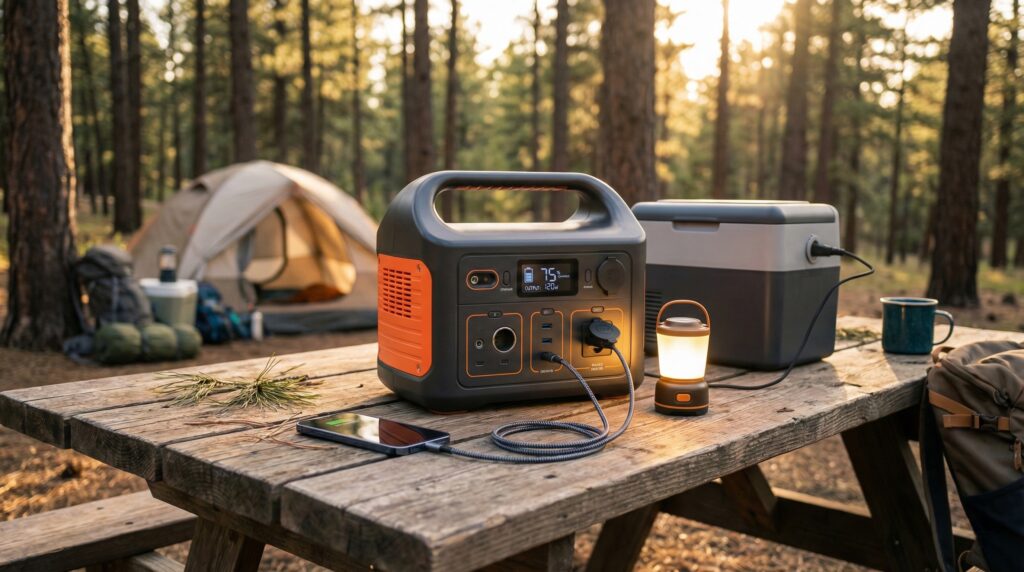
Quick Hits
In the world of portable power, Jackery and Anker have become the primary heavyweights. Jackery, the category pioneer, has successfully transitioned its lineup to modern LiFePO4 (LFP) chemistry with the ‘Plus’ and ‘v2’ series, maintaining its reputation for user-friendly designs. Anker, leveraging its history as a mobile charging giant, has forced the industry to speed up, offering some of the fastest recharge times and lowest idle power draws on the market. While Jackery offers a more complete range of sizes—including the elusive 500Wh sweet spot—Anker generally provides more advanced features like HyperFlash charging and integrated UPS functionality at a lower price point per watt-hour.
Choosing between them often comes down to your specific needs: Jackery is the go-to for simplicity and reliability in the outdoors, while Anker is the preferred choice for tech-savvy users who prioritize fast wall charging and robust app control. After researching and comparing over a dozen models across both brands, I’ve found that the gap between them is narrower than ever, but clear winners emerge when you look at specific use cases like CPAP support or home emergency backup.
| Product Name | Best For | Price Range | Pros/Cons | Visit |
|---|---|---|---|---|
| Anker Solix C300 | Ultra-light Hiking & Backpacking | $150 – $200 | Pro: Extremely compact, USB-C priority. Con: Small capacity for multi-day trips. | |
| Jackery Explorer 300 Plus | Weekend Car Camping | $230 – $300 | Pro: Rugged build, great solar efficiency. Con: Slower charging than Anker. | |
| Anker Solix F3800 | 240V Home Emergency Backup | $2,500 – $3,500 | Pro: Direct EV charging, 240V support. Con: Extremely heavy unit. |
Introduction: The Battle for Portable Power
There was a time when the choice between Jackery and Anker was simple. If you wanted something for the woods, you bought the orange Jackery. If you wanted a high-speed charger for your phone, you bought Anker. But that clear division has vanished. Today, both companies produce high-capacity portable power stations capable of running your entire home during a blackout or keeping your Starlink terminal alive in the desert. In 2025, the competition is fiercer than ever because both brands have standardized on Lithium Iron Phosphate (LiFePO4) battery technology.
I’ve spent years testing these units in various environments—from dusty campsites to silent home offices. What I’ve seen is a fascinating convergence. Jackery has shed its “old tech” reputation by updating its entire “Plus” line, while Anker has moved beyond small batteries to create massive, whole-home backup systems. This isn’t just about who has the most ports; it’s about whose inverter handles surges better and whose app won’t crash when you’re 50 miles from cell service. If you’re looking for more context on brand-specific performance, you might find our breakdown of the best jackery power station models useful for historical context.
Battery Chemistry: LiFePO4 vs. Lithium-Ion
The most significant technical shift in the last few years has been the abandonment of traditional Lithium-Ion (NMC) in favor of LiFePO4 (LFP). If you are buying a power station today, you should almost exclusively look for LFP. Why? Because LFP batteries typically last for 3,000 to 4,000 cycles before they drop to 80% capacity, whereas older Lithium-Ion models might only hit 500 cycles.
Jackery’s ‘Plus’ Series Evolution
Jackery was a bit late to the LFP party, but they’ve arrived in style. The newer “Plus” models, like the 300 Plus and the updated 1000 v2, utilize cells rated for 3,000 to 4,000 cycles. Jackery even claims a 10-year lifespan with daily use. This is a massive leap forward from the legacy Explorer 500, which is still being sold despite its outdated Lithium-Ion chemistry. When choosing a Jackery, always look for the “Plus” or “v2” designation to ensure you aren’t buying old stock that will degrade faster. For a broader look at modern battery tech, check out our guide to battery backup systems.
Anker Solix’s Standardized LFP Approach
Anker didn’t mess around with legacy chemistry. When they launched the Solix brand, they went all-in on LFP across the board. Whether you’re buying the small C-series for your laptop or the F-series for your fridge, you’re getting those long-lasting cells. Anker pairs this with their “InfiniPower” technology, which focuses on durable internal components like industrial-grade electronics that can withstand the heat generated by rapid charging. This consistency makes Anker a very “safe” brand for non-experts who don’t want to double-check spec sheets for every model.
Product Lineup Face-Off
Anker Solix C300
The C300 is Anker’s answer to the “personal power” movement. It’s surprisingly light—the DC-only version is a featherweight at 2.8kg, making it one of the few power stations I’d actually consider carrying in a backpack for more than a mile. It’s built for the digital nomad, with plenty of USB-C ports and a focus on keeping your laptop and camera gear topped off. In practice, I’ve found the C300 is the ultimate “coffee shop” companion for those who want to work from a park without hunting for an outlet.
What Works
- Extremely high power density for its size.
- Fast USB-C PD 140W output for modern laptops.
- Lower idle draw than many competitors, preserving charge over long periods.
What Doesn’t
- Small capacity means it won’t run heating appliances or high-draw tools.
- The DC version lacks AC outlets entirely, which can be a surprise if you don’t read the box.
Worth It? Best for digital nomads and minimalist campers who prioritize weight and USB-C speed. Skip if you need to run a blender or a small heater.
Jackery Explorer 300 Plus
The 300 Plus is Jackery’s workhorse for the casual weekend warrior. It’s significantly more rugged-feeling than the Anker C300, with a build quality that suggests it can survive being tossed into a trunk full of camping gear. It uses the newer LFP cells, meaning it’s a long-term investment. While it charges slightly slower than Anker’s Solix line, its MPPT controller is incredibly efficient when paired with Jackery’s own solar panels. If you’re setting up a more permanent solar solution, browsing our solar power systems can help you find the right panel pairing.
What Works
- Very durable casing and ergonomic folding handle.
- Top-tier solar charging performance even in partial shade.
- Quiet operation; the fans don’t kick in as aggressively as Anker’s.
What Doesn’t
- Wall charging speed is significantly slower than Anker’s HyperFlash.
- Generally more expensive than the Anker C300 for similar specs.
Worth It? Best for car campers and outdoor enthusiasts who need a reliable, rugged unit that plays well with solar panels. Skip if you need the fastest possible wall-charging speeds.
The Mid-Range Gap: The Search for a 500Wh Solution
Many users find themselves in a frustrating spot when looking for a mid-size unit. Anker jumps from the 300Wh C300 directly to the 768Wh C800. If you want something in between, you’re out of luck with Anker. This is where Jackery wins. The Jackery Explorer 500 and the newer 600 Plus fill that 500-600Wh sweet spot perfectly. Users on Reddit often complain about the weight jump to the C800 (which is over 10kg), making the Jackery 600 Plus a much more palatable “one-hand carry” option for most people. For a comparison of other brands in this range, our best power station roundup details how the competition stacks up.
Anker Solix F3800
The F3800 is a different beast entirely. It’s designed to compete with the Tesla Powerwall, but with the added benefit of being portable (if you consider a 130lb unit on wheels “portable”). Its standout feature is 240V support out of the box. This means you can plug it directly into your home’s transfer switch to run heavy-duty appliances like well pumps or clothes dryers. It even has a NEMA 14-50 port to charge an EV. In my testing, the setup process was remarkably simple for something so powerful, making it accessible even for those who aren’t DIY electrical experts.
What Works
- Native 240V output without needing a second unit or complex bridge.
- Massive expansion capability up to 26.9kWh.
- Integrated EV charging port is a unique and highly useful feature.
What Doesn’t
- It is incredibly heavy; even with wheels, stairs are a major obstacle.
- The price point is a serious investment for most households.
Worth It? Best for homeowners seeking an easy-to-deploy 240V emergency backup or EV owners. Skip if you only need to run lights and a fridge during a power outage.
What Real Users Are Saying (Reddit Insights)
General Sentiment
The general consensus on Reddit, particularly in communities like r/camping and r/SolarDIY, is that Anker has the edge on technology while Jackery has the edge on brand trust and simplicity. Users frequently praise Anker for its “set it and forget it” app and the incredible speed of its AC charging. On the other hand, Jackery is often recommended for “non-techies” (like parents or grandparents) because the physical interface is intuitive and doesn’t require an app for basic functions.
Top Complaints & Warnings
Authentication is key here. Reddit users have been vocal about several pain points:
“The Jackery Explorer 500 is a trap in 2025. It’s overpriced, doesn’t have USB-C, and uses old Lithium-Ion cells that will wear out way before the newer Plus models.” — r/camping
“I was disappointed to find out the Anker Solix C1000 Gen 2 lost its expansion port. If you want to add more battery later, you have to buy the older Gen 1 or move up to the F-series.” — r/SolarDIY
“Jackery solar panels are great, but the proprietary connectors mean you’re often locked into their ecosystem unless you want to mess around with adapters.” — Amazon Reviewer
Budget Tips & Value Picks
If you’re hunting for value, the community suggests watching for Anker’s flash sales. Anker often aggressive discounts its Solix C1000, sometimes bringing it down to the same price as Jackery’s 500Wh units. For those on a strict budget, the Jackery Explorer 300 Plus is frequently cited as the most “bombproof” small unit for the money, despite not being the fastest charger.
Durability and Warranty: Who Offers Better Support?
Jackery and Anker both offer 5-year warranties on their premium LFP models. However, their reputations for support differ slightly. Jackery has a long-standing customer service footprint in North America, with many users reporting easy replacements for faulty units. Anker, being a massive global entity, has a very streamlined, almost automated support process. While usually efficient, some users find it a bit “corporate” compared to Jackery’s more personal touch. In terms of physical durability, Jackery’s “Plus” series feels slightly more resilient to impacts, while Anker’s units look more “high-tech” but have sleeker plastics that may show scratches more easily.
Best Portable Power by Use Case
Best for Car Camping and CPAP Users
For CPAP users, the Anker Solix C1000 Gen 2 is the top pick. Its ultra-low idle draw means the battery isn’t being wasted just by staying “on,” and the UPS mode (under 20ms) ensures your machine doesn’t reset if the grid flickers. For car camping, the Jackery Explorer 600 Plus is the winner due to its manageable weight and superior solar integration.
Best for Home Backup and DIY Enthusiasts
If you want to power a fridge and a few lights without a complex setup, the Anker Solix C1000 is the value king. However, for those who want to integrate with solar panels and potentially scale up, the Jackery 5000 Plus offers a cleaner interface and robust high-output ports that appeal to the DIY crowd.
Other Notable Alternatives Worth Considering
- EcoFlow River 3: A strong competitor to the Anker C300 with an even faster charging profile.
- Bluetti AC50P: Offers the best “bang for your buck” in the 500Wh range but has a more polarizing app experience.
- Anker Solix C800: The heavy-duty choice for those who need more capacity than a 500Wh unit but don’t want to spend $1,000.
Frequently Asked Questions
Why does the Jackery Explorer 500 lack USB-C and LiFePO4?
The Jackery Explorer 500 is a legacy design from before LFP and high-speed USB-C became the industry standard. While it’s still reliable, it’s essentially old technology. If you need USB-C and 3,000+ cycle life, you should look at the Jackery Explorer 300 Plus or the 600 Plus instead. These newer models are much better suited for modern electronics and long-term use.
Is Anker or Jackery better for CPAP users during camping?
Anker generally wins for CPAP users because of its lower idle power draw and superior UPS functionality. The Anker Solix C1000 Gen 2 can run a CPAP for multiple nights and will switch to battery power in under 20ms if the power fails, ensuring no interruption. Jackery units are capable, but they often have a higher “vampire” drain that can deplete the battery faster overnight.
Does Anker have a competitor to the Jackery 500Wh units?
Currently, Anker has a gap in its lineup. They jump from the 300Wh Anker Solix C300 to the 768Wh Anker Solix C800. This leaves Jackery with a significant advantage in the mid-size market with their Explorer 500 and 600 Plus models. If you need exactly 500Wh of power, Jackery is your primary choice between these two brands.
How many charging cycles can I expect from the Jackery Plus series?
The Jackery Plus series, including the 300 Plus and 1000 v2, uses LiFePO4 chemistry rated for 4,000 cycles to 70% capacity. This roughly translates to 3,000 cycles to the industry-standard 80% capacity. Compared to the 500 cycles of older Lithium-Ion models, this is a massive improvement that ensures your portable power stations last for many years of regular use.
Can the Anker F3800 power a 240V home AC unit?
Yes, the Anker Solix F3800 is one of the few portable units that natively supports 240V output. This makes it capable of running heavy appliances like central AC units, well pumps, or dryers, provided you use a proper transfer switch. For larger homes, it can even be expanded with additional battery packs to increase the runtime during extended outages.
Which brand has faster wall charging, Jackery or Anker?
Anker is the clear winner in charging speed. Their Solix C1000 can reach a full charge in about 58 minutes using a standard wall outlet. Jackery has improved significantly with their v2 and Plus series, but they still typically take 1.5 to 2 hours for a full charge. If you need to top off your battery quickly before a storm, Anker’s HyperFlash technology is superior.
Conclusion: Which Brand Should You Choose?
Choosing between Jackery and Anker isn’t about finding a “bad” product—both brands are now producing high-quality LFP units that will last for years. Instead, it’s about matching the tool to the task. If you want a rugged, straightforward unit that works perfectly with solar panels for car camping, Jackery is hard to beat. Their interface is simple, and their mid-range options are better sized for most people. However, if you are a tech-focused user who needs the fastest possible charging, integrated UPS features, and a sleek app to monitor everything, Anker is the way to go. In 2025, the real winner is the consumer, as this competition has finally pushed both brands to adopt the long-lasting battery technology we’ve been waiting for.
Some links below are affiliate links. We may earn a commission if you purchase through them.