
Quick Hits
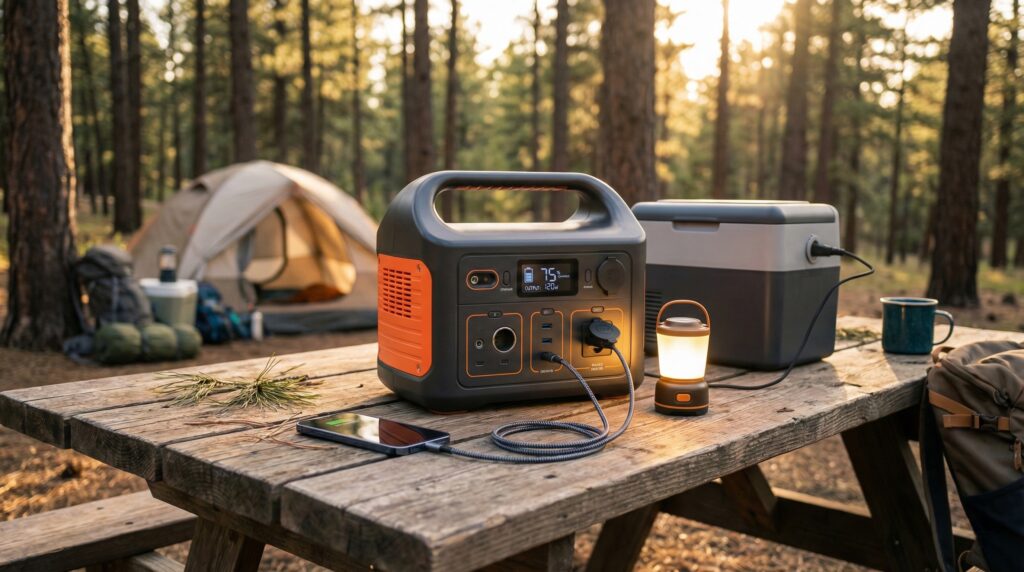
Finding the right portable power station for your CPAP machine is about balancing capacity, weight, and reliability. For most users, the Jackery Explorer 300 Plus is the top pick due to its lightweight design and ability to power a CPAP for two to three nights. If you are on a strict budget, the Bluetti EB3A offers incredible value with its long-lasting LiFePO4 battery. For those who need to power multiple devices or survive a week-long outage, the EcoFlow Delta series provides the massive capacity required. Regardless of the unit you choose, using a DC-to-DC converter is the single most important step to double your runtime by avoiding the energy waste of an AC inverter.
Introduction: Reliable Sleep Anywhere
If you rely on a CPAP machine, the idea of a power outage or a camping trip can feel more like a logistical nightmare than a relaxing break. I’ve spoken with countless people who feel tethered to a wall outlet, fearing that a night without their machine means a day of exhaustion or health risks. You might have looked into dedicated “travel batteries” sold by CPAP manufacturers, only to find they cost upwards of $1,000 and only work with one specific machine.
There is a better way. Modern portable power stations have evolved into the perfect companions for sleep apnea therapy. They are more affordable, more versatile, and far more robust than specialized medical batteries. Whether you’re tucking into a sleeping bag or preparing for a summer storm, having a dedicated power source ensures your sleep remains uninterrupted. This guide will walk you through the best options currently available, focusing on real-world performance rather than just marketing specs.
When you invest in a quality power station, you aren’t just buying a CPAP battery. You’re securing a backup for your phone, your tablet, and even small appliances. If you’re curious about how these fit into a broader setup, you can explore our full range of portable power stations for more context on different sizes and brands.
Why Home CPAP + Power Station Beats Specialized Travel Units
You might be tempted by the slim, branded batteries offered by ResMed or Philips. While they are portable, they are often a poor investment for the average user. A typical travel battery might set you back $800 to $1,200, yet it only offers enough energy for one, maybe two nights. If you upgrade your CPAP machine next year, that expensive battery might become a paperweight because of proprietary connectors.
In contrast, a multi-purpose power station like those from Jackery or EcoFlow costs between $250 and $600 for equivalent or superior capacity. These units use standard outlets and USB ports, meaning they can charge your laptop during a flight or run a fan during a blackout. They also tend to have much faster recharge times. While a specialized medical battery might take six hours to charge from a wall, many modern power stations can hit 80% in under an hour.
The versatility is the real winner here. You can take your home CPAP—the machine you find most comfortable—into the woods and power it just as easily as a specialized travel unit. This approach saves you money and provides a safety net for your other electronics. For those who prioritize staying connected while off-grid, checking out the best power bank for iphone can help round out your smaller device charging needs.
Top Portable Power Stations for CPAP Machines
Best Overall: Jackery Explorer 300 Plus
The Jackery Explorer 300 Plus is often the “sweet spot” for most CPAP users. Weighing in at just over 8 pounds, it won’t break your back carrying it from the car to the tent. It uses Lithium Iron Phosphate (LiFePO4) chemistry, which is a significant upgrade over older models. This means the battery can be charged and discharged thousands of times before you notice any significant loss in capacity. If you use your CPAP without a humidifier, you can comfortably expect 3 nights of use on a single charge.
What Works
- Extremely portable with a sturdy, fold-down handle that makes packing easy.
- The LiFePO4 battery lasts for years, even with frequent use during camping seasons.
- The display is clear and shows exactly how many hours of runtime you have left based on your current settings.
What Doesn’t
- The capacity is a bit tight if you insist on using a heated humidifier; you might only get one full night in that scenario.
- The fans can be slightly audible in a dead-quiet tent, though most find it a soothing white noise.
💰 Street Price: $250 – $300
Worth It? Best for weekend campers who want a reliable, lightweight name-brand unit and are willing to turn off their humidifier to save energy. Skip if you require a heated hose and humidifier for 3+ nights.
Check Price: Jackery Explorer 300 Plus on Amazon
Best Value for Money: Bluetti EB3A
If you want the most technology for the fewest dollars, the Bluetti EB3A is hard to beat. Despite its small size, it packs features usually reserved for much larger units, such as a built-in UPS (Uninterruptible Power Supply) mode. This is vital for home use—you can keep it plugged into the wall and plug your CPAP into the EB3A. If the power goes out in the middle of the night, the battery takes over instantly without your machine rebooting.
What Works
- Incredible charging speed; it can go from zero to full in about 70 minutes.
- Features a high-quality LiFePO4 battery that maintains its health for over 2,500 cycles.
- The app allows you to monitor power usage from your phone so you don’t have to lean out of bed to check the screen.
What Doesn’t
- Early firmware versions had some “phantom drain” issues where the battery would empty while sitting idle; make sure to update the firmware via the app immediately.
- The cooling fan has a high-pitched whine that can be annoying if the unit is right next to your pillow.
💰 Street Price: $250 – $300
Worth It? Best for budget-conscious users who want a dual-purpose unit for home backup and short camping trips. Skip if you are sensitive to high-pitched fan noises.
Check Price: Bluetti EB3A on Amazon
Best High-Capacity: EcoFlow Delta 2 / Delta 3
For those who refuse to compromise on comfort, the EcoFlow Delta series is the heavy hitter. With a capacity of around 1024Wh, the Delta 2 (and the newer Delta 3) can easily power a CPAP with the humidifier and heated tubing turned on for several nights. This is the unit you want if you’re heading out for a week or if you live in an area prone to multi-day power outages. It’s also a great centerpiece for solar generators if you plan on adding panels later.
What Works
- Massive power output allows you to run your CPAP, a laptop, and even a portable fridge simultaneously.
- Industry-leading recharge speeds—it’s the fastest in its class, which is great for “topping off” at a coffee shop or ranger station.
- Expandable capacity; you can plug in an extra battery if your needs grow.
What Doesn’t
- It is heavy (around 27 lbs), so it’s definitely for car camping or home use, not for carrying far on foot.
- The AC inverter uses quite a bit of “idle power,” so using a DC cable is mandatory if you want to get the full value of that large battery.
💰 Street Price: $900 – $1300
Worth It? Best for users who need total peace of mind and don’t mind the extra weight. Skip if you only need a battery for one-night emergency backups.
Check Price: EcoFlow Delta 2 on Amazon
Best Compact Option: EcoFlow River 2 Max
The EcoFlow River 2 Max strikes a balance between the tiny EB3A and the massive Delta 2. It offers about 512Wh of capacity, which is plenty for 4-5 nights of CPAP use without a humidifier. It features a flat top, which is surprisingly useful in a cramped tent or van for stacking other items. Its lightweight frame and fast-charging capabilities make it a favorite for “weekend warriors” who are always on the move.
What Works
- The X-Stream charging technology means you can fully charge it in about an hour before leaving for your trip.
- Very reliable software and app integration compared to some of the cheaper competitors.
- Large, easy-to-read screen that clearly displays input and output wattage.
What Doesn’t
- The AC outlets are on the side, which can make cable management a bit awkward in tight spaces.
- Users have reported that the “remaining time” estimator can be jumpy when the battery level gets below 15%.
💰 Street Price: $900 – $1300
Worth It? Best for car campers who want a high-quality, mid-sized unit that charges incredibly fast. Skip if you need to power high-wattage kitchen appliances alongside your CPAP.
Check Price: EcoFlow River 2 Max on Amazon
Best Premium Backup: Bluetti AC180
The Bluetti AC180 is built like a tank. It’s designed for those who need a robust backup system that can handle extreme conditions. It offers 1152Wh of capacity and a very powerful inverter. While it’s overkill for just a CPAP, its “Silent Charging” mode is a dream for sleep apnea patients. You can charge it during the day without the loud fan noise associated with other high-speed chargers.
What Works
- Silent operation modes make it much less intrusive in a quiet environment.
- The build quality is exceptional; the casing feels rugged and professional.
- Excellent performance in colder temperatures, which often drain cheaper batteries.
What Doesn’t
- The weight is significant (35 lbs), making it the heaviest on this list.
- The screen can be difficult to read in direct sunlight due to the glossy finish.
💰 Street Price: $700 – $900
Worth It? Best for home backup and RVers who want a premium, long-lasting power source for all their gear. Skip if portability is your main priority.
Check Price: Bluetti AC180 on Amazon
The Heavy Duty Choice: Jackery 1000 v2
The Jackery 1000 v2 is the updated version of one of the most popular power stations ever made. It’s a literal powerhouse. If you are going off-grid for a week or more, this is your best bet. It combines Jackery’s famous ease-of-use with modern LiFePO4 cells. It’s large enough that you could realistically run a CPAP with full humidifier settings for 3-4 nights without needing a recharge.
What Works
- Simplified interface; even if you aren’t tech-savvy, this unit is plug-and-play.
- Dual 100W USB-C ports mean you can fast-charge modern laptops directly without an AC brick.
- Very quiet operation under low loads (like a CPAP).
What Doesn’t
- It’s a large investment, both in price and physical space.
- Charging via a 12V car outlet takes a very long time (over 10 hours) due to the large capacity.
💰 Street Price: $900 – $1100
Worth It? Best for long-term off-grid living or extended camping trips where “running out” is not an option. Skip if you only do overnight trips.
Check Price: Jackery 1000 v2 on Amazon
CPAP Power Station Comparison Table
| Product Name | Best For | Price Range | Pros/Cons | Visit |
|---|---|---|---|---|
| Jackery Explorer 300 Plus | weekend campers who want a reliable, lightweight name-brand unit and are will… | $250 – $300 | ✅ Extremely portable with a sturdy, fold-down handle; The LiFePO4 battery lasts for years, even with fre ❌ The capacity is a bit tight if you insist on using; The fans can be slightly audible in a dead-quiet t |
|
| Bluetti EB3A | budget-conscious users who want a dual-purpose unit for home backup and short… | $250 – $300 | ✅ Incredible charging speed; it can go from zero to ; Features a high-quality LiFePO4 battery that maint ❌ Early firmware versions had some “phantom drain” i; The cooling fan has a high-pitched whine that can |
|
| EcoFlow Delta 2 / Delta 3 | users who need total peace of mind and don’t mind the extra weight | $900 – $1300 | ✅ Massive power output allows you to run your CPAP, ; Industry-leading recharge speeds—it’s the fastest ❌ It is heavy (around 27 lbs), so it’s definitely fo; The AC inverter uses quite a bit of “idle power,” |
|
| EcoFlow River 2 Max | car campers who want a high-quality, mid-sized unit that charges incredibly fast | $200 – $300 | ✅ The X-Stream charging technology means you can ful; Very reliable software and app integration compare ❌ The AC outlets are on the side, which can make cab; Users have reported that the “remaining time” esti |
|
| Bluetti AC180 | home backup and RVers who want a premium, long-lasting power source for all t… | $700 – $900 | ✅ Silent operation modes make it much less intrusive; The build quality is exceptional; the casing feels ❌ The weight is significant (35 lbs), making it the ; The screen can be difficult to read in direct sunl |
|
| Jackery 1000 v2 | long-term off-grid living or extended camping trips where “running out” is no… | $900 – $1100 | ✅ Simplified interface; even if you aren’t tech-savv; Dual 100W USB-C ports mean you can fast-charge mod ❌ It’s a large investment, both in price and physica; Charging via a 12V car outlet takes a very long ti |
What Real Users Are Saying (Reddit Insights)
General Sentiment
The general consensus among the Reddit CPAP community is that “dedicated” CPAP batteries are a waste of money. Most users on subreddits like r/CPAP and r/SolarDIY advocate for portable power stations because of the LiFePO4 chemistry and the ability to use the battery for other needs. There is a strong emphasis on “stealth camping” and the need for silent operation, which is why brands like EcoFlow and Jackery are frequently recommended over loud, fuel-powered generators.
Top Complaints & Warnings
One of the most frequent warnings from experienced users concerns the use of heated humidifiers. Many new owners buy a small 300Wh station and are shocked when it dies at 3:00 AM.
“I learned the hard way that a ResMed AirSense 10 with the humidifier on 4 will drain a 240Wh battery in about 5 hours. Turn that heater off if you want to sleep through the night!” — r/camping
Another common complaint involves the weight of the units. While 10-15 pounds doesn’t sound like much, Reddit users who do walk-in campsites or backpacking find it prohibitive. For those users, even the “compact” stations are often considered too bulky, leading many to seek out the absolute smallest 12V DC setups possible.
Budget Tips & Value Picks
The community frequently suggests looking for “open box” or refurbished deals on eBay and official manufacturer sites to save money. Another pro-tip shared often is the use of 12V “cigarette lighter” style adapters.
“Don’t use the wall plug. Buy the DC converter for your specific machine. It increased my runtime from two nights to almost five on the same Bluetti EB3A.” — r/CPAP
Users also recommend checking if your insurance or HSA/FSA covers these power stations as “emergency medical equipment,” which can occasionally offset the cost.
How to Double Your CPAP Battery Life
The DC-to-DC Converter Advantage
The single most important piece of advice I can give you is this: **Stop using the AC wall plug.** Your CPAP machine actually runs on DC power internally. When you use the standard three-prong wall plug, the power station has to convert its DC battery power into AC, and then your CPAP’s “power brick” converts it back into DC. This double-conversion process wastes 20% to 40% of your battery energy as heat.
Instead, buy a 12V DC power cable specifically made for your machine (like the ResMed AirSense 10 or 11 DC Converter). This allows the machine to pull power directly from the 12V socket on your station, bypassing the inverter. This one change can often turn a “one-night battery” into a “three-night battery.”
Optimizing Settings
If you find yourself in a situation where power is limited, you need to be aggressive with your settings.
- Turn off the humidifier: The heating element in the water tub is the biggest energy hog. Dump the water and use the machine “dry.”
- Turn off heated tubing: Like the humidifier, heated hoses use a massive amount of electricity. Switch to a standard Slim Line Tubing for camping.
- Enable Airplane Mode: Many modern machines (like the ResMed AirSense 11) have cellular modems that constantly search for a signal. Turning this off saves a small but meaningful amount of power over 8 hours.
Charging in the Wild: Solar vs. Car Charging
If you’re staying out for more than a few days, you’ll need a way to put energy back into the station. Solar panels are the most popular choice. A 100W solar panel can usually recharge a mid-sized station like the Jackery 300 Plus in about 4-5 hours of direct sunlight. If you’re looking for a smaller solar solution for hikers, you might also find the best solar power bank useful for keeping your peripherals topped off while your main station charges.
Car charging, while convenient, is the “last resort.” Most car cigarette lighters only output about 100 watts. If you have a large station like the Jackery 1000, it could take 10+ hours of driving to reach a full charge. As one user on Reddit noted, “You probably don’t want to idle a car for 8 hours” just to sleep through the night. If you must charge in the car, do it while you’re driving between locations, not while parked at camp.
Frequently Asked Questions
How long will a 300Wh power station run my CPAP?
A 300Wh power station, like the Jackery 300 Plus, will typically run a CPAP machine for 2 to 3 nights if you turn off the humidifier and heated tubing. If you use a DC-to-DC converter, you might even squeeze out a 4th night. However, if you leave all the heating settings on, it may only last for one night or even shut down before morning.
Can I use a humidifier with a portable battery pack?
Yes, you can, but it requires a much larger battery. To use a humidifier comfortably for multiple nights, you should look at units with at least 1000Wh of capacity, such as the EcoFlow Delta 2. Using a humidifier increases power consumption by 300-400%, so plan accordingly or bring solar panels for daily recharging.
Do I need a DC converter for my CPAP battery setup?
While not strictly “required,” a DC converter is highly recommended. Using the standard AC outlet on your Bluetti EB3A or Jackery unit wastes a significant amount of energy. A DC cable allows your machine to run more efficiently, often doubling the amount of time you can sleep on a single charge. It is the most cost-effective way to improve your setup.
Can I charge my power station with a car cigarette lighter?
Yes, most portable power stations come with a car charging cable. However, car charging is very slow. A unit like the EcoFlow River 2 Max might take 6 hours to charge from your vehicle. It’s best to charge while driving to your destination rather than relying on it as your primary charging method once you’ve arrived at camp.
What happens to the battery life in cold weather?
Batteries are less efficient in the cold. If you are winter camping, your runtime might drop by 20% or more. To prevent this, keep your power station (like the Bluetti AC180) inside your tent or even in your sleeping bag to keep it warm. Never charge a Lithium battery if the temperature is below freezing, as this can permanently damage the cells.
Is it safe to use a modified sine wave inverter with a CPAP?
It is generally safer to stick with a Pure Sine Wave inverter, which is what all the units on this list (Jackery, EcoFlow, Bluetti) use. Modified sine wave inverters can cause some CPAP machines to run hot or experience motor failure over time. For sensitive medical equipment, always choose a high-quality battery backup system that specifies Pure Sine Wave output.
Final Thoughts
Sleeping with a CPAP shouldn’t mean you’re stuck at home. With the current generation of portable power stations, you can enjoy the great outdoors or survive a multi-day power outage with the same level of comfort you have in your bedroom. Start by choosing a unit that fits your portability needs—the Jackery 300 Plus for light travel or the EcoFlow Delta 2 for maximum backup. Remember to invest in a DC adapter, and you’ll have a setup that is reliable, efficient, and ready for anything.
Disclosure: We earn a small commission on qualifying purchases through our Amazon links, at no extra cost to you.