
TL;DR
The best alternative depends on what you are replacing: a gas generator, a battery power station, or a solar-generator bundle. For indoor-safe backup for phones, laptops, routers, CPAP machines, and small appliances, we would start with a battery power station from a reputable portable-power brand; for long outages and heavier loads, a gas inverter generator still makes sense if you can run it outdoors safely.
If you want the Harbor Freight-style value proposition, do not shop by price alone. Compare usable watt-hours, continuous watts, surge watts, recharge options, warranty terms, return shipping, and service access before you buy.
What Harbor Freight Alternatives Actually Are
When people search for Harbor Freight alternatives in the portable power space, they usually mean one of three things. The first is an alternative to a Predator-style gas inverter generator. The second is an alternative to a portable battery power station. The third is an alternative to a “solar generator” bundle, which is usually a battery power station paired with one or more solar panels.
Those products are not interchangeable. A gas inverter generator makes electricity by burning gasoline or propane. It can run for a long time if you have fuel, and it can be a strong choice for refrigerators, freezers, pumps, tools, RV use, and whole-circuit backup when installed with the right transfer equipment. But it must be operated outdoors, far away from doors, windows, vents, garages, and balconies because of carbon monoxide risk. The CDC carbon monoxide safety guidance is clear that carbon monoxide can be deadly and is not something to manage casually.
A battery power station stores electricity in an internal battery, then delivers AC and DC power through outlets and ports. It is quiet, has no tailpipe emissions, and is much more practical indoors from an emissions standpoint. It is often the better choice for apartments, bedrooms, home offices, campsites with quiet-hour rules, routers, phones, laptops, camera gear, lights, and some medical devices. Buyers should still follow the manufacturer’s temperature, charging, ventilation, and storage instructions, and it is worth looking for recognized electrical safety testing such as UL 2743 Portable Power Packs or similar certification language.
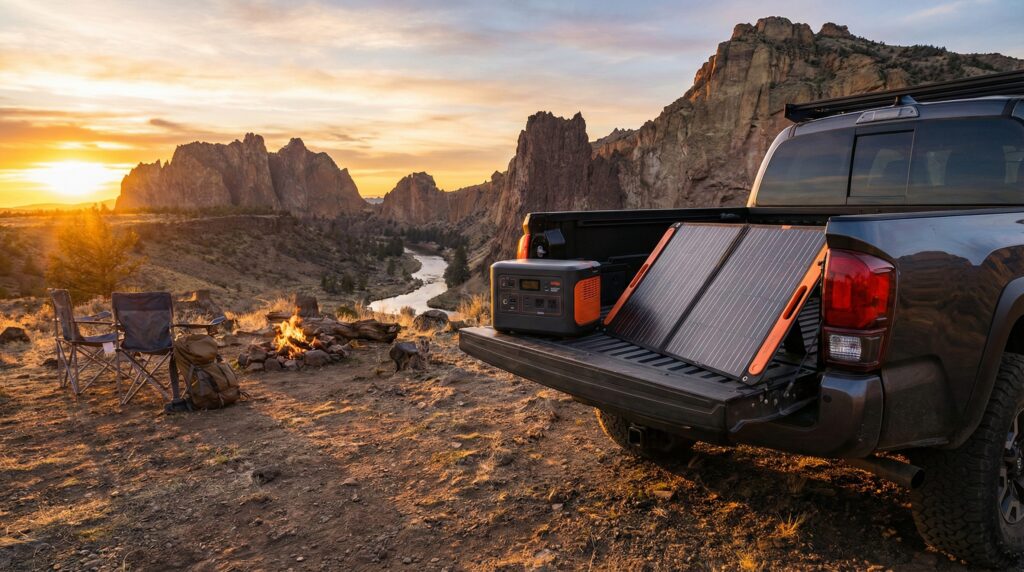
A solar-generator bundle is a battery station plus solar panels. It does not “generate” electricity the way an engine does; the panels recharge the battery when sunlight is available. This can be very useful during extended outages or off-grid trips, but panel wattage, shade, season, weather, and panel angle matter a lot. The DOE solar PV basics are a good primer if you want to understand why real-world solar charging is often slower than the headline number on the box.
Our simple formula is this: define the load, define the runtime, then choose the power type. Add up what you need to run, check each device’s running watts and startup surge, estimate how many hours you need, and then compare usable watt-hours or fuel runtime. A low price is attractive, but the better value is the unit that actually covers your loads and has support if something goes wrong.
Who Harbor Freight Alternatives Fit Best
These alternatives fit buyers who like value pricing but want more choices in battery size, solar input, warranty coverage, app controls, service options, or long-term battery support. They are especially useful if your backup-power needs have become more specific than “buy the cheapest generator that looks big enough.”
A battery power station is the best fit if you need quiet indoor backup. If your outage plan is to keep a Wi-Fi router, phones, a laptop, LED lights, a fan, a small TV, or a CPAP machine running, a battery station is usually easier to live with than a gas generator. You can keep it charged in a closet, move it around the house, and use it without storing gasoline. For this kind of use, prioritize usable watt-hours, continuous output, port selection, battery chemistry, recharge speed, and whether the unit supports pass-through use under the manufacturer’s rules.
For example, the Bluetti AC200L is a relevant portable-power alternative in the higher-capacity battery-station category, with typical pricing in the roughly $830 to $970 range when available through the brand’s direct channel. It is the kind of option that makes sense for shoppers comparing larger battery stations rather than small phone-charging packs. We would treat it as a candidate for home electronics, camping, RV-adjacent use, and solar-rechargeable emergency power, not as a one-for-one substitute for every gas-generator job.
A gas inverter generator is the better fit if your main concern is longer runtime for larger loads. If you need to power a refrigerator and freezer through a multi-day outage, run jobsite tools, or support higher-wattage equipment where refueling is practical, a gas generator may still be the more realistic choice. The tradeoff is safety and maintenance: you need outdoor placement, fuel storage, oil changes, spark plug care, and a plan for noise and exhaust.
A solar-generator bundle fits people who want a battery system that can recharge off-grid. This is useful for camping, van travel, cabins, hurricane kits, and extended outages where fuel may be hard to find. Just be realistic: a large battery paired with a small panel can take a long time to refill. If you are planning around solar, tools such as the NREL PVWatts solar calculator can help you think about how location and sun conditions affect output, even though portable panels will not always behave like a fixed rooftop array.
These alternatives also fit buyers who care about return logistics. A heavy battery station or generator can be expensive to ship back, and not every direct-to-consumer brand handles returns the same way. If easy in-store exchange is important to you, a local retailer may still win. If battery ecosystem, solar input, and model selection matter more, a dedicated power-station brand may offer better choices.
Who Should Skip Harbor Freight Alternatives
You should skip most portable-power alternatives if you have not calculated your loads yet. Buying first and measuring later is how people end up with a battery station that trips off when a refrigerator compressor starts, or a generator that cannot handle a pump, heater, or saw. Before comparing brands, write down each device you need to run, its running watts, whether it has a motor or compressor, and how long it needs power.
You should also skip battery power stations if your real need is sustained high-watt heat. Electric space heaters, kettles, hair dryers, hot plates, and many air conditioners drain batteries quickly because they use a lot of watts. A battery station can run some of these devices if its inverter is large enough, but runtime may be short. For heating, cooking, or large cooling loads, a different emergency plan may be more practical.
Skip gas generators if you cannot operate one outdoors with proper clearance. This includes many apartments, condos, dense townhomes, balconies, attached garages, and homes where there is no safe exhaust location away from openings. “Quiet inverter” does not mean “safe indoors.” Carbon monoxide is invisible and odorless, and generator misuse can be fatal.
Skip solar-generator bundles if you expect guaranteed fast charging in bad weather. Solar panels are helpful, but they are not magic. Shade from trees, clouds, winter sun angle, smoke, dust, and poor panel placement can cut output sharply. If you need guaranteed backup for critical medical equipment, talk with the device manufacturer and consider a layered plan that may include a properly sized battery, spare battery options, utility programs, or professional backup-power installation.
You should also be cautious if warranty service would require shipping a very heavy unit and you cannot manage the logistics. Battery stations and inverter generators can be bulky, and freight returns are different from returning a phone charger. Read the return policy before checkout, especially on sale items.
Finally, skip off-brand or unclear battery products when safety information is vague. Lithium-ion batteries are common and useful, but damaged packs, poor chargers, overheating, and improper storage can create risk. The NFPA lithium-ion battery safety guidance is a good reminder to use listed products, follow charging instructions, and stop using batteries that show damage, swelling, odor, or unusual heat.
Price and Value
Harbor Freight is popular because buyers expect practical gear at aggressive prices. A good alternative has to justify itself. That justification might be a longer-lasting battery chemistry, better solar input, quieter operation, cleaner power output, better support, easier returns, or a warranty that feels stronger than the savings you give up.
For battery power stations, pricing usually rises with battery capacity, inverter output, charging speed, battery chemistry, and expandability. A compact unit for phones and laptops costs much less than a larger station intended for refrigerators, routers, TVs, and small appliances. In the available product data, the Bluetti AC200L sits around $830 to $970, which places it in a more serious home-backup and camping category rather than the small emergency-pack category. That price can make sense if you need a larger battery station, but it is overkill if you only need to recharge phones during short outages.
The Bluetti Elite 200 is another portable-power brand option to compare if you are shopping direct-to-consumer battery stations. Because pricing changes often, we would evaluate it by its live price, capacity, continuous output, solar input, warranty, and return rules at the time of purchase rather than by brand name alone.
Gas inverter generators often look cheaper per running watt, especially if you only compare sticker price. But the real cost includes fuel cans, stabilizer, oil, extension cords, generator cover, possible maintenance parts, and safe connection equipment. If you plan to connect a generator to home circuits, do not improvise with a backfeed cord. Talk with a licensed electrician about a transfer switch or interlock that is legal and safe for your panel.
Solar-generator bundles can be the most expensive upfront because you are buying both battery and panels. The value is not just “free power from the sun”; it is resilience when wall charging and fuel are unavailable. Still, avoid overspending on panels that exceed the station’s solar input limit. If a power station can only accept a certain maximum solar wattage or voltage range, buying beyond that limit may not improve charging and could create compatibility problems.
For value shoppers, we would use a total-ownership checklist:
- What loads do you need to run, and for how many hours?
- What is the continuous watt rating?
- What is the surge watt rating?
- How many usable watt-hours can you reasonably expect from the battery?
- How fast does it recharge from the wall, car, or solar?
- Is the solar input high enough for your plan?
- What safety certifications or testing does the manufacturer list?
- How long is the warranty, and what does it actually cover?
- Who pays return shipping on a heavy unit?
- Are replacement batteries, cables, panels, and service parts available?
The cheapest choice is not always the best value. The best value is the lowest-cost option that safely meets your actual runtime and wattage needs while giving you a realistic path for support.
Common Mistakes When Trying Harbor Freight Alternatives
The most common mistake is comparing advertised battery capacity to generator wattage as if they are the same thing. Watt-hours measure stored energy. Watts measure output at a moment in time. A 2,000Wh battery station and a 2,000W generator are not equivalent just because the numbers look similar. The battery tells you roughly how much energy is stored; the watt rating tells you how much load it can support.
Another mistake is ignoring surge watts. Refrigerators, freezers, sump pumps, air compressors, and some power tools can draw much more power at startup than they use while running. If the surge demand exceeds the inverter’s limit, the power station may shut down even if the running wattage looks acceptable. For motor-driven devices, always check both running and startup requirements.
Buyers also overestimate solar charging. A 200W panel does not deliver 200W all day in every condition. Output changes with sun angle, heat, shade, clouds, dirt, cable losses, and panel orientation. If you need to refill a large battery every day, panel size and placement matter as much as the battery itself.
Another pitfall is forgetting that many battery stations are not weatherproof. People often buy them for camping or emergency use, then place them where rain, condensation, or wet ground can become a problem. Unless the manufacturer clearly rates the unit for wet conditions, keep the power station dry and protected while still following ventilation guidance.
Gas-generator buyers make a different set of mistakes. The dangerous one is running the generator in a garage, under a porch, on a balcony, or near a window because it is raining or because the cord is too short. Do not do this. Use outdoor-rated cords of the proper gauge, place the generator outdoors with safe clearance, and follow the manufacturer’s manual and carbon monoxide precautions.
Maintenance is another common miss. Gas generators need oil, fuel management, periodic running, and storage prep. Old gasoline can cause starting and carburetor problems. If you want low maintenance and only need modest loads, a battery station may be a better fit. If you need long runtime and high output, accept that the engine will need care.
Some shoppers also forget return shipping. A large power station or generator is not like returning a pair of gloves. Before ordering online, check the return window, who pays freight, whether opened items are accepted, and whether warranty service requires shipping the product back.
Finally, do not buy by brand reputation alone. A strong brand can still sell a model that is too small for your loads, and a good sale can still be a poor fit. Match the unit to the job first; then compare price.
FAQ
Are battery power stations safer than gas generators?
They are generally safer for indoor use from an emissions standpoint because they do not burn fuel or produce engine exhaust. That does not mean they are risk-free. Follow the manufacturer’s charging, temperature, ventilation, storage, and load limits, and look for recognized safety testing such as UL 2743 or equivalent certification language.
Can a battery power station replace a gas generator?
Sometimes. A battery power station can replace a gas generator for phones, laptops, routers, lights, CPAP machines, small TVs, and some refrigerators if the capacity and surge rating are adequate. It is usually not a full replacement for long outages, large heating loads, heavy tools, well pumps, or whole-home backup unless you buy a much larger system designed for that job.
What size power station do I need for a refrigerator?
Check the refrigerator’s running watts and startup surge first. Then estimate runtime by dividing usable watt-hours by average running watts, leaving room for inverter losses and compressor cycling. Many refrigerators can run from a properly sized power station, but the startup surge is the spec that often decides whether the unit will work reliably.
Is a solar generator the same as a gas generator?
No. A solar generator is usually a battery power station paired with solar panels. It stores electricity and can recharge from sunlight. A gas generator creates electricity by running an engine on fuel. Solar is quieter and cleaner at the point of use, but charging depends on sun conditions and panel capacity.
What specs matter most when comparing alternatives?
For battery stations, focus on usable watt-hours, continuous watts, surge watts, battery chemistry, wall-charge speed, solar input, output ports, safety certification, warranty, and return policy. For gas generators, compare rated running watts, surge watts, runtime at load, noise, fuel type, emissions compliance, maintenance needs, and service access.
Can I use a gas generator in a garage if the door is open?
No. Do not run a gas or propane generator in a garage, enclosed porch, balcony, basement, or near windows and doors, even with the door open. Carbon monoxide can build up quickly and can be fatal. Follow the generator manual and public safety guidance such as CDC carbon monoxide safety.
Are solar panels worth buying with a portable power station?
They are worth it if you need off-grid recharging and understand the limits. Panels are most useful for camping, cabins, RV-adjacent use, and extended outages where wall charging is unavailable. They are less compelling if your outages are short and you can recharge from the wall before and after use.
Should I choose a direct-to-consumer power brand or a local store?
Choose a direct-to-consumer power brand if you want a wider battery ecosystem, larger model selection, solar accessories, and detailed portable-power features. Choose a local store if fast pickup, easy returns, and local exchange matter more. For heavy gear, return logistics can be a major part of the real value.
Looking for these on Amazon? Browse harbor freight alternatives on Amazon →
Bottom Line
The best alternative is the one that matches your actual power problem. Choose a battery power station for quiet indoor backup and electronics, a gas inverter generator for longer runtime and larger outdoor-safe loads, and a solar-generator bundle when off-grid recharging is part of the plan.
If you want value, do not stop at the sale price. Compare watt-hours, continuous and surge output, recharge options, warranty support, safety guidance, and return logistics before you buy.
Affiliate disclosure: Some of the links in this article are affiliate links. We may earn a commission if you purchase through them.