
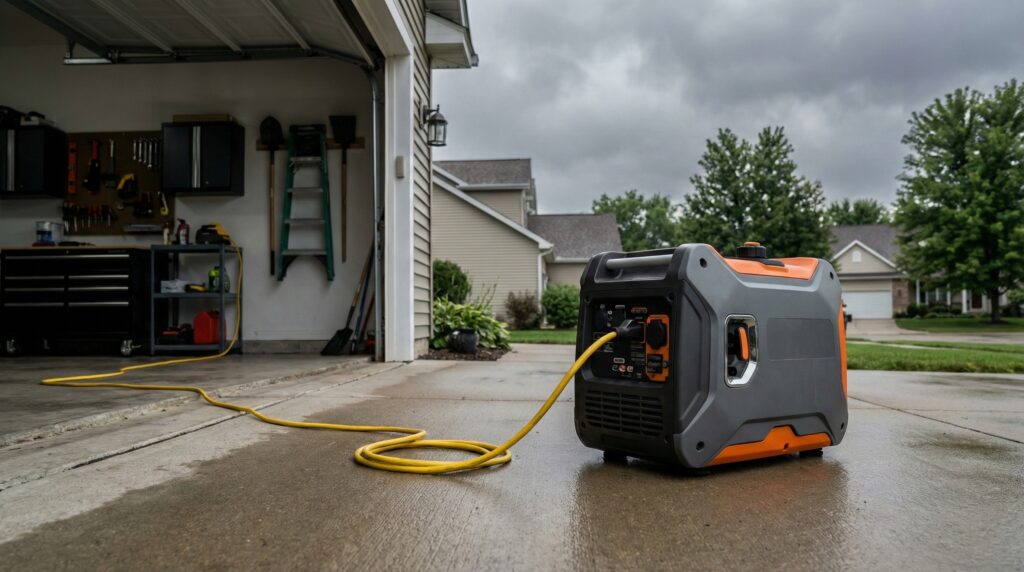
TL;DR
The right “solar generator” for camping is really a portable power station sized to your watt-hours (energy for the night) and watts (ability to start and run gear like coolers and small appliances). Plan for real-world solar charging to be slower than panel ratings — and confirm the power station’s solar input limits and connector compatibility before you buy panels.
Top Recommended Portable Power Stations
| Product | Best For | Price | Pros/Cons | Visit |
|---|---|---|---|---|
| BLUETTI AC180 Portable Power Station 1152Wh LiFePO4 | Fridge-capable weekend camping | $449.00as of Oct 17, 12:40 GMT+0000 | High-output, mid-size capacity; some buyer reports of faster % drop than expected | Visit Amazon |
| OUPES Mega 1 + B2 Extra Battery + 240W Solar Panel | Solar Generator Kit | Basecamp kit with panel included | $1660 – $1940 | All-in-one bundle simplifies shopping; higher upfront cost and more to transport | Visit Oupes |
Top Pick: Best Overall Portable Power Stations
BLUETTI AC180 Portable Power Station 1152Wh LiFePO4
Best for: A 2–3 day car-camping trip where you want enough capacity for lights, phones, and a laptop — plus the inverter strength to handle “real” campsite loads like a cooler, small blender, or compressor startup.
The Good
- Strong on-paper size for camping: 1,152Wh capacity (per brand spec) is a practical middle ground for weekend trips.
- High inverter output for a unit this size (1,800W continuous / 2,700W peak per buyer-reported usage and product positioning), which is the kind of headroom that helps with compressor surges.
- Fast AC charging is a real advantage when you can top up at home, at a friend’s place, or at an RV park power pedestal between drives.
- Fits a common camping pattern: run a 12V fridge/cooler part-time, charge devices overnight, then recharge during a midday “solar window.”
- BLUETTI is a well-known ecosystem, which can matter if you plan to add compatible panels/cables later.
The Bad
- Some buyer reports mention the battery percentage dropping faster than expected — which can be jarring if you’re budgeting tightly for an overnight fridge run.
- Value can be subjective at this price point; if you only camp a couple times a year, a smaller, cheaper unit may feel like a better fit.
- Like any power station, it still needs airflow at camp — don’t stash it under sleeping bags or in a sealed tote while it’s running.
4.6/5 across 1,724 Amazon reviews
“I’ve been using the BLUETTI AC180 and I’m honestly very impressed. It has plenty of power to run multiple devices at the same time, and it works great during power outages and for camping trips. The battery lasts a long time, and the fast charging is amazing — it really does charge very quickly, which is super convenient.I also like that it feels very solid…” — Verified Amazon buyer (5 stars)
“Estoy decepcionado lo usé para alimentar un bombillo durante 1 hora que se fue la luz y se cayó del 100% al 84% creo el arrancador de mi auto aguanta más, me siento estafado pues gasté como 15 mil pesos” — Verified Amazon buyer (2 stars)
“I’m a fan of Bluetti systems but EcoFlow, Jackery and Anker are also reputable brands. I would recommend the Bluetti AC180 or AC200L.” — r/preppers discussion
“With 1152Wh capacity and 1800W output (2700W peak), it easily powers my essential devices during outages and keeps everything running smoothly when I’m outdoors camping.” — verified buyer, 5 stars
Our Take: For most campers who want one solar-capable power station that’s genuinely useful beyond phones and headlamps, the AC180 hits the sweet spot of capacity and inverter muscle — just plan conservatively for real-world runtime and solar charging.
OUPES Mega 1 + B2 Extra Battery + 240W Solar Panel | Solar Generator Kit
Best for: A family basecamp setup or longer off-grid camping where you want a “bundle” approach (power station + extra battery + panel) instead of piecing together components and adapters.
The Good
- All-in-one kit approach reduces compatibility guesswork — especially helpful if you don’t want to research solar connectors and voltage ranges.
- Built around a larger, camp-ready concept (power station plus an extra battery), which is typically how you stretch to multi-night use.
- Includes a 240W solar panel in the kit, which is a more realistic starting point for camping solar than single 100W panels in mixed shade.
- Strong volume of third-party customer feedback at the brand level: Trustpilot 4.5/5 across 2794 reviews.
The Bad
- Higher upfront cost than “power station only” options, and it’s more gear to store and transport.
- Panel output in the real world will vary heavily with tree cover and panel angle, so you still need a conservative charging plan.
- Because this is a bundle, returns/exchanges can be more complicated than swapping a single item.
4.5/5 across 2,794 Trustpilot reviews (source)
“I’d been shopping for a power station for a long time. Oupes was one of the first brands I came across. The consensus was that their products were reliable and offered a great…” — Trustpilot review
“The Guardian 6000 was packaged well, arrived in good condition and delivered quickly.…” — Trustpilot review
Price: $1660 – $1940
Our Take: If you’re building a basecamp-style solar setup for longer trips and you like the simplicity of a matched kit, this OUPES bundle is a straightforward way to buy the “battery + solar” concept in one go — just be ready for the bulk and price.
FAQ
How many watt-hours do I need for camping?
Start by listing what you’ll run and for how long, then estimate watts × hours for each item (or use the device’s wattage label). Add 20–30% to cover inverter losses and real-world conditions (cold nights, hot afternoons, and power spikes). For many weekend campers charging phones/lights plus a laptop and a fan, the practical starting point is often in the 500–1000Wh range; if you’re running a 12V fridge for multiple days, 1000–2000Wh becomes much more realistic.
What inverter size do I need for camping gear?
Match continuous watts to what you’ll run at the same time, then make sure surge watts can handle startup loads. Compressor-based devices (many coolers/mini-fridges), some pumps, and some power tools can surge well above their running wattage, which is why higher-output units like the BLUETTI AC180 are often easier to live with at camp.
Why is solar charging slower than the panel’s rated watts?
Solar panels are rated in ideal lab-like conditions; at camp you’re dealing with heat, haze, shade from trees, imperfect panel angle, and shorter windows of “good sun.” Evidence-based solar guidance (including resources from the National Renewable Energy Laboratory (NREL)) explains why output commonly drops in real conditions. Practically, it means a “240W panel” might deliver much less for large parts of the day — so oversize your panel plan when you can, and be willing to reposition panels around midday.
How do I know if a solar panel will work with my power station?
Before buying a panel, check the power station’s solar input: (1) the allowed PV voltage range, (2) the max input watts/amps, and (3) the connector type. Many portable panels use MC4 connectors, but you may need an MC4-to-DC adapter cable specific to your power station. If you’re unsure, an off-grid solar installer can quickly sanity-check your panel and cable plan to avoid over-voltage or mismatched connectors.
Is it safe to use a lithium power station inside a tent or vehicle?
You should treat it like any high-energy lithium device: keep it ventilated, don’t cover it while charging or running loads, and keep it out of direct sun in hot environments. The Consumer Product Safety Commission’s lithium-ion safety guidance is a good baseline for handling and charging. If you need to run AC power in wet conditions, talk to a licensed electrician about safe cord choices and ground-fault protection.
Can I charge a power station with solar while using it?
Many power stations support pass-through charging (using the unit while it’s charging), but behavior varies by model and load. For camping, it’s a common strategy: run daytime loads and recharge from solar simultaneously, then rely on the battery overnight. Check your model’s manual for any restrictions and keep the unit ventilated since charging + discharging can increase heat.
Is LiFePO4 better than “regular lithium” for camping?
LiFePO4 (LFP) is often preferred for frequent camping because it’s generally associated with longer cycle life and strong thermal stability compared with older lithium-ion chemistries. The tradeoff is that LFP units can be a bit heavier for the same watt-hours, which matters if you’re carrying the station any distance from the car to the campsite.
Bottom Line
If you want one solar-capable camping power station that balances usable capacity with enough inverter power for real campsite loads, the BLUETTI AC180 is our best overall pick in this shortlist. Size your watt-hours to your overnight plan first, then double-check solar input compatibility so you don’t end up with panels you can’t safely or efficiently use.
Affiliate disclosure: Some of the links in this article are affiliate links. We may earn a commission if you purchase through them.
Product prices and availability are accurate as of the date/time indicated and are subject to change. Any price and availability information displayed on Amazon.com at the time of purchase will apply to the purchase of this product. Certain content that appears on this site comes from Amazon. This content is provided “as is” and is subject to change or removal at any time.