
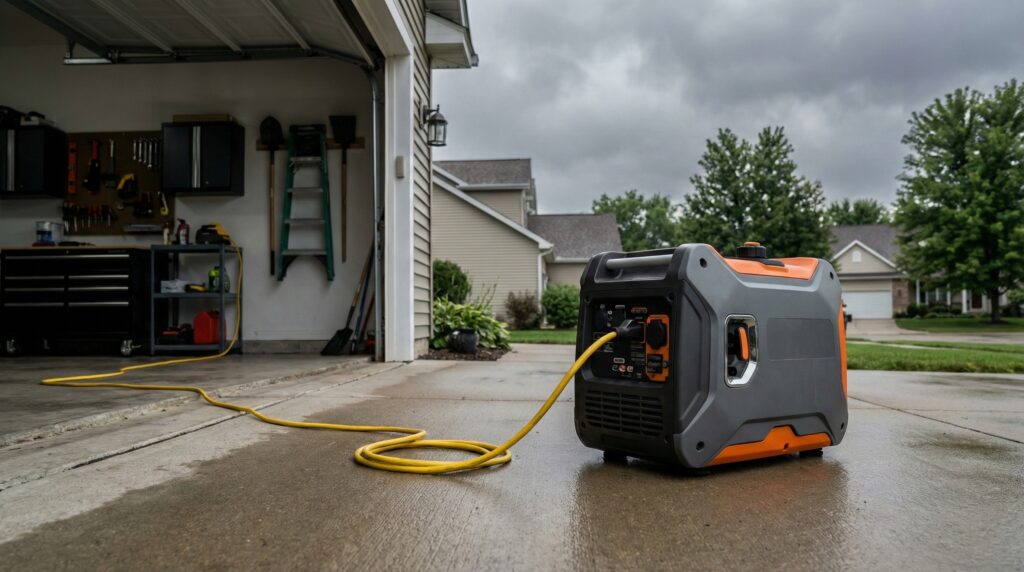
Quick Hits
Inverter generators have evolved from small camping accessories to robust home backup solutions capable of running entire households. Unlike traditional open-frame models, inverters provide “clean” power with low Total Harmonic Distortion (THD), which is essential for protecting your furnace control boards, well pumps, and high-end appliances. For ultimate reliability, the Honda EU7000is remains the industry standard, while the Duromax XP9000IH and Genmax GM10500 offer massive 240V output for homeowners on a budget. If you value customer service above all else, Champion’s support is unmatched in the industry. This guide breaks down the real-world performance, common failure points reported by users, and the critical technical differences between 120V and 240V connectivity for your home.
Introduction: Why Inverter Generators are Replacing Traditional Backups
When the grid fails, your primary goal is keeping the essentials running without damaging the very equipment you are trying to protect. Traditional portable generators are often “dirty” power sources; they fluctuate in frequency and voltage, creating electrical noise that can fry sensitive circuit boards in modern refrigerators or HVAC systems. This is where inverter generators have changed the landscape. By converting DC power to clean AC power, they maintain a pure sine wave that mimics the electricity coming from your wall outlets.
Your choice of an inverter also impacts your neighbors and your wallet. Because these units use auto-throttling technology—often called “Eco Mode”—the engine only runs as fast as the current load requires. If you are only charging a phone and running a few LED lights, the engine drops to a whisper. This fuel efficiency is a massive advantage during extended outages when gasoline might be scarce. Furthermore, the noise reduction makes them far more neighbor-friendly than the “contractor-style” generators that sound like a lawnmower running in your backyard all night.
However, choosing the right unit involves more than just looking at the wattage on the box. You need to consider the voltage requirements of your home’s transfer switch and the specific surge demands of your well pump or air conditioner. If you are also considering silent alternatives, you might find our guide to portable power stations useful for smaller, indoor-safe backup needs.
Top-Rated Large Inverter Generators for Whole-House Connectivity
Honda EU7000is
The Honda EU7000is is widely considered the gold standard for a reason. It is one of the few portable inverters featuring Electronic Fuel Injection (EFI), which eliminates the most common cause of generator failure: a gummed-up carburetor. In my experience, even after sitting for months, the EFI system ensures the unit fires up on the first press of the button. It provides a steady 5,500 running watts and can handle 7,000-watt surges, making it more than capable of handling your lights, fridges, and even a 240V well pump.
What Works
- EFI system makes it incredibly reliable for long-term storage.
- Extremely quiet operation, allowing you to work from home during an outage without noise fatigue.
- Exceptional resale value; these units often sell for 80% of their retail price even years later.
- Integrated 120/240V selector switch for flexible home connectivity.
What Doesn’t
- It is significantly heavier than its competitors, making it difficult to move without the wheel kit on soft ground.
- The price tag is nearly triple that of comparable Chinese-made brands.
- Risk of theft is high due to its high value and recognizable brand name.
Worth It? Best for homeowners who want a “buy once, cry once” solution and prioritize reliability above all else. Skip if you are on a tight budget and don’t mind performing more frequent maintenance.
Duromax XP9000IH
If you need raw power without the Honda price tag, the Duromax XP9000IH is a heavy hitter. This dual-fuel unit can run on either gasoline or propane, giving you much-needed flexibility when gas stations are closed. It delivers 7,600 running watts on gasoline, which is enough to power almost every circuit in a typical 2,000-square-foot home simultaneously. Its ability to provide 240V power means it integrates seamlessly with a 30A or 50A transfer switch.
What Works
- Dual-fuel capability allows for cleaner, longer storage using propane.
- Excellent power-to-price ratio compared to premium brands.
- Digital command center for monitoring voltage and run hours.
What Doesn’t
- Customer support is notoriously difficult to reach; users on Reddit frequently complain about long wait times.
- Propane use results in a 10-20% drop in total power output.
- The unit often arrives with a bonded neutral, which may require modification if your transfer switch is non-separately derived.
Worth It? Best for larger homes with high power demands (like well pumps and multiple fridges). Skip if you aren’t comfortable doing some of your own troubleshooting or maintenance.
Genmax GM10500
The Genmax GM10500 is a relatively new entrant that has caught the attention of the backup power community due to its massive 10,500 peak wattage. It is one of the few inverters on the market that includes a dedicated 50A 240V outlet, which is a significant advantage if you have a high-capacity transfer switch. For those looking for the best generator for home backup power that can actually start a central AC unit, this is a top contender.
What Works
- True 50A output can power heavy appliances like electric dryers or well pumps.
- Relatively compact design given its massive power output.
- Tri-fuel options are often available, allowing for natural gas connectivity.
What Doesn’t
- Genmax is a newer brand with a limited track record for long-term durability.
- Finding local service centers can be a challenge compared to Honda or Champion.
- The remote start feature can drain the battery if the unit is left in “standby” for weeks.
Worth It? Best for users who need maximum wattage and have a 50A home inlet. Skip if you prefer a brand with decades of proven reliability and established local repair shops.
Champion 4500 Dual Fuel
While smaller than the others, the Champion 4500 is a darling of the generator community because of the company’s legendary tech support. If your generator stops working at 2 AM during a storm, Champion is the most likely brand to actually answer the phone. This unit is perfect for “redundancy play”—using it for critical loads while keeping your fuel consumption to a minimum. It’s also a strong candidate for those researching the best dual fuel inverter generator for smaller suburban homes.
What Works
- Industry-leading customer service and part availability.
- Extremely easy to parallel with a second unit to double your power.
- Small enough for one person to lift into a truck for service.
What Doesn’t
- It only outputs 120V; it cannot power 240V appliances like well pumps or some electric ovens.
- Connecting it to a home panel requires a “bridging” adapter which has safety limitations.
- The plastic casing can vibrate and rattle at higher loads.
Worth It? Best for homeowners who only need to back up 120V circuits (lights, fridge, internet). Skip if you have a 240V well pump or a standard 240V transfer switch setup.
Best Inverter Generators for Home Backup Comparison
| Product Name | Best For | Price Range | Pros/Cons | Visit |
|---|---|---|---|---|
| Honda EU7000is | Ultimate Reliability | Check price on Amazon | Reliable EFI / Very Expensive | |
| Duromax XP9000IH | High Capacity Value | Check price on Amazon | Dual Fuel / Poor Support | |
| Genmax GM10500 | Max Wattage (50A) | Check price on Amazon | High Specs / Newer Brand | |
| Champion 4500 Dual Fuel | Support & Service | Check price on Amazon | Great Support / 120V Only |
The Reliability Hack: Mid-Sized & Budget Alternatives
There is a growing strategy among power enthusiasts: instead of one massive, expensive unit, they buy two smaller units and run them in parallel. This is the “Honda EU2200i Redundancy Play.” If one unit fails or needs an oil change, you still have the other to keep the fridges running. Plus, moving two 50-pound units is significantly easier on your back than wrestling a 260-pound monster like the EU7000is. If you go this route, you can always supplement your setup with the best inverter generator for your specific wattage needs.
For budget-conscious buyers, Harbor Freight’s **Predator** line and the **Wen** series have become the “Chinese clones” of choice. They are essentially a fraction of the cost of a Honda. While they might not last 15 years with daily use, for intermittent emergency backup, they often provide excellent value. The key is to change the oil frequently and use a magnetic dipstick to catch the metal shavings that are common in these cheaper engines during the break-in period.
Technical Deep Dive: The 120V vs. 240V Conflict
One of the most common mistakes homeowners make is buying a 120V generator and expecting it to power their entire house through a transfer switch. Most modern American homes use a split-phase electrical system with two “hot” legs. A standard transfer switch expects 240V power to feed both of these legs. If you plug a 120V generator in, only half of the breakers in your panel will receive power.
While some people use “bridging” adapters or jumpers to send that 120V signal to both legs, this should only be a temporary fix. You must ensure no 240V appliances (like your central AC or dryer) are turned on, as this could cause them to draw too much current and fail. For a seamless experience, always look for an inverter with a 120/240V switch or a dedicated 240V outlet. If you find the electrical requirements of gas generators too complex, you might consider the best solar battery backup system for home use, which often simplifies the connection process.
Powering Sensitive Equipment: Well Pumps and Furnaces
There is a persistent myth that inverters can’t handle the surge of a well pump. While it’s true that a 1HP pump can draw up to 3,000 watts just to start, modern large-scale inverters are designed with enough “headroom” to manage these surges. In fact, the clean power from an inverter is often better for the starting capacitors in your pump. Similarly, high-efficiency furnaces are notorious for rejecting “dirty” power from traditional generators. The circuit boards sense the frequency fluctuation and simply refuse to ignite. Using an inverter ensures your heat stays on when the temperature drops.
What Real Users Are Saying (Reddit Insights)
General Sentiment
The general consensus across the r/Generator and r/Preppers communities is that while specs on paper are great, serviceability is what matters in a real crisis. Users overwhelmingly prefer brands with local parts availability. Honda and Champion receive the highest marks for longevity, whereas Genmax and Duromax are praised for their feature sets but often criticized for their “after-sale” experience. Many users recommend buying from a retailer like Costco to leverage their generous return policies as a “warranty backup” for brands with poor direct support.
Top Complaints & Warnings
The most common complaints center on the physical weight of large units and the maintenance of fuel systems.
“The Honda 7000 is a tank, but I have to worry about it getting stolen while it’s running outside and how the heck I’ll get it into my truck if it ever needs professional service.” — r/Generator
“I learned the hard way that propane gives you way less power. My 9000W generator could barely run my well pump once I switched it over to the propane tank.” — Reddit user Sentiment
Users also highlight the “shavings” issue in new engines, strongly advising the use of magnetic dipsticks for the first 20 hours of operation to prevent premature engine failure.
Budget Tips & Value Picks
For those who can’t justify a $5,000 Honda, the community often suggests a “two-pronged” approach.
“Two or three cheap Chinese machines will be much more reliable (combined) than one expensive Honda just due to the way the statistics works out.” — r/Generator
This strategy involves having a primary unit and a smaller backup (like a Predator 2000) that can at least keep the electronics and a few lights going if the main unit dies.
Other Notable Alternatives Worth Considering
- Westinghouse iGen4500: A very popular mid-sized unit known for its digital display and remote start. It’s a solid middle ground between the budget Wen and the premium Honda.
- Yamaha EF6300iSDE: Often considered the only true rival to Honda in terms of build quality. It is incredibly quiet and durable but lacks the EFI technology found in the newer Honda models.
- Wen 56380i: Frequently cited as the “best bang for your buck” on Amazon. It is a no-frills unit that performs surprisingly well for its price point, though customer support can be hit-or-miss.
Essential Maintenance for Emergency Readiness
Your generator is only as good as your last maintenance check. For home backup, the single most important thing you can do is use **ethanol-free fuel**. Ethanol attracts moisture and can ruin a carburetor in as little as 30 days. If you can’t find ethanol-free gas, use a high-quality fuel stabilizer and run the engine every month for 20 minutes under load.
Additionally, consider installing a **MicroAir EasyStart** on your central air conditioning unit. This device reduces the initial power surge required by the compressor by up to 70%. This simple modification can allow a mid-sized inverter like the Duromax XP9000IH to run your AC unit comfortably, whereas it might have tripped the breaker otherwise. Finally, always keep a spare spark plug and extra oil on hand—you don’t want to be hunting for parts when the roads are blocked by snow or debris.
Frequently Asked Questions
Can a 120V inverter generator power my whole house?
Technically, a 120V generator like the Champion 4500 can power your 120V circuits if you use a bridging adapter on your transfer switch. However, it will not power 240V appliances like well pumps or central AC. For a true whole-house experience, a 240V unit like the Honda EU7000is or Duromax XP9000IH is highly recommended to avoid electrical imbalances and complexity.
Why do well pumps struggle with some inverter generators?
Well pumps require a massive “inrush” of current to start. If your inverter generator’s surge wattage is too low, the inverter’s protection circuit will trip. Units like the Genmax GM10500 have the headroom to handle these surges. Additionally, ensure you are using a 240V connection, as most deep-well pumps require it to operate correctly.
Is it better to buy one Honda or two cheaper generators?
This is a debated topic on Reddit. One Honda EU7000is offers the highest individual reliability and less overall maintenance. However, buying two Champion or Predator units and a parallel kit provides redundancy. If one fails, you still have power. Most experts suggest the Honda if you have the budget, but the two-unit strategy is a valid way to maximize uptime on a budget.
How much power do I lose when running a generator on propane?
Propane has a lower energy density than gasoline, typically resulting in a 10% to 20% reduction in power output. For example, the Duromax XP9000IH will produce significantly fewer running watts on propane than on gas. Always size your generator based on the propane wattage if you plan to use it as your primary fuel source during an outage.
Do I need a floating neutral for my home transfer switch?
Most standard home transfer switches require a generator with a “floating neutral.” If your generator has a bonded neutral (common in Duromax and Genmax units), it may cause your GFCI breakers to trip. Many users consult an electrician to safely convert their unit to floating neutral for home backup use.
Conclusion: Choosing the Right Setup for Your Home
Choosing the right inverter generator comes down to balancing your power needs with your budget and your willingness to perform maintenance. If you need 240V power for a well pump and want the peace of mind that comes with EFI, the Honda EU7000is is the clear winner. For those who need maximum wattage and dual-fuel flexibility, the Duromax and Genmax models offer impressive performance for the price, provided you are willing to manage the potential customer service hurdles.
Regardless of which unit you choose, remember that the “set it and forget it” mentality doesn’t apply to emergency power. Regular oil changes, fuel stabilization, and a clear understanding of your home’s electrical load are what will actually keep you comfortable when the grid goes dark in 2026. Investing in a quality best home generator today is the best way to ensure your family’s safety and independence tomorrow.
Some links below are affiliate links. We may earn a commission if you purchase through them.