
Quick Hits
Standby generators provide the ultimate safety net for your home, engaging automatically the moment the grid fails. For most residential needs, the Generac 24kW and 26kW models offer the best balance of price and smart features, while professionals and electricians often steer homeowners toward Kohler for its superior build quality and reliability. If you live in an area with extreme heat or require power for massive estates, upgrading to a liquid-cooled unit—like the Generac 27kW with its Mitsubishi engine—is widely considered a “bulletproof” investment. While these systems typically cost between $10,000 and $12,000 including installation, they offer a level of energy independence that portable units simply cannot match.
Introduction: Why a Standby Generator is Your Best Defense Against Power Outages
There is a specific kind of stress that hits when the sky turns charcoal and the lights flicker. You start wondering if the sump pump will hold, if the freezer full of food is going to spoil, or how you’ll manage the kids in a dark house for three days. After spending years analyzing how families manage these crises, I can tell you that a permanent standby generator is the only solution that truly removes that weight from your shoulders. It isn’t just about having lights; it is about maintaining a normal life when the world outside is anything but.
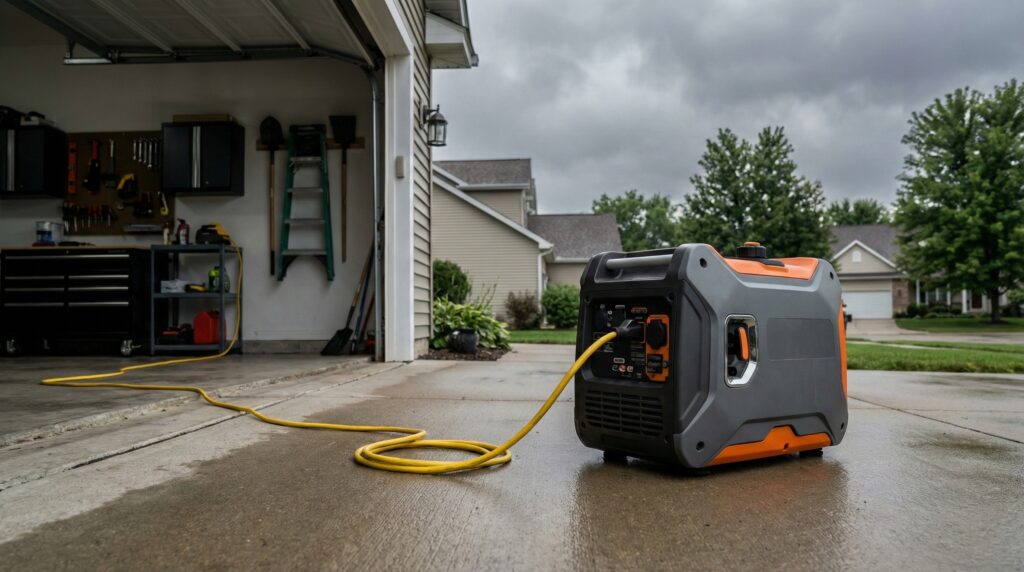
Unlike portable units that require you to drag them out of the garage and fumble with heavy cables in a downpour, a standby generator sits ready on a permanent pad. It is wired directly into your home’s electrical system via an automatic transfer switch. When the power goes out, the system detects it, starts the engine, and switches your home’s load over in seconds. Your power setup might benefit from this seamless transition, especially if you rely on medical equipment or have a home office that can’t afford a second of downtime. We have seen a massive shift toward these systems as our aging grid faces more frequent challenges from extreme weather.
In this guide, we are going to look at the heavy hitters. We’ll compare the market leaders, dive into the technical differences between air-cooled and liquid-cooled engines, and listen to what the actual technicians in the field are saying about durability. Reliability isn’t just a marketing word; it is the difference between a warm house and a frozen pipe disaster.
Top-Rated Standby Generator Brands Compared
Generac 7209 24kW
Generac is the name most people know, and for good reason. They own the largest share of the residential market because they make backup power accessible. The 7209 model is part of their Guardian series, designed to provide enough “oomph” to run large homes including multiple central air conditioning units. It’s a smart system that manages your home’s high-load appliances to prevent the generator from overloading. In practice, the 24kW unit handles a 3,500-square-foot home with ease, provided you aren’t trying to run every single appliance simultaneously.
What Works
- Mobile Link monitoring allows you to check status from your phone anywhere in the world.
- Widely available parts and a massive network of certified technicians for maintenance.
- Compact design takes up less yard space than industrial-grade competitors.
What Doesn’t
- Air-cooled engines are significantly louder during their weekly “exercise” cycles.
- Some technicians report the “Nexus” controllers can be difficult to source during peak storm seasons.
Worth It? Best for suburban homeowners who want a user-friendly, tech-forward system with a nationwide service network. Skip if you have very close neighbors sensitive to engine noise.
Kohler Home Standby
If you ask an electrician what they have at their own house, the answer is often a Kohler. These units are built with a heavy-duty focus that feels a step above the standard consumer grade. Their commercial-grade engines are designed for better voltage regulation, which is critical if you are running sensitive electronics or high-end appliances. They are also known for having one of the best enclosures in the business, which helps with corrosion resistance in coastal environments.
What Works
- Extreme reliability with a fast response time—usually reaching full power in 10 seconds.
- The heavy-duty alternator handles the “startup surge” of large HVAC motors better than most.
- Corrosion-resistant enclosures are ideal for salt-air environments near the ocean.
What Doesn’t
- The initial purchase price is often higher than comparable Generac models.
- Fewer authorized service dealers in rural areas compared to the market leader.
Worth It? Best for those who prioritize mechanical longevity and have sensitive electronics. Skip if you are on a strict budget and just need “good enough” backup.
Cummins QuietConnect
Cummins is a legend in the world of diesel and industrial power, and they’ve brought that “workhorse” mentality to the residential sector. The QuietConnect series is specifically designed to be, well, quiet. They use a unique housing design and airflow management to keep decibel levels low. If your local HOA has strict noise ordinances, this is likely your top choice. They also perform exceptionally well under high loads, making them a favorite for larger estates with high electrical demands.
What Works
- Significantly quieter operation during both exercise and full-load runs.
- Strong performance in cold climates where other engines might struggle to crank.
- Small footprint for the power output, allowing for more flexible installation locations.
What Doesn’t
- Parts can be more expensive than Generac or Briggs & Stratton.
- The monitoring app is functional but lacks some of the “polished” feel of competitors.
Worth It? Best for homeowners in tight neighborhoods or HOAs where noise is a primary concern. Skip if you want the most “app-centric” user experience.
Generac 27kW Liquid Cooled
When you step up to a liquid-cooled unit, you are moving from a “small engine” (like a lawn tractor) to a “vehicle engine.” This 27kW model features a 2.4L Mitsubishi four-cylinder engine. Because it uses a radiator and coolant—just like your car—it can run for days on end without the risk of overheating. This is a massive advantage in hot southern climates or during summer heatwaves when an air-cooled unit might need frequent breaks to cool down. Technicians frequently cite this specific Mitsubishi engine as one of the most durable ever put into a residential unit.
What Works
- The 4-cylinder engine runs at a lower RPM (1800 vs 3600), leading to a much longer lifespan.
- Unmatched reliability for long-duration outages that last a week or more.
- Provides stable, clean power even when running at 90% capacity.
What Doesn’t
- The unit is much larger and heavier, requiring a more substantial concrete pad.
- Maintenance is more complex, requiring coolant checks and more involved oil changes.
Worth It? Best for large homes in hot climates or anyone wanting a “forever” generator. Skip if you only expect short outages and want to save on installation costs.
Standby Generator Comparison Table
| Product Name | Best For | Price Range | Pros/Cons | Visit |
|---|---|---|---|---|
| Generac 7209 24kW | Suburban Families | Check price on Amazon | + Mobile monitoring / – Noisy | |
| Kohler Home Standby | Professional Reliability | Check price on Amazon | + Build quality / – Dealer network | |
| Cummins QuietConnect | Quiet Operation | Check price on Amazon | + Low noise / – Expensive parts | |
| Generac 27kW Liquid Cooled | Extreme Climates | Check price on Amazon | + Mitsubishi engine / – Size |
Air-Cooled vs. Liquid-Cooled: Is the Upgrade Worth It?
The biggest technical fork in the road is deciding how your engine handles heat. Air-cooled units are the most common for residential use. They use a large fan to pull air over the engine’s cylinders. While affordable and effective for most 24-48 hour outages, they have limits. In extreme heat—think 100°F plus—they can struggle to dissipate heat under a full load. This is where your battery backup planning might actually influence your generator choice.
Liquid-cooled units, like the 27kW and 32kW models with Mitsubishi engines, are essentially small car engines. They use a closed-loop coolant system with a radiator. Why does this matter? Because they can run at lower speeds (1800 RPM vs the 3600 RPM of air-cooled units) while still providing full power. This lower RPM means less wear and tear, a much quieter hum, and a life expectancy that can be double or triple that of an air-cooled model. If you are in a part of New England where winter storms knock out power for a week at a time, or in the deep South where the AC never stops, liquid-cooled is the professional’s choice for a “one and done” installation.
What Real Users Are Saying (Reddit Insights)
General Sentiment: Brand Loyalty vs. Technician Warnings
On forums like r/Generator, the divide between homeowners and the people who actually fix these machines is fascinating. Homeowners generally love the convenience and the apps provided by Generac. However, the sentiment from technicians is often more nuanced. Many pros emphasize that while Generac is the “easy” choice due to parts availability, the internal build quality of brands like Kohler often wins the long-term reliability argument. There is a common consensus that any standby generator is only as good as its last maintenance check.
Top Complaints & Warnings
One of the most vocal complaints from the technician community involves the materials used in mass-market units. Several technicians on Reddit have pointed out that “thin-wired rotors” in some entry-level air-cooled units don’t hold up as well under constant heavy loads as the beefier components found in premium models. Another frequent frustration is the difficulty of getting certain proprietary parts, like Nexus controllers, during the “rush” that follows a major hurricane or blizzard. Noise is also a recurring theme; many users are surprised by how loud an air-cooled generator is during its weekly 15-minute “exercise” mode.
“I am a generator tech and I’ve seen it all. Generac is fine for the price, but those thin wired rotors just don’t hold up compared to Kohler or Cummins when things get tough. If you have the budget, go liquid-cooled and never look back.” — r/Generator
Budget Tips & Value Picks
For those looking to save, the community often suggests focusing on a “right-sized” unit rather than the biggest one available. Over-buying capacity leads to higher fuel consumption. If you can live without running the electric dryer or the hot tub during an outage, you can often drop down to a smaller, more fuel-efficient unit. Users also recommend looking for “turn-key” installation packages from warehouse clubs like Costco, which sometimes include extended warranties that can save you thousands in the long run.
The Hybrid Approach: Modular Battery Backups + Standby Generators
A trend that I am increasingly recommending to my clients is the “Hybrid Backup.” While a standby generator is great for the heavy lifting—like your AC and well pump—it can be overkill and quite noisy for the middle of the night when you just want a light on and your CPAP machine running. This is where pairing a fuel-based generator with one of our top-rated portable power stations makes perfect sense.
By using a silent system like the Bluetti EP500 or EcoFlow Delta Pro 2 for your overnight “critical loads,” you can actually turn your generator off for 8 hours. This saves a massive amount of fuel and gives your neighbors a break from the noise. These battery units can then be recharged by the generator during the day while it’s already running to power the rest of the house. This dual-layer defense is becoming the gold standard for energy independence, especially when you factor in best solar generator options that can supplement your power without any fuel at all.
Choosing the Right Fuel Source: Natural Gas vs. Propane vs. Bi-Fuel
Your fuel choice is often dictated by what is already at your house. If you have a natural gas line, that is the “holy grail” of backup power because it never runs out. You don’t have to worry about a delivery truck getting through blocked roads. However, in major disasters like earthquakes, gas lines can be shut off for safety. 1,000-gallon propane tanks are the common alternative in rural areas. A typical 24kW generator can run for several days on a full tank, but as many users found during Hurricane Sandy, if the roads are impassable, that fuel becomes a finite resource. If you’re building from scratch, a bi-fuel option that can switch between sources offers the best of both worlds.
For smaller needs or a dedicated office backup, you might find that a best ups battery backup is a better fit for your computer equipment to prevent data loss while the generator is cranking up.
Installation and Cost Analysis: What to Expect
Don’t let the “sticker price” of the generator fool you. The unit itself might cost $6,000, but the installation is a major project. You are hiring a licensed electrician to install a transfer switch and a plumber to run the gas lines. In most markets, a professional “turn-key” installation for a 22kW to 26kW unit will land between $10,000 and $12,000. This includes the concrete pad, the permits, and the initial startup and testing. It’s an investment in your home’s value, often recovering a significant portion of its cost during a home sale because buyers love the “storm-proof” nature of a pre-installed system.
Other Notable Alternatives Worth Considering
Briggs & Stratton PowerProtect
Known for having the best warranty in the business, these units offer a more compact footprint than Generac. They are a solid mid-range choice if you have limited space and want the peace of mind of a long-term manufacturer guarantee.
MTU Liquid Cooled
If you are powering a massive estate or a small commercial building, MTU is the high-end choice. They are built to industrial standards and are essentially “over-engineered” for residential use, providing extreme durability at a premium price point.
Bluetti EP500
While not a fuel-based generator, this massive battery backup is perfect for the “silent secondary” role. It can run your fridge and lights for a full day on its own and integrates well into a hybrid home backup strategy.
Best Standby Generators by Segment
Best for Large New England Homes
The Generac 32kW Liquid Cooled unit is the powerhouse for large homes in the Northeast. Its ability to handle high heating loads and stay cool during extended outages makes it the most reliable pick for 3,500+ sq ft properties.
Best for Whole House Propane
The Kohler Home Standby series is optimized for efficient fuel burn, making it the best choice for those relying on 500 or 1000-gallon propane tanks where every gallon counts during a long disaster recovery.
Best for Disabled Accessibility
For homes with elevators or medical equipment, the Generac 7209 24kW is the top choice because of its fast response time and reliable load-shedding technology that ensures the most critical items always have power first.
Frequently Asked Questions
Is Generac or Kohler more reliable for long-term use?
While Generac is the market leader with the best app and service network, many electricians consider Kohler to be more reliable for long-term use. Kohler units often use commercial-grade engines and heavy-duty alternators. However, a Generac unit that is properly maintained will still last 15-20 years. For more on smaller reliable systems, check our guide on the best battery backup options for your home.
Why do electricians recommend liquid-cooled generators over air-cooled?
Liquid-cooled generators, like the Generac 27kW, operate at lower RPMs and use a radiator system similar to a car. This prevents overheating during long-duration outages in hot weather. Electricians prefer them because they are more robust and can run for days without the “rest periods” sometimes required by air-cooled models. They are essentially the industrial-strength version of home backup power.
Can I get a tax credit for installing a standby generator for medical reasons?
Yes, it is often possible. If a doctor confirms that a standby generator is a medical necessity—such as for powering a home elevator for a disability or life-sustaining medical equipment—you may be able to deduct the cost as a medical expense. Always consult with a tax professional, but this can significantly offset the $10,000+ installation cost for those who need it most.
Is a 24kW generator enough to run two HVAC systems and an elevator?
A 24kW unit like the Generac 7209 is typically enough for these loads, thanks to smart “load-shedding” technology. This tech manages the startup of your AC units so they don’t all hit the generator at the same time. If you have an elevator, your electrician will prioritize that circuit to ensure it always has power, even if the AC has to wait a few minutes to kick back on.
What is the average installation cost for a whole-home generator?
You should expect to pay between $10,000 and $12,000 for a “turn-key” installation. This includes the generator (like a 26kW Guardian), the automatic transfer switch, the plumbing for gas or propane, and the electrical labor. While the unit itself may be around $7,000, the labor and materials for a safe, code-compliant install make up the rest of the investment.
Conclusion: Which Generator is Right for Your Home?
Choosing a standby generator is a significant step toward total energy independence. If you live in a standard suburban home and want the easiest path to backup power, a 24kW or 26kW Generac is a solid, tech-forward choice. However, if you are looking for a machine that will likely outlast your tenure in the home, the heavy-duty build of a Kohler or the “bulletproof” liquid-cooled Mitsubishi-powered Generac models are well worth the extra investment. Remember to consider a hybrid approach by adding a silent battery system for overnight loads, and always work with a certified installer to ensure your family’s safety. In 2026, as our grid continues to face new challenges, having your own reliable power source isn’t just a luxury—it’s a smart strategy for protecting your home and your peace of mind.
Some links below are affiliate links. We may earn a commission if you purchase through them.